
How to Respond to a Heart Attack: Critical First Aid Steps to Save a Life
April 22, 2026


Author
Experience the Xiamen Tianzuo Medical difference – where every product is a testament to our dedication to health and safety.
Tianzuo Medical


A heart attack is one of the most dangerous and time-sensitive medical emergencies you can encounter. Every second counts when someone is experiencing a heart attack, and knowing exactly what to do can mean the difference between life and death.
In this guide, we’ll walk you through how to recognize heart attack symptoms and the exact first aid steps you need to take to help someone in need.
What Are the Common Symptoms of a Heart Attack?
Early recognition is the single most important factor in surviving a heart attack. Don’t wait or dismiss warning signs—act fast if you notice any of these symptoms:
- Severe chest pain, pressure, or tightness (often described as a “crushing” feeling)
- Pain that spreads to the shoulder, arm, neck, jaw, or back
- Shortness of breath, even when resting
- Dizziness, lightheadedness, or fainting
- Cold, clammy sweats
- Nausea or vomiting
- Sudden, extreme weakness or fatigue
These symptoms can appear suddenly or develop slowly over minutes or hours. They can affect men, women, and people of all ages differently.
What to Do If Someone Is Having a Heart Attack
If you suspect someone is having a heart attack, do not hesitate—follow these life-saving steps immediately:
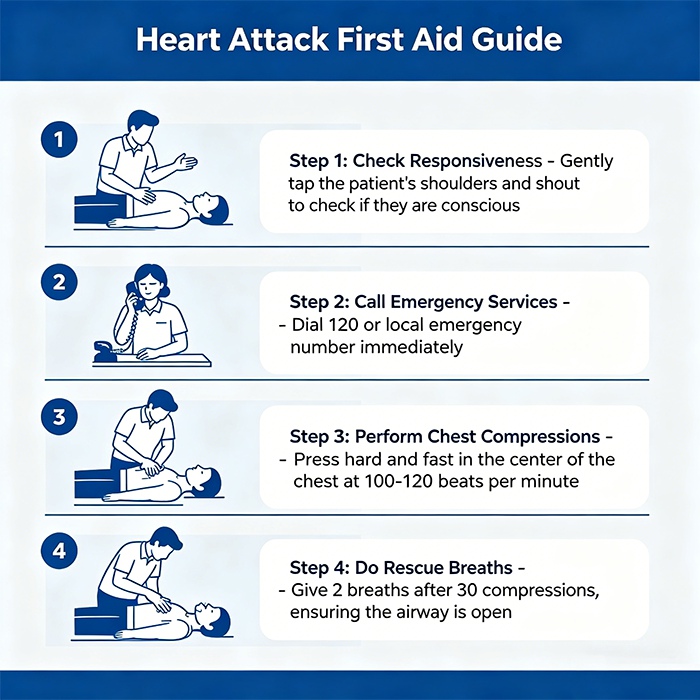
1. Call Emergency Services Right Away
First, dial 911 or your local emergency number. Tell the dispatcher you believe someone is having a heart attack so paramedics can prepare on the way.
2. Check Responsiveness, Breathing, and Pulse
Gently tap the person and ask if they’re okay.
- If they are conscious: Help them rest in a comfortable position, loosen tight clothing, and keep them calm.
- If they are unconscious: Check for breathing and a pulse.
3. Start CPR Only If Necessary
CPR is only needed if the person is not breathing or you cannot find a pulse.
Hands-Only CPR (for untrained people)
If you’ve never learned CPR or don’t want to give rescue breaths:
- Push hard and fast in the center of the chest
- Aim for 100–120 compressions per minute
- Continue until emergency help arrives
Standard CPR (for trained people)
If you’re certified and comfortable:
- 30 chest compressions
- 2 rescue breaths
- Repeat the cycle until help arrives
Keep going—don’t stop unless the person starts breathing normally or medical professionals take over.
Key Heart Attack First Aid Tips to Remember
- Never drive the person to the hospital yourself — emergency medical services have life-saving equipment and can start treatment immediately.
- Do not give the person food, drink, or medication unless instructed by a 911 dispatcher.
- Stay with the person at all times and reassure them.
Final Thoughts
A heart attack can happen to anyone, anywhere, at any time. Being prepared with simple first aid knowledge can help you save a life.
The most important rules are: recognize symptoms, call for help, and perform CPR if needed.
Stay safe, and share this guide with your family and friends—you never know when this information will be critical.
Latest Blog
- How to Choose an Endotracheal Tube: Cuffed vs Uncuffed and Size Selection for Buyers
- How to Choose a Tourniquet: Windlass vs Elastic Buckle for First-Aid Buyers
- CPR Mask vs Face Shield: Which First-Aid Item Should You Stock?
- How to Choose an Anesthesia Breathing Circuit: Circle vs Mapleson, Disposable vs Reusable
- How to Use a Three-Ball Spirometer: A Practical Guide for Post-Surgery Breathing Recovery
- How to Choose a Head Immobilizer: A B2B Buyer's Guide for EMS and Hospital Procurement
- High-Flow Nasal Cannula (HFNC): How It Works and When to Choose It Over a Standard Oxygen Mask
- Nasal Oxygen Cannula: The Quiet Workhorse of Oxygen Therapy (and How to Spec It Right)