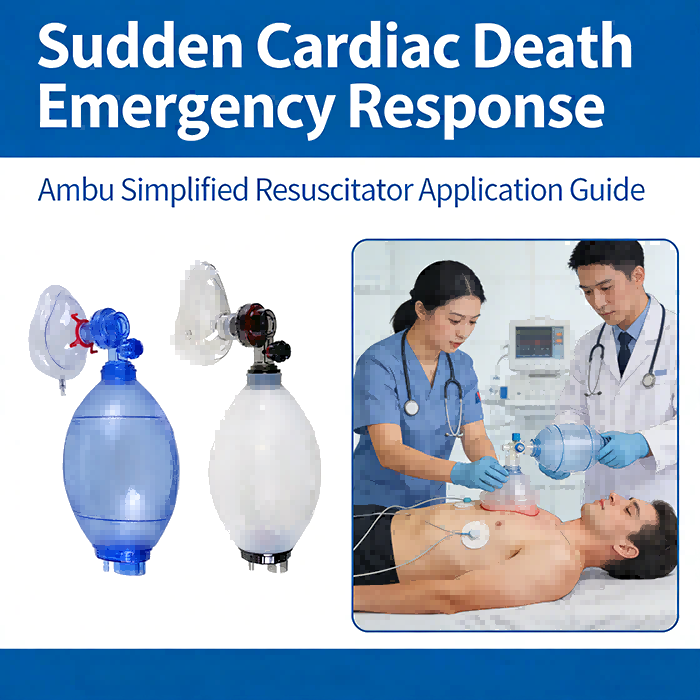
Sudden Cardiac Death (SCD): Why Ambu Bags Are Lifesavers in Emergency Resuscitation (Procurement Guide)
Apr, 01 2026
Sudden Cardiac Death (SCD) has become a global public health crisis, grabbing headlines with its sudden, life-ending impact—every minute, someone succumbs to SCD worldwide, and the survival rate outside hospitals remains staggeringly low at less than 1% in many regions, including China. For healthcare providers, first responders, and medical procurement teams, understanding the critical role of manual resuscitators (Ambu bags) in SCD emergency care is not just a clinical necessity—it’s a matter of saving lives. In this blog, we connect the SCD hot topic with Ambu bag applications, highlighting why this simple yet powerful device is indispensable in SCD resuscitation, along with key insights for medical procurement professionals.
The Urgency of Sudden Cardiac Death: A Global Hot Topic
Sudden Cardiac Death refers to unexpected death caused by cardiac arrest within 1 hour of symptom onset, mostly triggered by malignant arrhythmias like ventricular fibrillation. According to the latest clinical data, over 500,000 SCD cases occur annually in China alone, with an average of one death every minute. What’s more alarming is the low survival rate: the in-hospital SCD resuscitation success rate can reach up to 90.9% with proper emergency measures, but the out-of-hospital survival rate is less than 1.2% due to delayed resuscitation and inadequate emergency equipment.
The “golden 4 minutes” is the key to SCD resuscitation—brain cells start irreversible damage after 4 minutes of oxygen deprivation, and the survival rate drops by 7-10% every minute of delay. While chest compressions and AEDs are crucial, Ambu bags (manual resuscitators) play an irreplaceable role in maintaining oxygenation during resuscitation, bridging the gap between initial first aid and professional medical intervention.
Why Ambu Bags Are Indispensable in SCD Resuscitation
In SCD cases, cardiac arrest leads to loss of spontaneous breathing, and timely oxygen supply is critical to protecting vital organs like the brain and heart. Ambu bags, as portable, easy-to-operate manual resuscitators, are the first line of defense for oxygen delivery in SCD emergencies—here’s why they are irreplaceable:
1. Instant Oxygen Supply to Buy Time
SCD resuscitation requires immediate positive-pressure ventilation (PPV) to deliver oxygen to the lungs and bloodstream. Ambu bags can be used within seconds, without relying on electricity or complex setup—critical in out-of-hospital scenarios (such as public places, homes, or transportation) where SCD often occurs. Clinical cases from Luohu District People’s Hospital show that timely bag-valve mask ventilation, combined with chest compressions and defibrillation, contributed to a 90.9% resuscitation success rate for 10 SCD patients in early 2024, with 8 patients discharged without neurological sequelae.
2. High-Concentration Oxygen Delivery for Critical Care
During SCD resuscitation, ACLS guidelines recommend 100% oxygen delivery until the return of spontaneous circulation (ROSC) to maximize oxygenation. A high-quality Ambu bag, paired with an oxygen reservoir and set to 10-15 L/min flow rate, can deliver 95-100% FiO₂—ensuring adequate oxygen supply to the heart and brain, which directly improves resuscitation outcomes. Without an Ambu bag, manual mouth-to-mouth ventilation can only deliver 16-18% FiO₂, far insufficient for SCD emergency care.
3. Portability and Versatility for All SCD Scenarios
SCD can occur anywhere—hospitals, offices, gyms, or public transportation. Ambu bags are lightweight, compact, and easy to carry, making them suitable for pre-hospital first responders, emergency departments, and even public places with high SCD risks. For example, a 49-year-old man who suffered SCD while registering at a hospital was successfully resuscitated with immediate Ambu bag ventilation and defibrillation, recovering fully within a short period. This versatility makes Ambu bags a must-have device for any emergency preparedness plan.
Key Ambu Bag Features for SCD Resuscitation (Procurement Focus)
For medical procurement teams, selecting the right Ambu bags is critical to ensuring clinical teams can effectively respond to SCD emergencies. The following features are non-negotiable for SCD resuscitation, directly impacting resuscitation success and patient outcomes:
1. Reliable One-Way Valves
High-quality one-way valves prevent air backflow, ensuring that 100% oxygen is delivered to the patient without dilution. For SCD resuscitation, even a small valve malfunction can reduce FiO₂ and compromise patient survival. Procurement teams should prioritize Ambu bags with durable, leak-proof one-way valves to avoid equipment failure in critical moments.
2. Compatible Oxygen Reservoir
A transparent, collapsible oxygen reservoir is essential for delivering 95-100% FiO₂—without it, Ambu bags can only deliver 80-85% FiO₂, insufficient for SCD resuscitation. Procurement tip: Choose Ambu bags with well-matched reservoirs that are easy to attach and durable enough to withstand frequent use in emergency scenarios.
3. Ergonomic Design for Long-Term Use
SCD resuscitation often requires prolonged ventilation (sometimes 10+ minutes) until professional help arrives. Ambu bags with ergonomic handles and soft, squeezable bags reduce operator fatigue, ensuring consistent ventilation depth and rhythm. For procurement, selecting ergonomically designed Ambu bags improves clinical efficiency and reduces the risk of ventilation errors.
4. Size Compatibility for All Populations
SCD can affect adults, children, and even neonates. Procurement teams should source Ambu bags in multiple sizes (adult, pediatric, neonatal) to cover all patient groups. For example, neonatal Ambu bags with smaller volumes (4-6 mL/kg tidal volume) and lower flow rates (5-10 L/min) prevent barotrauma while maintaining adequate oxygenation—critical for pediatric SCD cases.
Ambu Bag Application in SCD Resuscitation: Clinical Best Practices
To maximize the effectiveness of Ambu bags in SCD resuscitation, clinical teams should follow these standardized steps—insights that also guide procurement decisions by highlighting equipment requirements:
• Pre-Check: Before use, confirm the Ambu bag rebounds fully, valves function properly, and the reservoir is securely attached—procurement teams should prioritize Ambu bags with easy-to-inspect components to save time in emergencies.
• Oxygen Flow Setting: Set the flow rate to 10-15 L/min (adults) or 5-10 L/min (neonates/pediatrics) to fully inflate the reservoir, ensuring 95-100% FiO₂ delivery.
• Seal Maintenance: Use the EC-clamp technique for face mask ventilation to ensure a tight seal—procurement teams should select Ambu bags with adjustable masks to minimize leaks, which can reduce FiO₂ by 10-20%.
• Ventilation Rhythm: Squeeze the bag slowly (1-2 seconds per squeeze) to deliver 500-600 mL tidal volume (adults), paired with chest compressions at a ratio of 30:2—ergonomic Ambu bags support consistent squeezing rhythm.
Procurement Takeaways: Invest in Ambu Bags to Combat SCD
As SCD continues to be a global public health concern, the demand for reliable emergency equipment like Ambu bags is growing. For medical procurement teams, sourcing high-quality Ambu bags is not just a purchase—it’s an investment in patient survival. Key procurement recommendations:
• Prioritize trusted manufacturers with a track record in emergency medical devices, ensuring compliance with international standards (e.g., ISO 13485).
• Stock spare reservoirs and accessories (masks, connectors) alongside Ambu bags to avoid suboptimal resuscitation due to missing components—critical for out-of-hospital SCD scenarios.
• Choose Ambu bags with easy-to-clean, durable materials to comply with hospital infection control protocols, ensuring long-term usability.
Final Thoughts: Ambu Bags—A Simple Tool, A Life-Saving Impact
Sudden Cardiac Death is unpredictable, but the tools to fight it don’t have to be. Ambu bags, as affordable, portable, and effective manual resuscitators, are the unsung heroes of SCD resuscitation—bridging the gap between the golden 4 minutes and professional medical care. For clinical providers, mastering Ambu bag use can mean the difference between life and death. For procurement teams, selecting the right Ambu bags ensures that clinical teams have the tools they need to save lives when every second counts.
In the fight against SCD, every piece of emergency equipment matters—and Ambu bags are a cornerstone of that fight. Whether you’re procuring for a hospital, clinic, or emergency service, investing in high-quality Ambu bags is an investment in patient safety and survival.