Drowning First Aid: Critical Steps to Save Lives in Water Emergencies
Apr, 20 2026
Drowning is a leading cause of accidental death in pools, beaches, rivers and bathtubs. Learning proper drowning first aid can greatly improve survival rates and reduce serious injuries. This guide covers essential steps to respond quickly and safely in water emergencies.
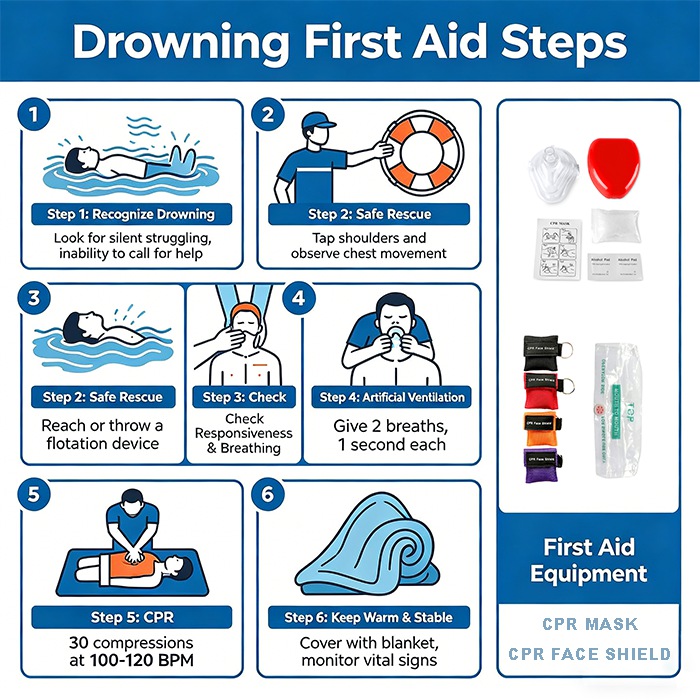
How to Recognize Drowning
Drowning is often silent with no loud splashing or shouting. Victims may stay underwater or float face down. Their arms push down instinctively to breathe, so they cannot wave for help. A quiet child near water is a serious warning sign.
Safe Rescue Tips
Always protect yourself first during a water rescue:
Reach with a pole, rope or float to pull the victim in.
Do not swim to the victim unless you are trained.
Move the victim to dry land fast.
Check Breathing and Consciousness
On dry land:
Tap and shout to check for response.
Open airway with head-tilt, chin-lift.
Watch breathing for 5–10 seconds.
Start life support immediately if not breathing.
Immediate Ventilation Support
Use a bag-valve mask for safe artificial ventilation:
Make a tight mask seal.
Give slow breaths and watch chest rise.
Keep steady ventilation until help arrives.
Early ventilation lowers brain damage risk from oxygen loss.
CPR for Non-Breathing Victims
Start CPR if no pulse and no breathing:
Chest compressions at 100–120 per minute.
Combine with rescue breaths.
Continue nonstop until EMS takes over.
Use jaw-thrust for suspected spinal injuries.
Keep Victim Warm and Stable
Cover with blanket to prevent hypothermia.
Do not give food or drink.
Monitor breathing closely.
Reliable First Aid Equipment
Quality first aid tools are essential for water emergencies. Professional breathing devices speed up ventilation and lower infection risk. Trusted gear is used by lifeguards, coast guards, pools and medical teams worldwide.
Water emergencies happen fast, but correct first aid saves lives. Learn these steps and prepare proper equipment to protect yourself and others.