

Global Demand for Emergency Medical Devices: Growth Trends & Key Drivers (2020–2024)

Author
Experience the Xiamen Tianzuo Medical difference – where every product is a testament to our dedication to health and safety.
Tianzuo Medical


📈 The Big Picture: A Market on the Rise
Over the last five years, the global market for emergency medical devices has grown steadily — not in dramatic spikes, but in a way that feels sustainable.
Think manual resuscitators (BVMs), anti-choking devices, oxygen masks, and first-aid kits. These aren't niche products anymore. They're becoming standard equipment in hospitals, ambulances, workplaces, schools, and even homes.
So what's driving this? Let's break it down.
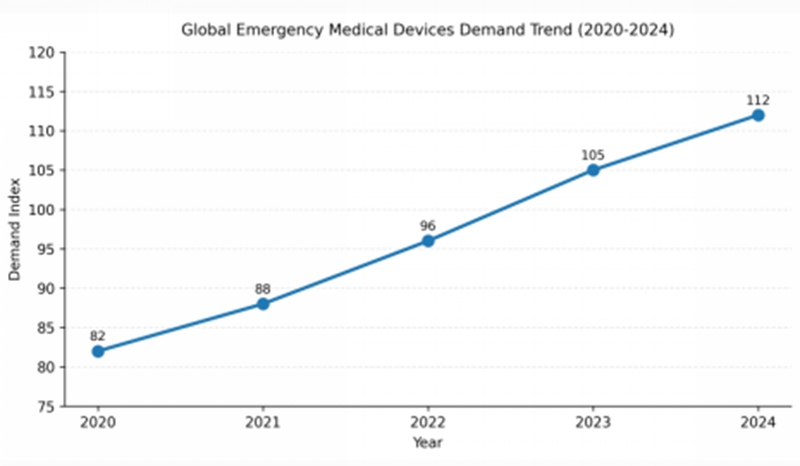
📊 Demand Trend at a Glance (2020–2024)
| Period | Market Trend |
|---|---|
| 2020–2021 | Steady recovery after early market disruption |
| 2021–2023 | Strong growth — safety awareness takes off |
| 2023–2024 | Sustained high demand, especially for portable devices |
📌 The takeaway? This isn't a short-term spike. The market has reset to a higher baseline — and it's staying there.
Note: A visual trend chart is included below.
🔍 What's Fueling the Growth?
1. First Aid Is Finally Getting Attention
Governments, schools, and corporations are investing more in first-aid training and equipment. That means more orders for:
-
Manual resuscitators
-
Anti-choking devices
-
Breathing masks
It's no longer just hospitals buying these. Workplaces and communities are becoming serious buyers.
2. Aging Population = Higher Emergency Risks
Older adults are more vulnerable to choking, cardiac arrest, and respiratory distress.
This creates stable, long-term demand — not just in hospitals, but also in homecare settings. Families want reliable devices on hand.
3. Supply Chains Are Back to Normal
Remember the chaos of 2020–2021? Production and logistics have stabilized.
Now buyers can place regular, larger orders without constant delays. Inventory cycles have shortened, and the market stays active year-round.
4. Regulations Are Getting Stricter — That's a Good Thing
Higher global standards mean buyers are looking for certified, traceable, consistent-quality devices.
If you're a supplier with ISO 13485, FDA registration, or CE marks, you're in a stronger position than ever.
🚀 Which Product Categories Are Growing Fastest?
Demand is strongest in these categories:
| Product Category | Why It's Growing |
|---|---|
| Manual resuscitators (BVM) | Essential for cardiac arrest and respiratory failure |
| Anti-choking rescue devices | Rising awareness of choking risks in all ages |
| Anesthesia & oxygen masks | Used in both clinical and pre-hospital settings |
| Portable first-aid kits | Workplaces, schools, and homes are stocking up |
| Disposable respiratory supplies | Hygiene concerns + ease of use |
These products share three things in common:
✅ Essential
✅ Easy to use
✅ Widely adopted across hospitals, clinics, and households
🧭 What This Means for Buyers (2024–2025)
If you're sourcing emergency medical devices, here's what to keep in mind:
-
Demand will stay strong — no signs of cooling off
-
Quality and supply reliability are your biggest competitive advantages
-
Order early — peak seasons and logistics delays still happen
The buyers who win are the ones who lock in stable, compliant, and responsive suppliers before shortages hit.
✅ Final Takeaway
The global emergency medical device market isn't just growing — it's structurally shifting upward.
Drivers like aging populations, safety awareness, and stricter regulations aren't going away. That means sustained demand for BVMs, anti-choking devices, masks, and kits.
For buyers: choose suppliers who can deliver consistent quality, full compliance, and reliable lead times.
For suppliers: this is your moment to stand out through trust and transparency.
- How to Choose an Endotracheal Tube: Cuffed vs Uncuffed and Size Selection for Buyers
- How to Choose a Tourniquet: Windlass vs Elastic Buckle for First-Aid Buyers
- CPR Mask vs Face Shield: Which First-Aid Item Should You Stock?
- How to Choose an Anesthesia Breathing Circuit: Circle vs Mapleson, Disposable vs Reusable
- How to Use a Three-Ball Spirometer: A Practical Guide for Post-Surgery Breathing Recovery
- How to Choose a Head Immobilizer: A B2B Buyer's Guide for EMS and Hospital Procurement
- High-Flow Nasal Cannula (HFNC): How It Works and When to Choose It Over a Standard Oxygen Mask
- Nasal Oxygen Cannula: The Quiet Workhorse of Oxygen Therapy (and How to Spec It Right)