How to Choose an Anti-Choking Device: A Buyer's Guide for Homes, Schools, and Distributors
Aug, 25 2026
In this article
An anti-choking device is a handheld suction tool that pulls a lodged piece of food or foreign object out of the airway when back blows and abdominal thrusts have not cleared it. This guide explains how the device works, where it sits in the response chain, and the selection points that matter for homes, schools, care facilities, and bulk B2B procurement.
What an Anti-Choking Device Actually Does
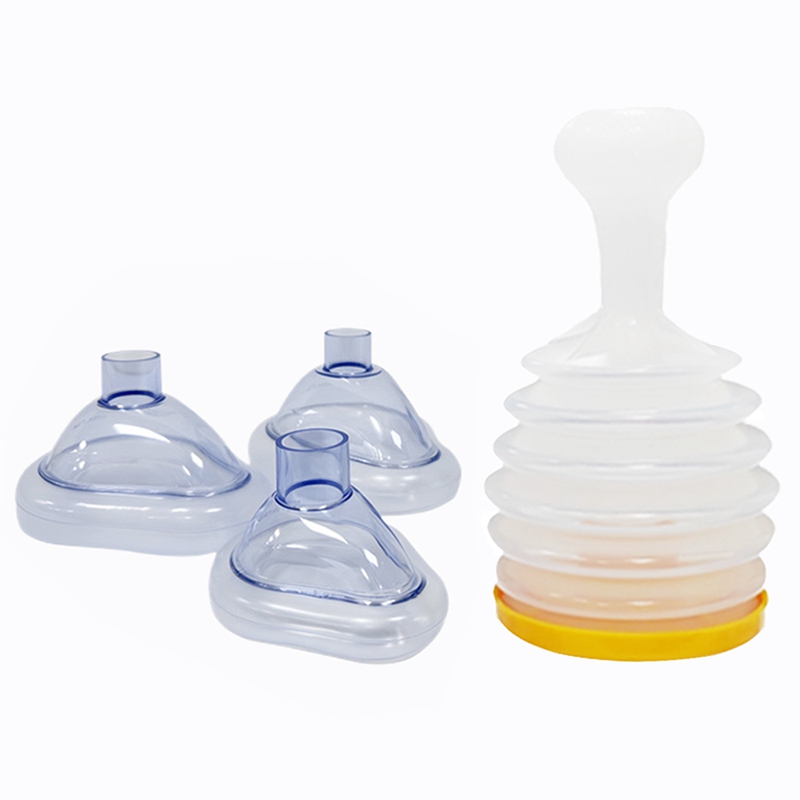
Most people know the Heimlich manoeuvre — it drives air up from the lungs to pop an obstruction free. A suction-based anti-choking device works from the opposite direction. It is a handheld unit built around a clear chamber, a plunger or pump handle, and a face mask. You place the mask over the casualty's mouth and nose to form a seal, then pull the handle to generate controlled negative pressure inside the airway. That vacuum draws the stuck object back up and out, rather than pushing it from below.
The appeal is straightforward: when standard first aid has failed, or when the person is unconscious and abdominal thrusts are no longer an option, a direct suction pull can clear an airway in seconds. A transparent chamber lets the responder see the object clear, and because the unit is mechanical, it can be cleaned and reused after the event. It is a physical rescue tool, not a medicine, and it needs no power to operate.
Where It Fits in the Choking Response Chain
Get the order right, because the device is a backup, not a first move. Recognise severe choking — the person cannot speak, cough, or breathe. Start with five sharp back blows between the shoulder blades. If that fails, move to abdominal thrusts (Heimlich) for adults and children over one year, or chest thrusts for infants. Only when those steps do not work, or the casualty goes unconscious, do you reach for the suction device. Call emergency services in parallel throughout.
Treating it as a second-line tool matters for two reasons. First, established protocols clear most obstructions without any device. Second, regulators and first-aid bodies position suction devices exactly here — as the option you keep for the moment everything else has run out. A distributor explaining this to a buyer builds far more trust than one promising the device replaces trained response.
Mask Fit: The Detail That Decides Success
The seal is everything. A mask that leaks lets the vacuum escape, and the pull fails exactly when it matters most. Look for medical-grade silicone that conforms to the face, not hard plastic that lifts at the edges. Practical kits ship two mask sizes — one for adults, one for children — so a single unit covers a household or a classroom. Confirm the labelled age range before you stock it; suction devices are generally sized for ages one year and up and are not intended for infants under twelve months, who should receive back blows and chest thrusts only.
For buyers sourcing at volume, mask identification also drives training. Masks should be colour-coded or clearly sized and stored with the device, so a stressed responder grabs the right one without thinking.
Single-Action Simplicity and Battery-Free Design
In a choking emergency nobody reads the manual. The operation path should be brutally short: attach the correct mask, place it, pull. A single firm pull that generates the vacuum in one motion beats any multi-step setup when seconds count. Equally important for bulk deployment, the best units are mechanical — no batteries, no charging, no replacement filters or consumables to track. A device that sits in a kitchen drawer for two years and still works on pull number one is worth more than a feature-rich one that needed maintenance nobody performed.
Matching the Device to the Setting
The right unit is the one that is actually present and reachable when needed.
Home: keep it near the main eating area, understood by more than one adult.
School / daycare: distance is the enemy — distribute compact kits to cafeterias, classrooms, and buses rather than one central point.
Restaurant: staff should know the location and have practised the two-step pull.
Senior care: dysphagia, dentures, and a weaker cough make choking more likely; easier handling and bedside standby placement matter most.
Travel / car: a small, sealed kit that lives in a glove box or bag beats a bulky unit left at home.
For any of these sites, the strongest product is the one that removes search and confusion from the responder's hands — visible, identified, and practised.
Certifications and What They Really Mean
Buyers should verify claims rather than trust marketing language. A device may be described as "FDA approved" when, in FDA terms, it is merely registered or listed — registration is not approval or clearance. For a credible supplier, look for CE marking and manufacturing under ISO 13485, the quality standard for medical devices, plus transparent documentation you can show a tender board or a hospital procurement lead. Multilingual instructions and clear pictograms also matter for non-English-speaking users and travellers. A manufacturer that drafts its own clinical review guidance, as Tianzuo Medical has for resuscitation equipment, signals the kind of engineering discipline worth backing.
Related Products
TW8648 Choke Suction DeviceView product →TW8648-B Portable Suction DeviceView product →TW8342 Resuscitation Mask with One-Way ValveView product →TW8111 Adult Silicone Manual ResuscitatorView product →TW8374 PVC Anesthesia Masks with Ultra-Soft CushionView product →
Why Partner With Tianzuo Medical
Xiamen Tianzuo Medical is a one-stop manufacturer integrating R&D, molding, and production across emergency, anesthesia, and respiratory lines — and OEM / ODM is our forte. For distributors, wholesalers, and tender buyers, that means private-label programs, flexible MOQs, and bulk orders backed by consistent supply rather than one-off purchases.
Our facility operates under ISO 13485:2016, with CE and FDA-listed products, and our team helped draft China's *Guidelines for the Technical Review of Manual Resuscitator Registration*. Whether you are equipping retail shelves, school districts, or care-home networks, we can match configurations, packaging, and export documentation to your market.
Ready to discuss volumes, lead times, or a custom build? Reach our procurement team at https://www.tianzuomedical.com/contact-us or email Stephen@tzmed.com directly. We respond to B2B inquiries quickly and can arrange samples for qualified distributors.
Frequently Asked Questions
How does an anti-choking device work?
It is a handheld suction tool with a chamber, plunger, and face mask; placing the mask and pulling the handle generates negative pressure that draws a lodged object back out of the airway, working from the opposite direction to abdominal thrusts.
Should the device replace the Heimlich manoeuvre?
No. It is a second-line backup used only after back blows and abdominal thrusts fail, or if the casualty becomes unconscious; standard first-aid protocols remain the first response.
Can one device serve both adults and children?
Most kits include two mask sizes — adult and child — so a single unit covers the family, but check the labelled age range; suction devices are generally for ages one year and up and are not for infants under twelve months.
Do anti-choking devices need batteries or consumables?
The practical mechanical units are battery-free and need no filters or replacement parts, which is why they suit long standby storage in homes, vehicles, and care facilities.
What certifications should a buyer verify?
Look for CE marking and ISO 13485 manufacturing; be cautious with "FDA approved" claims since FDA registration or listing is not the same as approval or clearance, and ask the supplier for verifiable documentation.