manual resuscitator manufacturer

choking rescue device

  • How to Choose an Anti-Choking Device: A Buyer's Guide for Homes, Schools, and Distributors
    How to Choose an Anti-Choking Device: A Buyer's Guide for Homes, Schools, and Distributors
    Aug, 25 2026
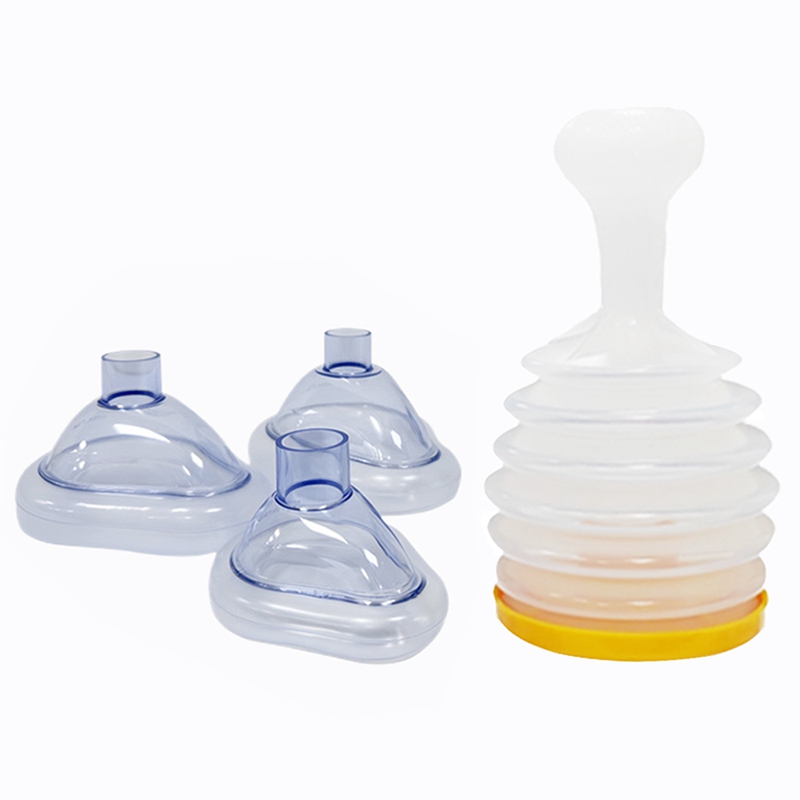
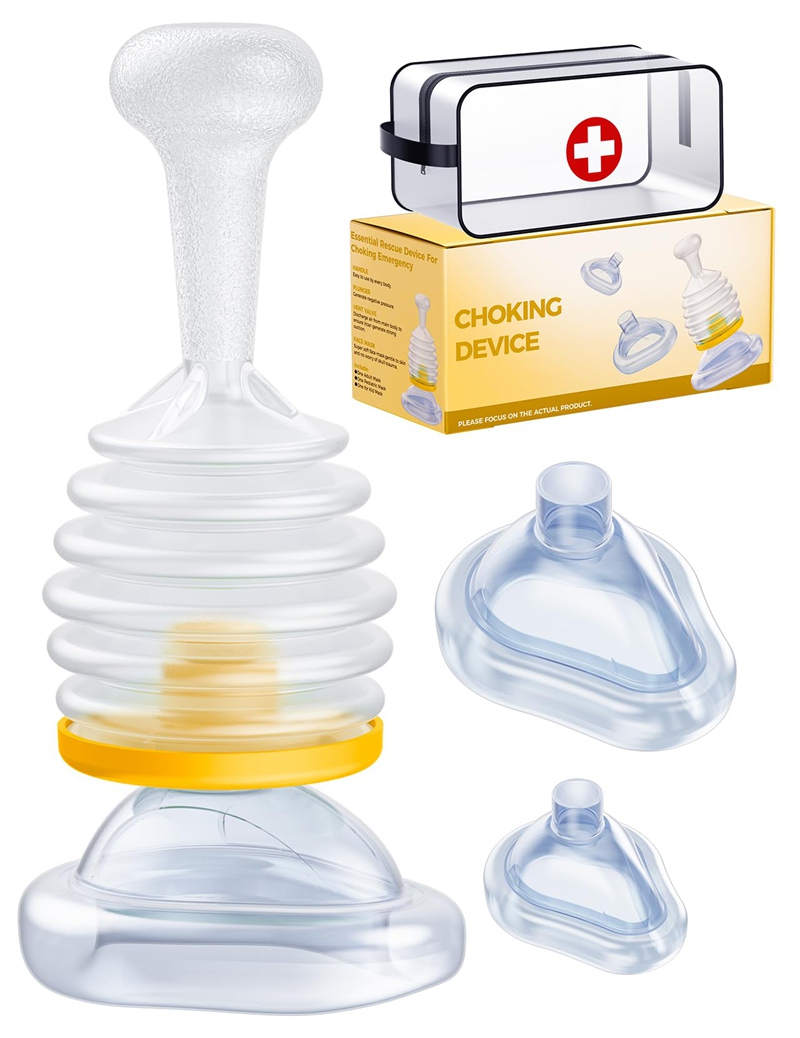
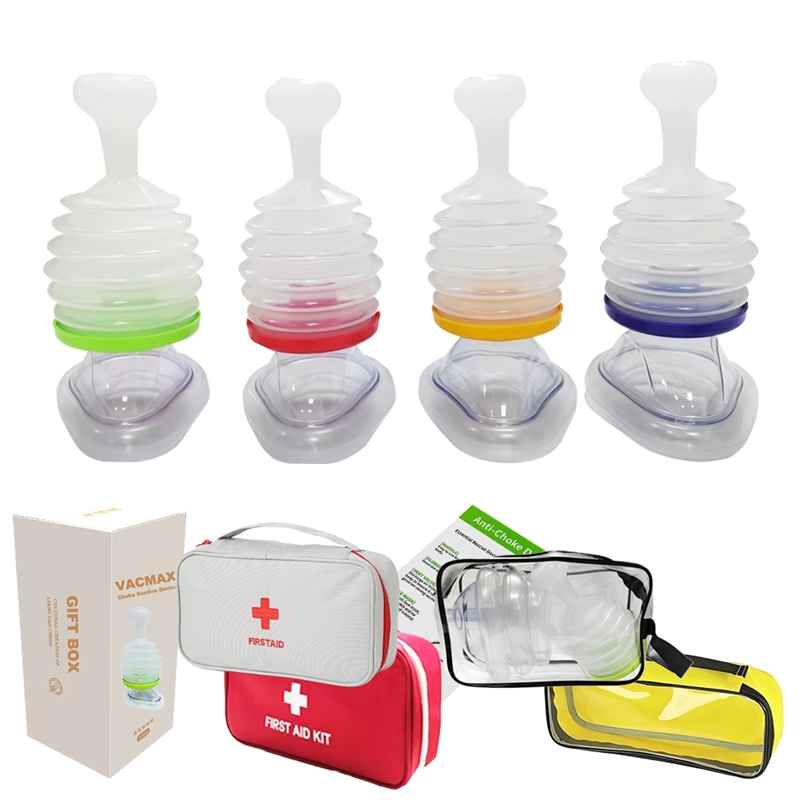
      In this article An anti-choking device is a handheld suction tool that pulls a lodged piece of food or foreign object out of the airway when back blows and abdominal thrusts have not cleared it. This guide explains how the device works, where it sits in the response chain, and the selection points that matter for homes, schools, care facilities, and bulk B2B procurement. What an Anti-Choking Device Actually Does Most people know the Heimlich manoeuvre — it drives air up from the lungs to pop an obstruction free. A suction-based anti-choking device works from the opposite direction. It is a handheld unit built around a clear chamber, a plunger or pump handle, and a face mask. You place the mask over the casualty's mouth and nose to form a seal, then pull the handle to generate controlled negative pressure inside the airway. That vacuum draws the stuck object back up and out, rather than pushing it from below. The appeal is straightforward: when standard first aid has failed, or when the person is unconscious and abdominal thrusts are no longer an option, a direct suction pull can clear an airway in seconds. A transparent chamber lets the responder see the object clear, and because the unit is mechanical, it can be cleaned and reused after the event. It is a physical rescue tool, not a medicine, and it needs no power to operate. Where It Fits in the Choking Response Chain Get the order right, because the device is a backup, not a first move. Recognise severe choking — the person cannot speak, cough, or breathe. Start with five sharp back blows between the shoulder blades. If that fails, move to abdominal thrusts (Heimlich) for adults and children over one year, or chest thrusts for infants. Only when those steps do not work, or the casualty goes unconscious, do you reach for the suction device. Call emergency services in parallel throughout. Treating it as a second-line tool matters for two reasons. First, established protocols clear most obstructions without any device. Second, regulators and first-aid bodies position suction devices exactly here — as the option you keep for the moment everything else has run out. A distributor explaining this to a buyer builds far more trust than one promising the device replaces trained response. Mask Fit: The Detail That Decides Success The seal is everything. A mask that leaks lets the vacuum escape, and the pull fails exactly when it matters most. Look for medical-grade silicone that conforms to the face, not hard plastic that lifts at the edges. Practical kits ship two mask sizes — one for adults, one for children — so a single unit covers a household or a classroom. Confirm the labelled age range before you stock it; suction devices are generally sized for ages one year and up and are not intended for infants under twelve months, who should receive back blows and chest thrusts only. For buyers sourcing at volume, mask identification also drives training. Masks should be colour-coded or clearly sized and stored with the device, so a stressed responder grabs the right one without thinking. Single-Action Simplicity and Battery-Free Design In a choking emergency nobody reads the manual. The operation path should be brutally short: attach the correct mask, place it, pull. A single firm pull that generates the vacuum in one motion beats any multi-step setup when seconds count. Equally important for bulk deployment, the best units are mechanical — no batteries, no charging, no replacement filters or consumables to track. A device that sits in a kitchen drawer for two years and still works on pull number one is worth more than a feature-rich one that needed maintenance nobody performed. Matching the Device to the Setting The right unit is the one that is actually present and reachable when needed. Home: keep it near the main eating area, understood by more than one adult. School / daycare: distance is the enemy — distribute compact kits to cafeterias, classrooms, and buses rather than one central point. Restaurant: staff should know the location and have practised the two-step pull. Senior care: dysphagia, dentures, and a weaker cough make choking more likely; easier handling and bedside standby placement matter most. Travel / car: a small, sealed kit that lives in a glove box or bag beats a bulky unit left at home. For any of these sites, the strongest product is the one that removes search and confusion from the responder's hands — visible, identified, and practised. Certifications and What They Really Mean Buyers should verify claims rather than trust marketing language. A device may be described as "FDA approved" when, in FDA terms, it is merely registered or listed — registration is not approval or clearance. For a credible supplier, look for CE marking and manufacturing under ISO 13485, the quality standard for medical devices, plus transparent documentation you can show a tender board or a hospital procurement lead. Multilingual instructions and clear pictograms also matter for non-English-speaking users and travellers. A manufacturer that drafts its own clinical review guidance, as Tianzuo Medical has for resuscitation equipment, signals the kind of engineering discipline worth backing. Related Products TW8648 Choke Suction DeviceView product →TW8648-B Portable Suction DeviceView product →TW8342 Resuscitation Mask with One-Way ValveView product →TW8111 Adult Silicone Manual ResuscitatorView product →TW8374 PVC Anesthesia Masks with Ultra-Soft CushionView product → Why Partner With Tianzuo Medical Xiamen Tianzuo Medical is a one-stop manufacturer integrating R&D, molding, and production across emergency, anesthesia, and respiratory lines — and OEM / ODM is our forte. For distributors, wholesalers, and tender buyers, that means private-label programs, flexible MOQs, and bulk orders backed by consistent supply rather than one-off purchases. Our facility operates under ISO 13485:2016, with CE and FDA-listed products, and our team helped draft China's *Guidelines for the Technical Review of Manual Resuscitator Registration*. Whether you are equipping retail shelves, school districts, or care-home networks, we can match configurations, packaging, and export documentation to your market. Ready to discuss volumes, lead times, or a custom build? Reach our procurement team at https://www.tianzuomedical.com/contact-us or email Stephen@tzmed.com directly. We respond to B2B inquiries quickly and can arrange samples for qualified distributors. Frequently Asked Questions How does an anti-choking device work? It is a handheld suction tool with a chamber, plunger, and face mask; placing the mask and pulling the handle generates negative pressure that draws a lodged object back out of the airway, working from the opposite direction to abdominal thrusts. Should the device replace the Heimlich manoeuvre? No. It is a second-line backup used only after back blows and abdominal thrusts fail, or if the casualty becomes unconscious; standard first-aid protocols remain the first response. Can one device serve both adults and children? Most kits include two mask sizes — adult and child — so a single unit covers the family, but check the labelled age range; suction devices are generally for ages one year and up and are not for infants under twelve months. Do anti-choking devices need batteries or consumables? The practical mechanical units are battery-free and need no filters or replacement parts, which is why they suit long standby storage in homes, vehicles, and care facilities. What certifications should a buyer verify? Look for CE marking and ISO 13485 manufacturing; be cautious with "FDA approved" claims since FDA registration or listing is not the same as approval or clearance, and ask the supplier for verifiable documentation.

  • How Does an Anti-Choking Device Work? A Practical Guide for Clinics, Schools, and Distributors
    How Does an Anti-Choking Device Work? A Practical Guide for Clinics, Schools, and Distributors
    Aug, 13 2026
      In this article Summary: Choking is a leading cause of accidental injury death, yet the standard Heimlich maneuver isn't safe or effective for everyone—infants, the elderly, pregnant women, and people in wheelchairs included. An anti-choking device (also called a choking rescue or suction device) offers a non-invasive backup that uses negative pressure to pull a blockage free. This guide explains how it works step by step, how it compares with abdominal thrusts, who should stock one, and what distributors should check before sourcing. Why Choking Rescue Devices Are Gaining Attention In the United States, choking is the fourth leading cause of unintentional injury death, and for infants under one year it is the top preventable-injury killer. The Heimlich maneuver has saved countless lives since 1974, but it relies on rescuer strength and correct technique—and it can cause rib fractures or internal injury in frail patients. That gap is why schools, care homes, and restaurants are now adding suction-type rescue devices to their first-aid kits, and why several U.S. states have begun mandating them on school campuses. How an Anti-Choking Device Works The principle is simple: instead of pushing air in (like abdominal thrusts), the device pulls the obstruction out with suction. A typical unit—our TW8648 choke suction device follows this design—has four parts: Face mask: Placed over the nose and mouth to form an airtight seal. One-Way Valve: Stops air from being pushed further into the airway. Plunger / suction pump: Depress to clear air, then pull back to generate negative pressure. Transparent tube: Lets the rescuer see the dislodged object. In use, you place the mask, press the plunger down to expel air, then pull it up to create suction. If the first attempt doesn't clear the blockage, repeat the push-pull motion without removing the mask. Most lay users can assemble and operate the device within roughly three minutes—inside the window before hypoxia causes harm. Anti-Choking Device vs. the Heimlich Maneuver They aren't competitors; they're layers of defense. Guidelines still put back blows and abdominal thrusts first. The device is the *second-line* option when those fail, or when the rescuer can't safely apply them—think a pregnant woman, a frail senior with osteoporosis, or an infant whose ribs are too delicate for thrusts. Because suction is gentler than compressions, it's also easier for an untrained bystander to attempt without causing injury. One caveat distributors should communicate: these devices should supplement, not replace, standard first-aid training. Buyers should stock them alongside, not instead of, CPR and choking education. Who Should Stock One Schools and daycare centers: Where young children choke most often. Care and nursing homes: For residents who can't tolerate abdominal thrusts. Restaurants and gyms: High-risk public settings with mixed-age crowds. Home and travel kits: Especially for families with infants or elderly relatives. Clinics and ambulances: As a documented backup in the airway algorithm. What to Look for When Sourcing an Anti-Choking Device If you're a distributor or procurement lead evaluating suppliers, check these points: Clear one-way valve and airtight mask seal — the core of safe operation. Transparent chamber so rescuers see the extracted object. Adult and pediatric mask options in one kit where possible. Simple, pictogram-based instructions for untrained users. Certifications and QC — work with a manufacturer running ISO 13485 processes and able to supply test documentation. Related Products Choke Suction Device (TW8648)— portable, non-invasive airway clearance.View product →Portable Suction Device (TW8648-B)— backup for pre-hospital airway care.View product →Resuscitation Mask with One-Way Valve (TW8342)— pairs with CPR response.View product →Adjustable Cervical Support Collar (TW5002)— broader first-aid immobilization line.View product → Why Partner With Tianzuo Medical As a vertically integrated manufacturer of emergency, anesthesia, and respiratory products, Xiamen Tianzuo Medical brings the same quality system to airway devices as to our flagship resuscitators: ISO 13485:2016, CE, and FDA-listed production, plus in-house molding and OEM/ODM support. For wholesalers and brand owners, we offer private labeling, flexible MOQs, and the documentation needed for tenders and retail compliance. If you're adding choking rescue devices to your catalogue, reach our team for pricing, samples, and customization options, or email Stephen@tzmed.com. Frequently Asked Questions How does an anti-choking device remove a blockage? It creates negative pressure (suction) through a sealed mask and one-way valve, pulling the obstructing object back out of the airway rather than pushing it deeper. Can it replace the Heimlich maneuver? No. Current guidance treats it as a second-line tool after back blows and abdominal thrusts fail, or when those aren't safe to perform. Is an anti-choking device safe for infants? Yes—pediatric masks make it suitable for young children and infants, who are among the groups least able to tolerate the Heimlich maneuver. Do these devices require training to use? Basic. Most lay users can assemble and operate one within about three minutes following the pictogram instructions, but standard first-aid training remains recommended. Can Tianzuo Medical supply anti-choking devices under our brand? Yes. We provide OEM/ODM manufacturing with private labeling, certifications support, and export documentation.
  • How Anti-Choking Devices Can Save Lives: A Guide for Every Household
    How Anti-Choking Devices Can Save Lives: A Guide for Every Household
    May, 27 2026
    Choking is a silent, fast-moving emergency that can affect anyone—children, the elderly, and even healthy adults. When food or objects block the airway, every second counts. Traditional methods like back blows and abdominal thrusts require strength and proper technique, and they may not work for everyone. This is where an anti-choking device becomes a simple, reliable life-saving solution for every home, school, and workplace.       Why Choking Emergencies Need More Than First Aid Moves  Choking often happens unexpectedly: during meals, with small toys, or even while talking and laughing. Standard first aid steps like the Heimlich maneuver require precise force and training, and they can be difficult to perform on young children, older adults, or people with limited mobility. An anti-choking device is designed to solve these challenges, offering a safe, effective alternative that works without physical strain or advanced training.   How Our Anti-Choking Device Works  The anti-choking device creates controlled suction to remove airway obstructions safely and quickly. Easy to Use by Anyone: No professional medical training is required. With simple, intuitive steps, even untrained users can operate it in an emergency. Safe for All Ages: Suitable for both adults and children, it features a soft, flexible mask that fits comfortably over the nose and mouth without damaging facial tissue. Effective Suction Technology: The pump-style design generates strong, steady negative pressure to pull out food, bones, or other foreign objects blocking the airway.   No Harmful Side Effects: Unlike aggressive first aid methods, the device does not require back blows, chest compressions, or invasive maneuvers, making it gentle on the patient’s body.   Step-by-Step: How to Use the Anti-Choking Device  Using the device takes just three simple steps: 1. Create a Seal: Place the mask firmly over the choking person’s nose and mouth to form a tight, air-tight fit. 2. Prepare the Suction: Press down on the pump handle to expel air from the device, ensuring no air is pushed into the patient’s airway. 3. Apply Suction: Pull the handle upward to create strong suction. This draws the obstruction out of the airway. If the object does not come out on the first try, repeat the process without removing the mask until help arrives.     Why Every Home Should Have an Anti-Choking Device  Choking can happen to anyone, anywhere. Having an anti-choking device on hand provides: Peace of Mind for Families: Especially for households with young children or elderly family members, who are most at risk. Reliability in Emergencies: The device works when other methods fail, giving you a safe, clear way to help someone before professional help arrives.   Ease of Storage: Compact and portable, it can be kept in kitchen drawers, first aid kits, or even taken on trips to restaurants or family gatherings.   Conclusion  When every second matters, the anti-choking device is more than just a tool—it’s a simple, effective safety net for choking emergencies. With its easy-to-use design, safe operation, and proven effectiveness, it empowers anyone to act confidently and save a life. Keeping one in your home, school, or workplace isn’t just preparation—it’s peace of mind for you and the people you care about.  
Sign Up To Get The Latest updates

Please read on, stay posted, subscribe and we welcome you to tell us what you think

leave a message

leave a message
Ready to scale your medical business? Click here to get a free quote & catalog!
submit

Home

Products

WhatsApp

contact

Tell us your requirements (e.g., Quantity, Destination Port)
leave a message
Ready to scale your medical business? Click here to get a free quote & catalog!
Submit