How to Build a First-Aid Kit: A Buyer's Guide
Nov, 12 2026
How to Build a First-Aid Kit: A Buyer's Guide
T
Published 2026-11-12 · By Tianzuo Medical Team
Facebook
LinkedIn
Instagram
YouTube
In this article
A well-built first-aid kit shortens the gap between an emergency and effective care—but the right kit reflects your population and risk, not a generic checklist. This buyer's guide walks procurement and safety leads through the core kit categories, how to match a kit to schools, workplaces, and EMS, and the compliance checklist that keeps a facility audit-ready.
What belongs in a modern first-aid kit—and why it matters
Airway and CPR: masks, face shields, and the anti-choking device
Bleeding control: tourniquets and pressure dressings
Immobilization: cervical collars, head immobilizers, and air splints
Matching the kit to schools, workplaces, and EMS
Quality, compliance, and a procurement checklist
What Belongs in a Modern First-Aid Kit—and Why It Matters
A first-aid kit is only as good as the decisions behind it. The goal is to standardize care and cut response time, so the right kit is built around your population and the hazards they actually face—a classroom is not a factory floor, and an ambulance is not a restaurant kitchen. We group a complete kit into four categories: airway and CPR, bleeding control, immobilization, and a second-line airway-clearance device for choking.
Procurement teams should resist the temptation to buy a one-size-fits-all box. Instead, define the settings you must cover (classrooms, dining areas, workshops, vehicles, treatment rooms), then assemble a kit that places the right item within seconds of the person who needs it. The rest of this guide breaks each category down so you can specify—and consolidate—with confidence.
Airway and CPR: Masks, Face Shields, and the Anti-Choking Device
Every kit needs a barrier layer for rescue breathing and a one-way-valve TW8340 CPR face shield—a simple, latex-free barrier that protects the rescuer during mouth-to-mask ventilation. Pair it with a reusable or disposable CPR mask so training and real response use the same interface.
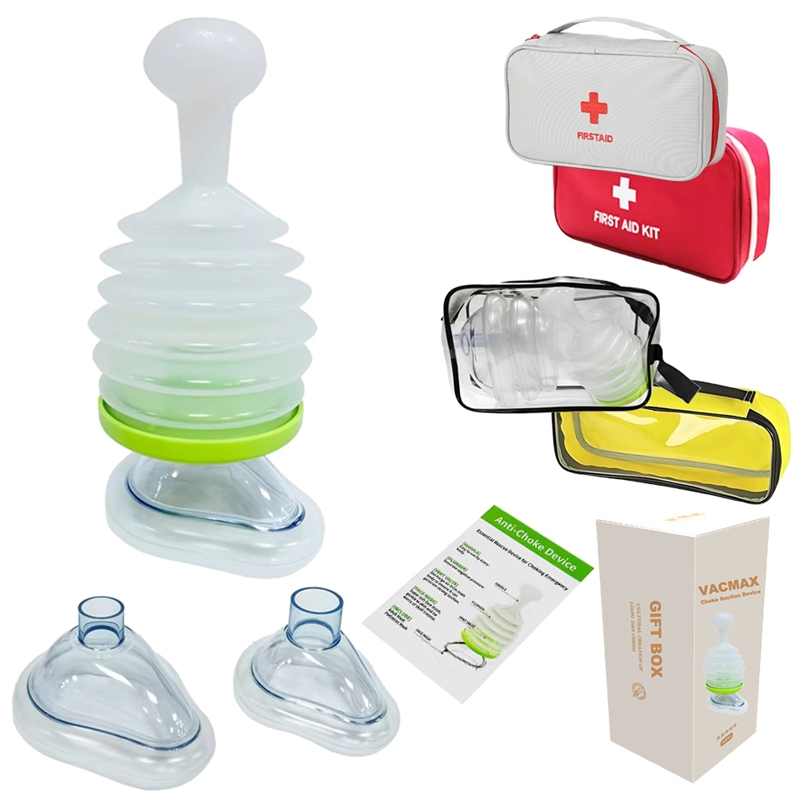
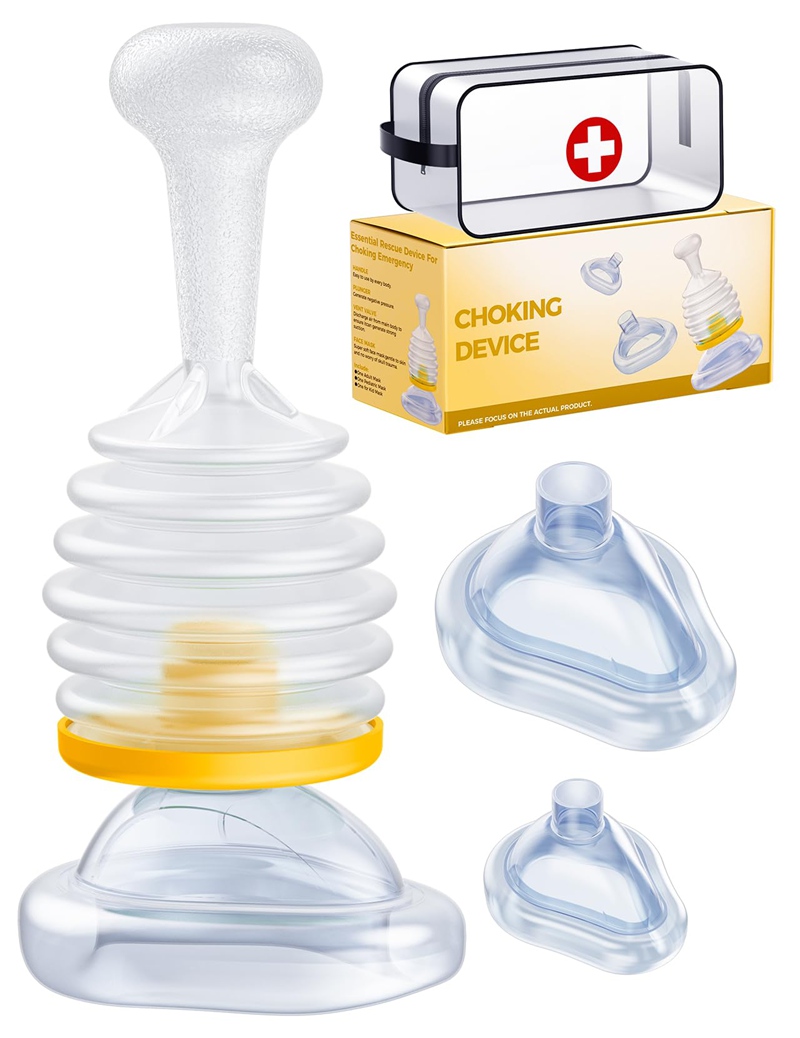
The centerpiece of the airway category is our flagship TW8648 anti-choking device: a non-electric, non-invasive suction tool with a built-in one-way valve and interchangeable adult and pediatric masks. It is important to be precise about its role—an anti-choking device is a second-line intervention used only after standard first aid (coughing, back blows, abdominal thrusts, and CPR if unresponsive) has not cleared the obstruction.
The TW8648 anti-choking device—the second-line airway-clearance centerpiece of a complete first-aid kit, with adult and child masks and a one-way valve.
Bleeding Control: Tourniquets and Pressure Dressings
Severe limb bleeding is one of the few first-aid emergencies where seconds change outcomes, so a credible kit includes a fast, one-handed tourniquet. The TW8634 fast-release tourniquet uses an ABS buckle and adjustable pressure so a single rescuer can apply it under stress, with no complicated windlass drill required for basic use.
For less catastrophic wounds, pair the tourniquet with sterile pressure dressings and trauma shears so responders can expose and pack a wound. In a workplace or public setting, stage bleeding-control items where they are visible and drill their use alongside your choking and CPR response—the three together cover the majority of life-threatening events outside a hospital.
A TW8634 fast-release tourniquet—the bleeding-control layer that completes a workplace or public first-aid kit.
Immobilization: Cervical Collars, Head Immobilizers, and Air Splints
Trauma and suspected spinal injury call for immobilization gear. A TW5002 adjustable cervical collar holds neutral spine alignment during transport, while a head immobilizer blocks lateral movement when used with a backboard. For fractures and soft-tissue injury, inflatable air splints stabilize a limb without restricting circulation and are X-ray permeable for hospital hand-off.
These items matter most for EMS, school athletic programs, and industrial sites where falls and collisions occur. They are lower-frequency than bleeding or choking gear, but when needed they prevent secondary injury and make extrication safer. Keep them in a clearly marked trauma compartment so they are never confused with everyday dressings.
A TW8340 CPR face shield—the barrier layer that supports rescue breathing alongside the anti-choking device.
Matching the Kit to Schools, Workplaces, and EMS
Match format to setting. Schools and childcare need fixed wall stations in cafeterias and nurse offices plus portable pouches for field trips; restaurants and foodservice want a visible kitchen-and-dining unit; offices and factories stage kits by hazard zone and headcount; and EMS and clinics fold the same items into standardized response bags. The device that is locked in a cabinet is technically owned but operationally unavailable—retrieval distance beats a premium price tag.
For mixed-age environments, confirm every item covers infants through adults: the TW8648 ships with adult (4#) and pediatric (2#) masks, and CPR shields and collars come in sizes for the youngest and oldest people you serve. Assign a named owner, a monthly inspection, and a short drill that assigns who starts care, who calls emergency services, and who brings the kit.
Quality, Compliance, and a Procurement Checklist
Before you standardize, verify the basics across every item: CE marking, ISO 13485:2016 quality-management certification, and FDA listing for the relevant product line; latex-free materials where specified; and batch-level traceability. Request the current instructions for use (IFU), training materials, and a clear policy on replacement parts and post-use support, then document the review date. The first-aid range from Xiamen Tianzuo Medical is supplied CE-marked under ISO 13485:2016 with FDA-listed documentation, every unit pressure- and leak-tested before shipment.
A practical six-step checklist: (1) define the settings and populations you cover; (2) confirm mask and size coverage for every age; (3) choose fixed, portable, or both by retrieval plan; (4) verify one-way-valve and non-invasive designs; (5) confirm certification and latex-free status; (6) confirm OEM/private-label, MOQ, and after-sales support. For deeper category detail, our guides on choosing a tourniquet and specifying a cervical collar walk individual items in more depth.
Why a Coordinated Kit Beats a Drawer of Singles
The biggest hidden cost of first aid is fragmentation: multiple suppliers, mismatched packaging, and training that does not transfer between items. Consolidating your airway, bleeding, and immobilization gear from one factory-direct manufacturer simplifies compliance paperwork, keeps connector and labeling standards consistent, and reduces the number of vendors to audit. It also makes zoning—fixed stations plus mobile pouches—trivial, because every kit shares the same parts.
For buyers running a multi-site program, sourcing as a coordinated kit rather than ad-hoc singles is the difference between a shelf that looks stocked and a program that actually saves time when it counts. Standardize the list, standardize the training, and standardize the supplier.
Related Products
TW8648 Anti-Choking Device
Non-electric suction device, adult & pediatric masks, one-way valve.
View product →
TW8340 CPR Face Shield
One-way-valve barrier for rescue breathing and CPR training.
View product →
TW8634 Tourniquet
Fast-release ABS buckle for emergency limb bleeding control.
View product →
TW5002 Cervical Collar
Adjustable extrication collar for spine immobilization.
View product →
Why Partner With Tianzuo Medical
Xiamen Tianzuo Medical Co., Ltd. is a factory-direct manufacturer of first-aid and emergency devices, serving hospital procurement teams, distributors, schools, and OEM/ODM partners across more than 30 markets. Our first-aid range—anti-choking devices, CPR masks and face shields, tourniquets, cervical collars, air splints, and head immobilizers—is built on ISO 13485:2016 quality management, with CE marking and FDA-listed documentation available per product line.
We support low minimum order quantities, private-label and customization programs, and consolidated shipping so you can standardize your emergency kits and reduce SKU complexity across every location. Every device is supplied with current instructions for use and batch traceability.
Ready to spec your next order? Contact our team or email Stephen@tzmed.com for a factory-direct quote, samples, and a tailored first-aid kit configuration.
Frequently Asked Questions
What should be in a basic workplace first-aid kit?
A complete kit covers four categories: airway and CPR (a CPR face shield or mask), a second-line anti-choking device such as the TW8648, bleeding control (a tourniquet and pressure dressings), and immobilization (a cervical collar, head immobilizer, and air splints for trauma). Match quantities and sizes to your population.
Is an anti-choking device required in a school or restaurant kit?
It is not a universal legal mandate everywhere, but an anti-choking device is increasingly standard because choking is a leading cause of accidental injury where people eat. Treat it as a second-line tool used only after standard first aid has not cleared the obstruction, and pair it with trained responders and posted protocols.
Do Tianzuo first-aid products need power or batteries?
No. The TW8648 anti-choking device is non-electric and non-invasive, operated by a simple plunger and one-way valve, so there is nothing to charge or fail. CPR shields and collars are likewise passive devices.
Are Tianzuo first-aid products latex-free and certified?
Products are supplied latex-free where specified, and the first-aid range is built under ISO 13485:2016 quality management with CE marking and FDA-listed documentation available per product line. Full material declarations and batch traceability are provided with each order.
Can Tianzuo supply OEM/ODM and low-MOQ first-aid kit orders?
Yes. We offer factory-direct OEM/ODM, private labeling, and low minimum order quantities across the first-aid catalog, with consolidated shipping so you can standardize kits by zone and reduce supplier complexity.
First-Aid Kit
Workplace Safety
Anti-Choking Device