Air Splints: Simple Device, but Only If You Use It Right
Jun, 08 2026
Let‘s Start with a Real Scene
You’re on scene. A patient has a suspected forearm fracture. They’re in pain. They need to be moved.
You pull out an air splint. Wrap it around. Pump it up.
Looks good. Feels secure.
But five minutes later, you check again. The splint feels softer. The immobilization isn’t as tight. What happened?
That‘s not a rare story. And it’s not always user error. Sometimes it‘s the splint itself.
What Is an Air Splint, Really?
An air splint is basically a double-walled plastic or vinyl sleeve. You wrap it around an injured limb, inflate it with a pump or your mouth (yes, some models let you do that), and it hardens just enough to stabilize the fracture.
No hinges. No complicated buckles. Just air pressure.
That simplicity is its superpower. But it’s also where things go wrong.
The Two Most Common Problems We’ve Seen
We make air splints. We also get calls from distributors who ask: “Why are my customers complaining?”
Ninety percent of the time, it’s one of these two.
1. Slow Leaks
Some splints lose pressure after 10–15 minutes. Not because the user did anything wrong. Because the seam welding wasn‘t strong enough.
You don’t notice it when you first inflate. But after a few minutes? The limb starts moving again. That defeats the whole point.
Good splints hold pressure for at least 30 minutes without needing a top-up. Bad ones? You‘ll be pumping every few minutes.
2. The Zipper or Velcro Gives Up
The splint itself might be fine. But the closure fails.
Velcro gets clogged with dirt and doesn’t stick. Zippers get stuck or break halfway.
Then you‘re left with a perfectly inflated splint that won’t stay wrapped. Frustrating, right?
That‘s why we use heavy-duty zippers and oversized Velcro strips on ours. It sounds small. But in the field? It makes a difference.
Where Do Air Splints Actually Get Used?
Not just ambulances. Here’s where we see them most:
Setting
Typical Use
Emergency medical services (EMS)
Fracture stabilization before transport
Sports medicine
Sideline injuries — ankle, wrist, forearm
Clinics & urgent care
Temporary immobilization while prepping for casting
Military & field hospitals
Lightweight, packable option for remote settings
Home care kits
For families with elderly members at fall risk
So even if you’re not selling to big hospitals, there‘s still a market.
What to Look for When You Buy Air Splints
If you’re sourcing these for resale or clinical use, skip the fancy marketing. Check these instead.
✅ Seam Strength
This is the #1 hidden failure point. Weak seams = slow leaks.
Ask your supplier: What‘s your welding process? If they can’t answer clearly, be careful.
✅ Valve Quality
The valve is where you pump air in. Cheap valves leak. Or they‘re hard to operate with gloves on.
Test it. Pump it up. Leave it for 20 minutes. Check again.
✅ Sizing Options
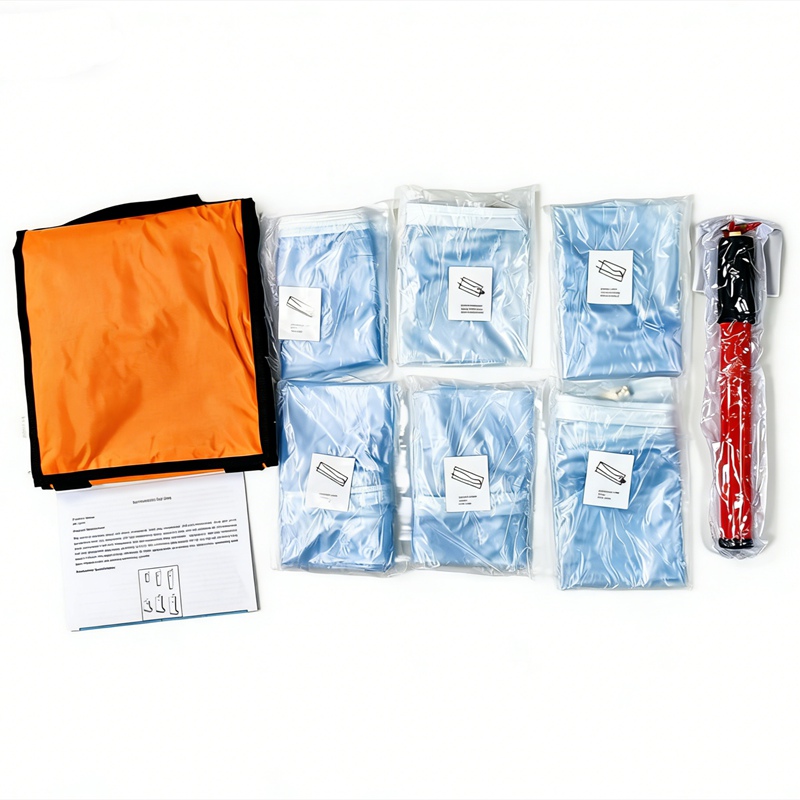
Standard sets usually include:
Arm splint (for forearm and wrist)
Leg splint (for lower leg and ankle)
Ankle/foot splint (smaller)
If a supplier only offers one size — ask why.
✅ X-Ray Translucent? Maybe Not Always
Some buyers ask for radiolucent splints (so you don’t have to remove them for X-rays). But not every market needs that.
Know your customer first. Don‘t pay for features nobody asked for.
A Quick Word on Reusability
Most air splints are reusable — if cleaned properly.
But here’s what distributors don‘t always tell you: blood or body fluids can get into the pump or valve. So unless the design allows full cleaning, some facilities treat them as single-patient use.
If you’re selling into high-infection-risk environments (ER, ICU, ambulances), consider offering disposable or easy-clean versions.
Our Take (No BS)
Air splints aren‘t high-tech. They don’t need to be.
But they need to hold air and stay closed. Everything else is secondary.
We‘ve been making them long enough to know where corners get cut. We don’t cut those corners.
If that matters to you — whether you‘re a hospital buyer, a distributor, or an EMS trainer — let’s talk.
Want Specs or a Sample?
We can send you:
Product catalog with sizes and materials
Test report on seam strength and air retention
A sample unit (if you‘re serious)
Just reach out. No fake “submit a form and wait three days” runaround.