manual resuscitator manufacturer

Blogs

  • How to Use an Ambu Bag Correctly for Reliable Oxygen Delivery (For Medical Procurement & Clinical Use)
    How to Use an Ambu Bag Correctly for Reliable Oxygen Delivery (For Medical Procurement & Clinical Use)
    Feb, 11 2026
    As a core emergency medical device, the Ambu bag (BVM) is widely used in hospitals, clinics, and pre-hospital emergency settings. For medical procurement professionals, choosing high-quality Ambu bags and ensuring proper use by clinical teams directly affects patient safety and treatment outcomes. Below is a concise, actionable guide to correct Ambu bag use—focused on oxygen delivery accuracy, with insights for both clinical practice and procurement reference.   1. Pre-Use Inspection: The Foundation of Reliable Oxygen Delivery For procurement teams, prioritizing Ambu bags with intact structures and high-quality valves is key. For clinical users, pre-use checks ensure no equipment defects compromise oxygen delivery: Check the self-inflating bag for cracks, leaks, or poor rebound—signs of low-quality materials that procurement should avoid. Test one-way valves (inlet/outlet) to prevent air backflow, which dilutes oxygen; high-performance valves are a critical procurement criterion. Ensure the matching reservoir (collapsible, transparent) is securely attached—loose connections cause oxygen leakage, a common issue with low-standard accessories.   2. Optimal Oxygen Flow: Key to Consistent FiO₂ Oxygen flow setting directly determines the accuracy of delivered oxygen concentration (FiO₂), a critical factor for emergency treatment. Procurement teams should note that high-quality Ambu bags work best with stable flow meters: Adults/Pediatrics: 10–15 L/min (ensures 95–100% FiO₂ with a fully inflated reservoir). Neonates: 5–10 L/min (avoids barotrauma, maintains 90–95% target SpO₂). Avoid flows <10 L/min (adults)—incomplete reservoir inflation reduces FiO₂ to 70–90%, insufficient for critical cases like cardiac arrest.   3. Proper Technique: Maximize Oxygen Delivery Efficiency Even the best Ambu bags (procured with high standards) will fail without correct clinical technique. Focus on these key points: Seal Maintenance: Use the EC-clamp method for face masks; ensure tight connections for ETT/LMA (small leaks reduce FiO₂ by 10–20%). Squeezing Rhythm: Slow, gentle squeezes (1–2 seconds/adult) deliver 500–600 mL tidal volume; avoid forceful squeezing to prevent lung injury. Rate Control: 10–12 breaths/min (adults), 12–20 breaths/min (pediatrics/neonates) to avoid hyperventilation.   4. Monitoring & Procurement Tips Continuous monitoring ensures oxygen delivery accuracy, while procurement decisions support long-term reliability: Clinical Monitoring: Track SpO₂ (≥94% for most patients), observe reservoir inflation, and check chest rise/breath sounds. Procurement Insights: Prioritize Ambu bags with durable, leak-proof materials, compatible reservoirs, and easy-to-clean components (compliant with hospital infection control standards).   Final Note for Medical Procurement & Clinical Teams Accurate oxygen delivery with an Ambu bag relies on two pillars: high-quality equipment (from reliable procurement) and standardized clinical technique. For procurement professionals, choosing Ambu bags with robust valves, intact reservoirs, and compatible accessories ensures clinical teams can deliver consistent, life-saving oxygen. For clinical users, following these steps maximizes device performance and patient outcomes. Whether you’re procuring Ambu bags for your facility or training clinical staff, this guide ensures you get the most out of this critical emergency device.  
  • What Is a Manual Resuscitator? A Complete Guide for Healthcare Professionals
    What Is a Manual Resuscitator? A Complete Guide for Healthcare Professionals
    Feb, 11 2026
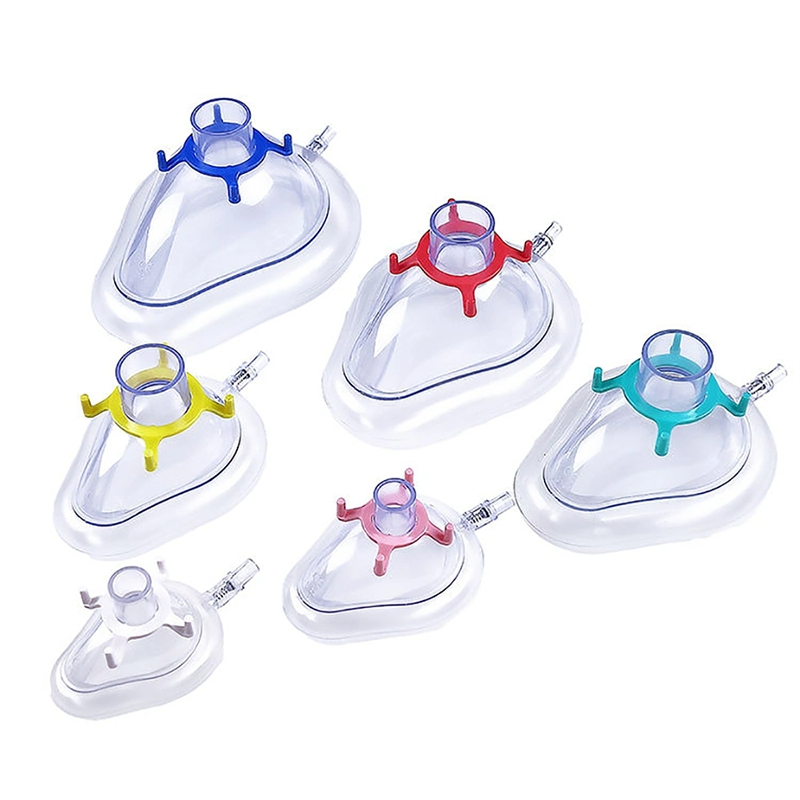
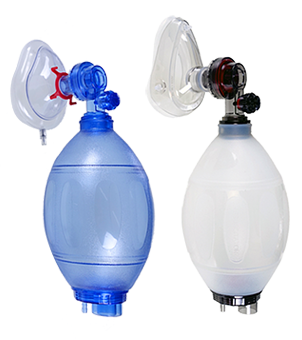
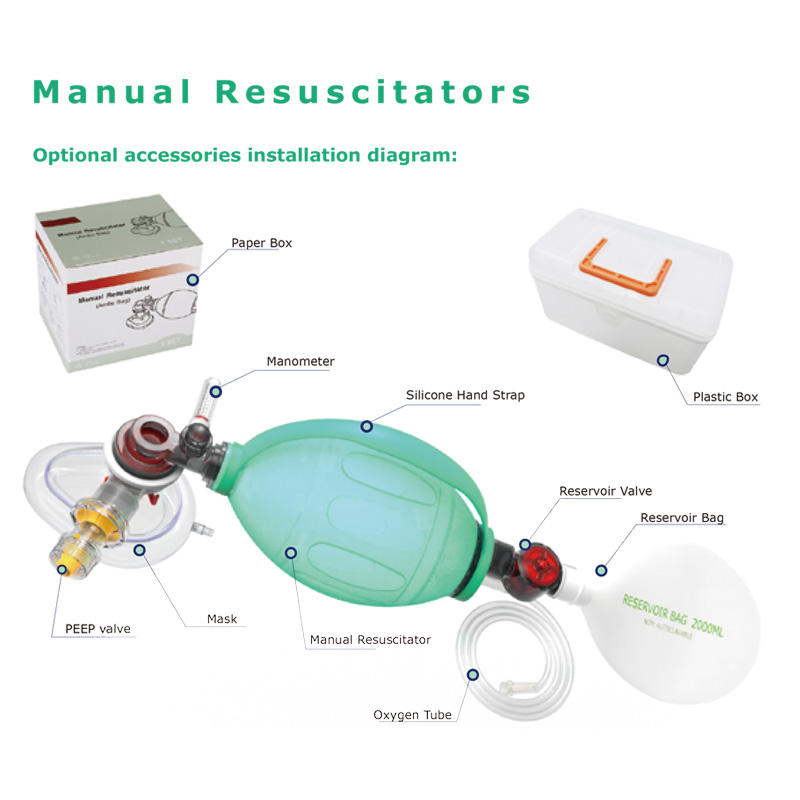
    The manual resuscitator, also known as a Bag-Valve-Mask (BVM) or Ambu bag, is a critical tool for providing ventilatory support in various medical emergencies. Its primary function is to deliver positive pressure ventilation to patients who are not breathing adequately or at all, thereby maintaining oxygenation and preventing hypoxia.   Structure and Components A typical manual resuscitator consists of several key components: · Self-inflating bag: This is the compressible part that the rescuer squeezes to deliver air. It automatically reinflates after each compression, drawing in ambient air or oxygen from an attached source. · Patient valve: This valve directs the airflow towards the patient during compression and away from the patient (allowing exhalation to ambient air) during bag re-expansion. · Face mask: Designed to create a tight seal over the patient's nose and mouth, ensuring efficient delivery of air. Various sizes are available for adults, children, and infants. · Oxygen reservoir: An optional but highly recommended attachment that significantly increases the inspired oxygen concentration by collecting and storing oxygen between breaths. · Oxygen inlet: Connects the resuscitator to an external oxygen source, such as an oxygen cylinder or wall outlet.   Mechanism of Action When the self-inflating bag is compressed, positive pressure forces air (or an oxygen-enriched mixture) through the patient valve and into the patient's lungs. Upon release, the bag reinflates, and the patient valve allows exhaled air to escape into the atmosphere, preventing rebreathing of carbon dioxide. The rhythmic compression and release of the bag mimic natural breathing, providing essential gas exchange.   Indications for Use Manual resuscitators are indispensable in a wide range of medical scenarios, including: · Cardiac arrest: To provide immediate ventilatory support during cardiopulmonary resuscitation (CPR). · Respiratory arrest: When a patient stops breathing due to drug overdose, trauma, or other causes. · Severe respiratory distress: In conditions like asthma attacks, anaphylaxis, or pneumonia, where patients struggle to breathe effectively. · Apnea: Periods of absent breathing, common in infants and during certain medical procedures. · Planned ventilatory support: During intubation procedures or short-term transport of ventilated patients.   Advantages · Portability and immediate availability: Manual resuscitators are compact and do not require an external power source, making them ideal for pre-hospital care and emergency situations. · Versatility: Adaptable for use across all age groups with appropriate mask sizes. · Cost-effectiveness: Relatively inexpensive compared to mechanical ventilators. · Simplicity of operation: Can be quickly deployed and used by trained personnel.   Disadvantages and Considerations · Risk of gastric inflation: Excessive ventilation pressure or improper mask seal can force air into the stomach, potentially leading to vomiting and aspiration. · Fatigue: Prolonged manual ventilation can be physically tiring for the rescuer, potentially leading to inconsistent ventilation. · Skill-dependent: Effective use requires proper training to ensure adequate mask seal, correct ventilation rate, and appropriate tidal volume. · Infection control: Reusable bags and masks require thorough cleaning and sterilization to prevent cross-contamination.   Best Practices · Always ensure a proper mask seal to maximize ventilation efficiency. · Ventilate at the appropriate rate and tidal volume for the patient's age and condition, observing chest rise. · Utilize an oxygen reservoir and connect to an oxygen source whenever available to deliver high concentrations of oxygen. · Consider using an oral or nasopharyngeal airway to maintain airway patency, especially in unconscious patients. · Monitor the patient's response, including oxygen saturation and chest auscultation. The manual resuscitator remains a cornerstone of emergency medical care, providing a life-saving bridge for patients requiring immediate ventilatory assistance. Its effective deployment relies on proper training, diligent practice, and adherence to established guidelines.
Prev
1 2 3
Next

Sign Up To Get The Latest updates

Please read on, stay posted, subscribe and we welcome you to tell us what you think

leave a message

leave a message
Ready to scale your medical business? Click here to get a free quote & catalog!
submit

Home

Products

WhatsApp

contact

Tell us your requirements (e.g., Quantity, Destination Port)
leave a message
Ready to scale your medical business? Click here to get a free quote & catalog!
Submit