manual resuscitator manufacturer

Blogs

  • How to Choose an Endotracheal Tube: Cuffed vs Uncuffed and Size Selection for Buyers
    How to Choose an Endotracheal Tube: Cuffed vs Uncuffed and Size Selection for Buyers
    Oct, 15 2026
    An endotracheal tube (ETT) looks simple until a buyer has to specify a range for an OR, ICU, or EMS program. This guide walks procurement teams and distributors through the cuffed-vs-uncuffed decision and the size bands that actually ship on a mixed caseload, so you can build a stock list that covers adults, pediatrics, and neonates without over-ordering.In this article An endotracheal tube is the device that holds an airway open when a patient cannot breathe unaided. For clinicians the placement is the hard part; for buyers the hard part is specifying a catalogue that covers every age and indication without turning into dead stock. The two decisions that drive the whole purchase are cuffed versus uncuffed, and the size band you actually need. Get those right and the rest of the spec — material, connectors, packaging — falls into place. Cuffed or Uncuffed: The First Decision The cuff question decides both the clinical seal and how many SKUs you carry. A cuffed ETT carries an inflatable low-pressure, high-volume cuff at the distal end; once inflated it seals the trachea, protects against aspiration, and lets the ventilator hold a controlled tidal volume without leaking. That is why cuffed tubes are the adult standard and are increasingly used across pediatric ages too. An uncuffed tube has no cuff and relies on the naturally narrow cricoid ring for a seal; it is the traditional pediatric choice under about age 8 and remains the neonatal default, because a cuff can over-compress a child's delicate subglottic mucosa and raise the risk of post-extubation stridor. For a buyer, the practical rule is: stock cuffed tubes as the backbone of any adult range, keep a band of uncuffed sizes for pediatric and neonatal use, and — where the supplier offers it — consider a cuffed pediatric line for longer ICU stays. Specifying both lets one purchase order serve anesthesia, emergency, and NICU channels instead of fragmenting the order across separate lines. Adult Size Ranges Buyers Should Stock Adult internal diameter (ID) typically runs 7.0–8.5 mm. Most adult females need 7.0–7.5 mm; most adult males need 8.0–8.5 mm, with larger males occasionally taking 9.0 mm. The convention among OR and EMS buyers is to hold one size smaller and one size larger than the estimated size at the bedside — a 7.0, 7.5, and 8.0 set covers the bulk of the adult caseload. Depth of insertion is commonly estimated as three times the internal diameter (a 7.5 mm tube sits at roughly 22 cm at the lip), but that is a clinical placement detail, not a procurement spec. From a stocking standpoint, the useful signal is that larger IDs lower airway resistance while smaller IDs suit narrowed or edematous airways, so a range that spans 6.5–9.0 mm ID gives a distributor flexibility without dead stock at the extremes. Confirm that each size ships with a 15 mm universal connector, a Murphy eye, and a printed depth scale, because those are the features clinicians expect and will reject a line that omits them. Pediatric and Neonatal Sizing Pediatric airways are the part of the catalogue where formula beats guesswork. The widely used estimate is ID (mm) = (age in years ÷ 4) + 4 for uncuffed tubes, and (age ÷ 4) + 3.5 for cuffed — so a 4-year-old lands near a 5.0 mm cuffed tube. The bedside rule of keeping one size smaller and one larger still applies. Neonates are weight-based: under 1 kg takes about a 2.5 mm tube, 1–2 kg a 3.0 mm, 2–3 kg a 3.5 mm, and full-term newborns 3.5–4.0 mm, almost always uncuffed. Buyers supplying children's hospitals or neonatal transport should stock the 2.5–5.5 mm band densely and the 6.0–6.5 mm sizes more thinly, because the small end turns over far faster. Reinforced (armored) ETTs matter here too: in pediatric and head-and-neck cases where the tube is bent repeatedly, a wire-reinforced wall prevents kinking that a plain tube would not survive. Ask the supplier which of these variants are in production rather than assuming a single wall type covers every indication. Material and Construction Specs That Matter A procurement spec is more than ID and length. Medical-grade PVC remains the default for disposable ETTs because it is clear, kink-resistant, and cost-effective at volume; many programs also want a radiopaque line so placement shows on X-ray, and clear tubing so secretions are visible. A Murphy eye — the side port near the tip — maintains airflow if the main lumen is occluded by a wall or secretion, and a soft, high-volume low-pressure cuff reduces mucosal pressure injury during long ICU ventilation. For difficult-airway or MRI-adjacent settings, reinforced and MRI-compatible variants exist. Sterile, single-use EO-processed packaging is the norm for tenders, and private-label buyers should confirm the IFU (instructions for use) can be printed in the market language. These construction details are where two visually similar tubes diverge in price and suitability, so they belong in the comparison sheet, not in the fine print. Building a Stock List for Your Channel Put the sizing rules together and a rational ETT stock list emerges: a dense adult band (6.5–9.0 mm ID, cuffed), a dense pediatric-neonatal band (2.5–6.5 mm, mostly uncuffed with a cuffed overlap from about age 2), and reinforced variants for a fraction of the surgical volume. Distributors servicing EMS add a narrower adult cuffed set weighted to 7.0–8.0 mm because pre-hospital intubation skews to adults and speed; hospital OR and ICU programs need the full spread plus the small end. The advantage of sourcing from a one-stop manufacturer is that the ETT line can ship on the same production and documentation cycle as your LMA, breathing bag, and resuscitator lines — one quality system, one export file, one private-label program — rather than three suppliers and three audits. Model the replacement and expiration churn into the forecast, and ask for a full size assortment and MOQ per size before committing volume. Related Products TW8604 Uncuffed Endotracheal TubeView product →TW9111 Non-Inflatable Cuff Laryngeal Mask Airway (LMA)View product →TW8414 / TW8422 Disposable Guedel AirwayView product →TW8608 Anesthesia Breathing BagView product →TW8111 Adult Silicone Manual ResuscitatorView product →Why Partner With Tianzuo Medical Xiamen Tianzuo Medical is a one-stop manufacturer integrating R&D, molding, and production, with OEM and ODM as its forte. The plant runs injection molding, blow molding, liquid silicone, and extrusion lines in-house, which is why an endotracheal tube order can ship with custom logo, multiple sizes, and private-label packaging off the same production cycle as your airway, anesthesia, and resuscitation lines. Quality is managed under ISO 13485:2016, with CE certification and FDA-listed products supported by export documentation for tender and distributor onboarding. For procurement teams, that means one supplier relationship covering intubation, immobilization, CPR barriers, and respiratory care — with MOQs and lead times quoted per model instead of bundled into vague ranges. Send us your target channel, market, and annual volume and our team will build a specification sheet for review. Email Stephen@tzmed.com or message WhatsApp +86 13074864868. Frequently Asked Questions Should I stock cuffed or uncuffed endotracheal tubes?Stock cuffed tubes as the adult backbone and keep a band of uncuffed sizes for pediatric and neonatal use; many programs also add cuffed pediatric sizes for longer ICU stays. What endotracheal tube size is used for adults?Most adult females need 7.0–7.5 mm ID and most adult males 8.0–8.5 mm ID; holding one size smaller and one larger covers the bulk of the caseload. How do I estimate pediatric ETT size?A common formula is ID (mm) = (age in years ÷ 4) + 4 for uncuffed tubes and + 3.5 for cuffed; always keep one size smaller and one larger at the bedside. What size endotracheal tube is used for neonates?Neonates are weight-based — under 1 kg about 2.5 mm, 1–2 kg 3.0 mm, 2–3 kg 3.5 mm, full-term 3.5–4.0 mm — and are almost always uncuffed. What construction features should a buyer specify?Specify medical-grade PVC, a radiopaque line, Murphy eye, 15 mm universal connector, printed depth scale, and sterile single-use packaging; add reinforced variants for surgical and difficult-airway use.
  • How to Choose a Tourniquet: Windlass vs Elastic Buckle for First-Aid Buyers
    How to Choose a Tourniquet: Windlass vs Elastic Buckle for First-Aid Buyers
    Oct, 13 2026
    A tourniquet is one of the few devices a buyer can order in good faith that reliably stops limb hemorrhage — but "tourniquet" covers two very different mechanisms. This guide compares windlass and elastic-buckle designs on the specs that actually decide performance, so procurement teams, distributors, and kit assemblers can specify the right device for their channel instead of defaulting to the cheapest unit in the catalogue.In this article Uncontrolled extremity bleeding is the one trauma cause a first responder can fix in the field, and a tourniquet is the fastest way to fix it. The problem for buyers is that the category name hides a fork in the road. A windlass device twists a rigid rod until bleeding stops; an elastic buckle device pulls a pre-tensioned strap through a plastic clasp and locks it. Both stop blood. They fail in different ways, cost different amounts, and suit different buyers. Specifying the mechanism first is the single most useful thing you can do before you start comparing quotes. Two Mechanisms, Two Failure Modes A windlass tourniquet — the design most militaries and EMS services issue — uses a strap threaded through a buckle, a rod rotated to take up the slack, and a clip that traps the rod so it cannot unwind. The advantage is graduated, controlled tension and a positive mechanical lock that will not drift during transport. The trade-offs are bulk, the need for training, and the fact that a windlass device is only as good as the rod material. Tianzuo's TW8635 CAT-type tourniquet pairs a high-strength nylon strap with a reinforced aluminum windlass rod and a time-stamp label for recording application time, and it applies one-handed. An elastic buckle tourniquet skips the rod entirely. The strap arrives pre-tensioned and is simply clipped into a fast-release ABS buckle — faster to deploy, flatter to pack, and cheaper at volume, but with a narrower tension range and no visible indication of how much pressure is being applied. Tianzuo's TW8634 buckle tourniquet is built this way, in 40 × 2.5 cm and 42.5 × 2.5 cm variants, with one-handed operation and adjustable pressure. Sizing and Strap Width Are the Real Specs Buyers lose margin by arguing about branding instead of geometry. Strap width drives how pressure distributes across the limb: narrow straps concentrate force onto a small area and risk tissue and nerve damage over time, so a wider strap is generally the safer specification for any device that might stay in place during a long evacuation. Length matters just as much — a strap that is too short cannot wrap an adult thigh, and an adult device in a pediatric kit is a kit that fails in the moment it matters. Tianzuo ships TW8634 in two lengths precisely because one size cannot cover every limb in a mixed buyer base. One-Handed Application and Time Recording Two features separate professional devices from improvised ones, and both are cheap to specify. The first is true one-handed operation: if the casualty has only one functional arm — or the responder is the casualty — a two-handed device is useless. The second is a writable time-stamp area. Downstream clinicians need to know when the tourniquet went on, and a device without a label forces someone to write on the strap itself. Any windlass model you shortlist should have both. Matching the Device to Your Channel Different channels need different products, and this is where most supplier conversations go wrong. Military, law enforcement, and EMS buyers want a windlass device with documented one-handed application, a time-stamp label, and repeatable stock colors for fleet standardization — Tianzuo's TW8635 is offered in black, red, blue, and desert against an MOQ of 500, with a 15–20 day lead time. Commercial outdoor, camping, vehicle, and workplace channels typically prefer the lighter elastic buckle format, where unit cost and pack-down volume decide the shelf. Kit assemblers should look at the pouch as part of the spec rather than an accessory. Training and In-Service Considerations A tourniquet that has been sitting in a sealed shelf for three years has not been tested by anyone. For buyers supplying EMS agencies, security teams, or corporate first-aid programs, the training pathway is part of the purchase, not an extra. A windlass device requires deliberate practice with the rod, the buckle threading, and the retention clip; an elastic buckle device requires far less instruction, which is exactly why it suits mass training across a workforce. Most programs run refresher drills on a fixed cycle and replace any unit whose strap, buckle, or rod shows wear — so model the replacement interval into your forecast rather than treating the initial order as the total. Distributors who bundle a short application demo with the first shipment consistently see fewer returns than those who ship boxes and walk away. Verify the Supply Chain, Not Just the Device Once the mechanism is chosen, check what arrives with the order. Tianzuo's TW8634 buckle tourniquet is offered at 20–30 days lead time under T/T or Alipay with CE, ISO 13485, and FDA-listed documentation stated on the product record, and MOQ and lead time differ per model across the range. Buyers assembling a bleeding-control shelf typically also add a MOLLE tourniquet pouch with trauma shears (TW9107, MOQ 200 sets) or an IFAK trauma pouch (TW910, 653 g, MOQ 200), and pair it with inflatable air splints for fracture immobilization. Ask for export documentation, private-label options, and a full size assortment before you commit volume. Related Products TW8635 Factory CAT TourniquetView product →TW8634 Fast Release ABS Buckle TourniquetView product →TW8634 Colorful Buckle Tourniquet TapeView product →Tactical MOLLE Tourniquet Pouch with Trauma ShearsView product →Outdoor IFAK Trauma PouchView product →Why Partner With Tianzuo Medical Xiamen Tianzuo Medical is a one-stop manufacturer integrating R&D, molding, and production, with OEM and ODM as its forte. The plant runs injection molding, blow molding, liquid silicone, and extrusion lines in-house, which is why a tourniquet order can ship with custom logo, multiple colors, and private-label packaging off the same production cycle as your airway and resuscitation lines. Quality is managed under ISO 13485:2016, with CE certification and FDA-listed products supported by export documentation for tender and distributor onboarding. For procurement teams, that means one supplier relationship covering hemorrhage control, immobilization, CPR barriers, and respiratory care — with MOQs and lead times quoted per model instead of bundled into vague ranges. Send us your target channel, market, and annual volume and our team will build a specification sheet for review. Email Stephen@tzmed.com or message WhatsApp +86 13074864868. Frequently Asked Questions Is a windlass tourniquet better than an elastic buckle tourniquet?For professional and military use, a windlass device gives finer tension control and a positive mechanical lock. An elastic buckle model is faster to deploy, lighter, and cheaper, which is why it dominates outdoor and general-consumer kits. Can a tourniquet be reused on multiple patients?Windlass models with replaceable straps are often cleaned and re-trained on, but any device that has actually been used for hemorrhage control should be retired rather than returned to service. Confirm your supplier's single-use policy in writing. What strap width should a buyer specify?Wider straps spread pressure over a larger area and reduce the risk of tissue and nerve damage during longer transports, so buyers serving EMS, military, or prolonged field care should prefer the wider option. Do I need a time-stamp label on the device?Yes, wherever the patient may be handed to a hospital or transferred between responders — downstream clinicians need to know when the tourniquet was applied, and a device without a writable surface forces improvised marking. What is the MOQ for private-label tourniquets?MOQ depends on the model and the level of customization. Standard catalog colors start lower; custom logo, custom packaging, and custom color runs carry higher minimums — contact us with your volume for an exact figure.
  • CPR Mask vs Face Shield: Which First-Aid Item Should You Stock?
    CPR Mask vs Face Shield: Which First-Aid Item Should You Stock?
    Oct, 09 2026
    In this article A CPR mask and a face shield both protect rescuers during mouth-to-mouth rescue breathing, but they are built for different buyers, kits, and compliance scenarios. This guide compares the two devices so procurement teams, distributors, and EMS buyers can specify the right barrier product—and the right quantity—for their market. For any organization that trains first responders, equips ambulances, or assembles public-access emergency kits, the choice between a CPR mask and a face shield is more than a line-item decision. Both devices create a hygienic barrier between the rescuer and the casualty during rescue breathing, yet they differ sharply in form factor, protection level, and where they fit inside a responder workflow. Below, we break down the practical differences so you can buy with confidence. What Each Device Actually Does A CPR mask—sometimes called a resuscitation mask or pocket mask—is a molded silicone or PVC mask with a one-way valve and an oxygen inlet. The rescuer places it over the casualty's nose and mouth, seals it with both hands using the standard E-C clamp, and delivers breaths through the valve. The one-way valve directs exhaled air away from the rescuer, while the oxygen port lets you attach a bag or supplemental O₂ for higher-flow ventilation. A face shield, by contrast, is a flat, credit-card-sized or slightly larger transparent sheet with a central filtered breathing port. It unfolds over the casualty's face and gives the rescuer a mucosal barrier for mouth-to-mouth or mouth-to-nose breathing. It is lighter, cheaper, and easier to distribute at scale, but it offers less seal and no structured airway support. When to Reach for a CPR Mask If your buyers operate in EMS, hospitals, fire services, or professional first-aid training, the CPR mask is the stronger specification. Its rigid seal supports effective ventilation, the one-way valve meaningfully reduces exposure to bodily fluids and exhaled aerosols, and the oxygen inlet makes it compatible with the rest of the respiratory chain—manual resuscitators, oxygen masks, and suction. For crash carts, ambulance kits, and certified responder programs, a CPR mask with a proven one-way valve is the default. When a Face Shield Makes More Sense Face shields earn their place in high-distribution, low-touch scenarios: public-access AED cabinets, school classrooms, office first-aid boxes, airline kits, and giveaway training packs. They are inexpensive enough to place one in every kit, require almost no training to use, and take up negligible space. For distributors selling into workplaces and community programs, face shields are the volume product, while CPR masks anchor the professional tier. Material and Compliance Specs Buyers Should Check Specify devices that meet the expectations of your target market. Look for medical-grade PVC or silicone construction, a clearly marked one-way valve with a visible filter, and latex-free materials where allergy sensitivity matters. Tianzuo Medical manufactures these barrier products under an ISO 13485:2016 quality system and supports CE and FDA-listed documentation, which streamlines tender submissions and distributor onboarding across Europe, North America, and beyond. Confirm shelf life, packaging (individual pouch vs bulk), and whether the mask ships with a disposable valve replacement. Building a Responder Kit: How Many of Each? A balanced public-access or workplace kit typically carries one CPR mask per trained responder station plus a quantity of face shields for broad coverage. EMS and hospital kits should standardize on CPR masks sized for adult and pediatric use, while community kits can lean on face shields for ubiquity. Buyers ordering in bulk should plan MOQs around their training calendar and certification renewals so stock rotates before expiry. Related Products TW8342 Resuscitation Mask with One-Way ValveView product →TW8648 Choke Suction DeviceView product →TW5002 Adjustable Cervical Support CollarView product →TW8311 Adult PVC Manual Resuscitator (Ambu Bag)View product →TW8374 PVC Anesthesia Masks with Ultra-Soft CushionView product →Why Partner With Tianzuo Medical Tianzuo Medical is a Xiamen-based manufacturer integrating R&D, molding, and production under one roof, with OEM and ODM as our core strength. Since 2011 we have supplied emergency, anesthesia, and respiratory products to distributors and tender buyers in more than 30 countries, backed by ISO 13485:2016, CE, and FDA-listed credentials. For procurement teams, that means consistent specifications, export documentation, and private-label options at competitive MOQs. Tell us your target market and kit configuration, and our team will help you build a compliant, cost-effective airway barrier assortment. Reach our specialists at Stephen@tzmed.com or via WhatsApp at +86 130 7486 4868. Frequently Asked Questions Is a CPR mask better than a face shield for training classes?For certified courses, a CPR mask is preferred because it teaches a real seal and valve workflow; face shields suit awareness-level introduction. Can a face shield be used with supplemental oxygen?Generally no—face shields lack a structured seal and oxygen inlet, so they are for barrier-only mouth-to-mouth, not augmented ventilation. Are these devices latex-free?Tianzuo Medical offers latex-free PVC and silicone options; confirm the specific SKU and packaging when you place a bulk order. What MOQ applies to OEM CPR masks?Minimum order quantities vary by customization; contact our team with your volume and branding needs for a quote. Do the masks ship with replacement valves?Many configurations include individually pouchpacked masks with a one-way valve; ask about spare-valve packs for high-use programs.
  • How to Choose an Anesthesia Breathing Circuit: Circle vs Mapleson, Disposable vs Reusable
    How to Choose an Anesthesia Breathing Circuit: Circle vs Mapleson, Disposable vs Reusable
    Sep, 29 2026
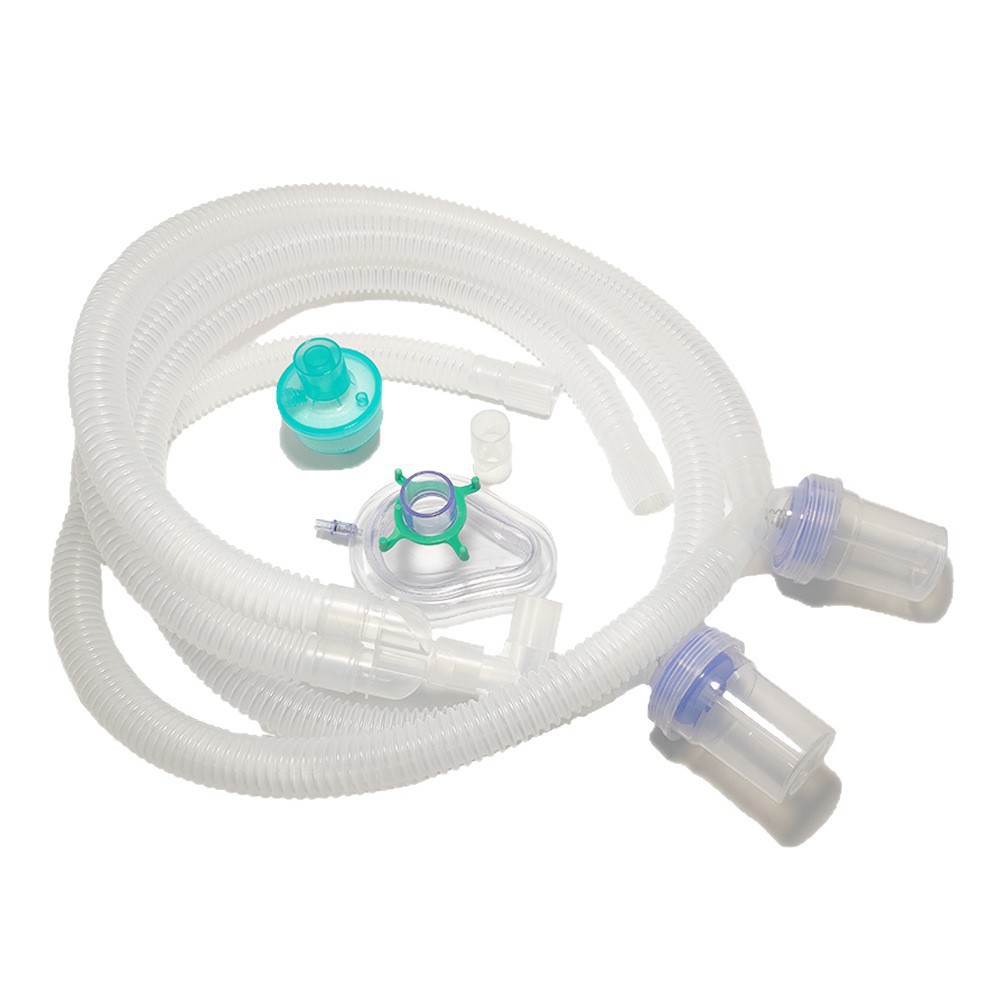
    In this article An anesthesia breathing circuit is the disposable interface between the anesthesia workstation and the patient's airway. This guide breaks down circle vs Mapleson systems, the disposable vs reusable trade-off, and the connector, length, and reservoir-bag specs procurement teams should pin down before placing a bulk order. What an Anesthesia Breathing Circuit Actually Does A breathing circuit is the part of the anesthesia machine that carries fresh gas to the patient and carries exhaled gas away. Its job is threefold: deliver oxygen and anesthetic agents, remove carbon dioxide, and — where the design allows — preserve the patient's heat and humidity instead of dumping it out the exhaust valve. Between the machine and the patient you will typically find a Y-piece, two corrugated limbs, a reservoir (breathing) bag, and one or more valves. Get any of those interfaces wrong and you have a misconnection, a leak, or dead-space problems that show up as capnography drift long after induction. For a procurement buyer the functional question is simpler than the physiology: which system matches the ventilator mode, the patient group, and the infection-control policy in your OR or ambulatory suite? Once those three are clear, the rest of the specification writes itself. Circle System vs Mapleson (and Bain / Jackson-Rees) The circle system is the default in most operating rooms. It uses unidirectional valves and a soda-lime (or similar) CO₂ absorber, which means exhaled gas is scrubbed and rebreathed. That lets you run a low fresh-gas flow, economize on costly volatile agents, and keep the circuit warm and humidified. Its parts — inspiratory and expiratory limbs, Y-connector, APL (adjustable pressure-limiting) valve, reservoir bag, and absorber canister — are standardized enough that most anesthetists are trained on it. Mapleson systems (A through F) take the opposite approach: no absorber, no unidirectional valves, and rebreathing controlled by fresh-gas flow. They are lighter and cheaper but thirsty on gas. Within the family, Mapleson A is efficient for spontaneous breathing, while Mapleson D — and its coaxial cousin the Bain circuit — is the efficient choice for controlled ventilation. Jackson-Rees (a modified Mapleson F) is a pediatric workhorse because of its low resistance. For your specification, the practical takeaway is to match the circuit class to the ventilation mode your department actually runs, and to confirm the anesthesia machine's approved configuration before committing to a bulk purchase. Disposable vs Reusable: The Procurement Trade-off This is where most tenders stall. A disposable circuit — typically a latex-free PVC circuit — is opened, used, and discarded. It removes reprocessing labor, cuts cross-contamination risk, and makes case turnover predictable. The cost you see on the quote is close to the cost you pay, aside from disposal. A reusable circuit shifts the real expense downstream: validated cleaning, disinfection, leak and resistance inspection, storage, and documented retirement criteria. Facilities with a mature reprocessing program can lower per-case cost, but the total cost of ownership is easy to underestimate. For distributors and hospital buyers building a catalog, a latex-free disposable breathing circuit is usually the safer default SKU because it satisfies infection-control teams in most markets without asking them to certify a wash cycle. Tianzuo Medical's expandable, latex-free disposable circuit is built around exactly that single-use workflow. Specifications Buyers Should Pin Down Do not order "a breathing circuit" and hope it fits. Pin these down in writing: Connectors: 22 mm at the machine (absorbent) end and 15 mm at the patient end is the ISO 5356 convention, but verify it against the specific machine make. A mismatch here is the classic source of adapter clutter on the back of the OR table. Tube length: 1.2 m, 1.5 m, or 1.8 m corrugated, or expandable tubing that stores short and stretches in use. Longer limbs help MRI and remote ventilator setups; shorter limbs reduce dead space. Reservoir bag: 0.5 L, 1 L, 2 L, or 3 L. Match to patient size and to whether the bag is used for manual ventilation. Material and bore: smooth-bore vs corrugated, latex-free PVC, coaxial vs parallel limbs. Accessories: APL valve position, bacterial filter location, gas-sampling port, and elbow type. Matching the Circuit to Patient Group and Ventilation Mode Adult circuits should never be assumed safe for neonates just because the connectors look compatible. Pediatric and neonatal use demands smaller internal volume, narrower tubing, and a smaller reservoir bag to avoid drowning the patient in apparatus dead space. Spontaneous-breathing cases favor Mapleson A or a circle at higher flow; controlled ventilation leans circle or Bain. If your buyers serve both adult and pediatric hospitals, stock the two configurations as separate SKUs rather than promising one circuit fits all. Procurement Mistakes to Avoid A few patterns cause returns and, worse, clinical incidents: Assuming connectors are universal. Always confirm 15 mm / 22 mm against the target machine. Overlooking the coaxial inner tube. On Bain-type circuits, a kinked or disconnected inner fresh-gas hose turns the whole limb into dead space. Ask suppliers for disconnection-test guidance (the Pethick test) and train users on it. Forgetting latex sensitivity. Specify latex-free explicitly; do not assume. Switching circle and Mapleson between cases without a checklist, which invites misconnection. Buying on unit price alone. Reprocessing, storage, and disposal change the real number. Related Products Disposable Anesthesia Breathing Circuit (Expandable, Latex-Free)View product →PVC Anesthesia Masks with Ultra-Soft CushionView product →Anesthesia Breathing BagView product →Uncuffed Endotracheal TubeView product →PEEP ValveView product → Why Partner With Tianzuo Medical Xiamen Tianzuo Medical Co., Ltd. is a one-stop manufacturer that integrates R&D, molding, and production, and OEM / ODM is our forte. For distributors and procurement teams, that means private-label anesthesia-circuit programs, flexible MOQs, and bulk-order pricing without a long overseas supply chain. Our facility runs under ISO 13485:2016 with CE and FDA-listed product lines, and we support export documentation for FOB, CIF, and DDP shipments. Whether you are tendering for a hospital OR, stocking an ambulance service, or building a wholesale catalog of respiratory consumables, we can match specifications to your market and scale output to your seasonal demand. Have a specification sheet or a target machine model? Send it to Stephen@tzmed.com or open an inquiry at https://www.tianzuomedical.com/contact-us — our team will confirm connector sizes, lengths, and bag capacities and return a quote with lead time. Frequently Asked Questions What is the difference between a circle and a Mapleson breathing circuit? A circle system uses unidirectional valves and a CO₂ absorber so gas is scrubbed and rebreathed at low fresh-gas flow; Mapleson systems have no absorber or valves and rely on high fresh-gas flow to prevent rebreathing. Circle is the OR standard; Mapleson D/Bain suits controlled ventilation and Jackson-Rees suits pediatrics. Are disposable anesthesia breathing circuits latex-free? Not all of them, so specify it. Latex-free PVC disposable circuits (such as Tianzuo Medical's expandable circuit) are the safe default for latex-sensitive settings and simplify infection control because there is no reprocessing step. What connector sizes do anesthesia circuits use? The ISO 5356 convention is a 22 mm connector at the machine (absorber) end and a 15 mm connector at the patient end, but you should confirm both against the specific anesthesia machine make before ordering to avoid adapters and misconnections. How do I choose the right reservoir bag size? Use 0.5–1 L for pediatric and neonatal patients, 2 L for typical adults, and 3 L for larger adults or where the bag is used for manual ventilation. Match the bag to the patient group and the ventilation mode in your specification. Can one circuit handle both spontaneous and controlled ventilation? A circle system handles both well. Mapleson efficiency varies — Mapleson A is best for spontaneous breathing while Mapleson D/Bain is best for controlled ventilation — so choose the circuit class to match your department's protocol and machine configuration.
  • How to Use a Three-Ball Spirometer: A Practical Guide for Post-Surgery Breathing Recovery
    How to Use a Three-Ball Spirometer: A Practical Guide for Post-Surgery Breathing Recovery
    Sep, 22 2026
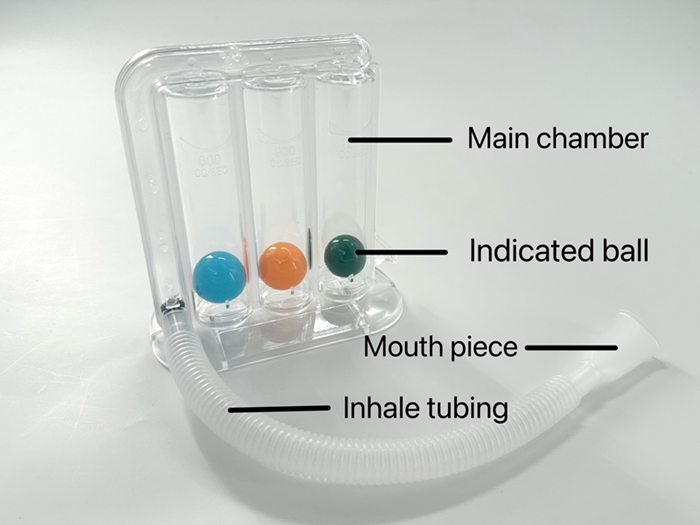
    In this article A three-ball spirometer is an incentive breathing trainer that gives patients visual feedback as they inhale, helping prevent post-surgical lung complications like atelectasis and pneumonia. This guide covers how it works, the correct step-by-step technique, one-ball vs three-ball options, and what to look for when sourcing spirometers for hospitals, clinics, or distribution. What Is a Three-Ball Spirometer and How Does It Work? A three-ball spirometer — sometimes called an incentive spirometer or breathing exerciser — is a simple, non-powered device that turns a deep breath into something a patient can actually see. Inside three clear chambers sit three lightweight balls. When the user seals their lips on the mouthpiece and inhales slowly and steadily, the airflow lifts the balls. The deeper and more controlled the breath, the higher the balls rise. Each chamber is set to a progressively higher inspiratory target, so the patient gets immediate visual proof that they are filling their lungs. Tianzuo Medical supplies two versions of this trainer: the TW1813 three-ball spirometer and the TW1811 one-ball spirometer. The one-ball model is the simpler option for basic incentive breathing, while the three-ball version gives graded feedback that many physiotherapists prefer for thoracic and abdominal surgery recovery. Why Incentive Spirometry Matters After Surgery After general anaesthesia or any chest, abdominal, or major surgery, patients tend to take shallow breaths. Pain, sedation, and immobility all reduce lung volume, and the small air sacs (alveoli) at the base of the lungs can partly collapse — a condition called atelectasis. Left unchecked, that raises the risk of chest infection and slows recovery. Incentive spirometry fights this by coaching the patient to take slow, maximal inhalations several times an hour. The visual target turns a boring exercise into a small achievement, which is exactly why compliance is higher than with "just breathe deeply" instructions. It is also used in COPD management and for patients on prolonged bed rest, where lung expansion needs active support. How to Use a Three-Ball Spirometer: Step by Step The technique is straightforward, but small details matter: Sit upright in a comfortable chair or in bed with the head and shoulders raised. Hold the device vertically so the chambers are level. Connect the tubing and mouthpiece if they are separate, then seal your lips firmly around the mouthpiece — no air should leak out the sides. Breathe out normally to empty the lungs. Inhale slowly and evenly through the mouthpiece. Aim for a steady two-to-three-second breath so the balls rise smoothly rather than snapping to the top. Try to hold the balls at the top for three to five seconds, then relax and exhale. Repeat for about 10 to 15 breaths, resting between sets. Most protocols suggest a session every one to two hours while awake. If you have a chest or abdominal incision, hugging a pillow against the wound while inhaling eases the pull on the stitches. Stop and return to normal breathing if you feel dizzy. One-Ball vs Three-Ball: Which Should You Stock? For procurement teams and distributors, the choice comes down to use case and budget. The one-ball spirometer (TW1811) is inexpensive, intuitive, and well suited to general wards, homecare after minor procedures, and high-volume tender kits where cost per unit matters. The three-ball spirometer (TW1813) adds graded targets that help clinicians track progress and motivate patients during longer recovery, making it popular in thoracic, cardiac, and major abdominal units. Both are single-patient devices and pair naturally with other respiratory consumables — nebulizer kits for airway humidification, oxygen masks and nasal cannulas for supplemental therapy, and resuscitation masks for emergency readiness on the same ward. Common Mistakes to Avoid A few habits undermine the exercise. Inhaling too fast makes the balls slam to the top with little real lung expansion — slow and controlled wins. Inhaling through the nose instead of sealing the mouthpiece dumps the effort and gives false feedback. Sharing a unit between patients is a cross-infection risk and should never happen; these trainers are meant for one user only. Finally, do not chase the top mark to the point of lightheadedness — steady progress beats a heroic single breath. Care, Cleaning, and Single-User Hygiene The mouthpiece and any detachable tubing should be rinsed in warm soapy water daily, then rinsed clear and left to air dry. The main chamber is generally wiped rather than submerged. Because moisture and saliva collect at the mouthpiece, the device should stay with one patient for its whole use and be discarded rather than passed on. For facilities, that means planning single-use allocation into the consumable budget. Sourcing Spirometers for Clinics, Hospitals, and Distributors When you buy spirometers in volume, consistency and documentation matter as much as price. Look for a manufacturer that holds ISO 13485:2016 quality management, carries CE and FDA listings, and supports OEM/ODM and private-label packaging so the unit fits your brand or tender specification. Low minimum order quantities (MOQ) and stable lead times let distributors test a SKU before committing to a full container. Tianzuo Medical builds both the one-ball and three-ball trainers in-house and ships them worldwide with the export documentation EMS, hospital, and clinic buyers expect. Related Products TW1813 Three-Ball Spirometer— graded three-chamber incentive breathing trainer.View product →TW1811 One-Ball Spirometer— simple single-chamber version for wards and homecare.View product →TW8345 Nebulizer Kit with Mask & Tubing— airway humidification consumable.View product →TW8344 Medical PVC Oxygen Mask with Tubing— supplemental oxygen delivery.View product →TW8601 Medical PVC Nasal Oxygen Cannula— low-flow oxygen therapy.View product → Why Partner With Tianzuo Medical Xiamen Tianzuo Medical is a one-stop manufacturer integrating R&D, molding, and production of emergency, anesthesia, and respiratory consumables for pre-hospital, in-hospital, and homecare markets. If you are a distributor, hospital procurement lead, or EMS buyer, partnering with us means direct factory pricing, flexible OEM and ODM private-label options, and low MOQs that let you validate a SKU before a full container order. Our quality system is built on ISO 13485:2016, and our products carry CE and FDA listings, with the export documentation (FOB/CIF/DDP) that tenders and cross-border buyers require. Whether you need breathing trainers, oxygen therapy sets, or crash-cart essentials, we supply a coherent respiratory range from a single source. Ready to discuss volumes, branding, or a sample order? Contact our team at https://www.tianzuomedical.com/contact-us or email Stephen@tzmed.com for a quote and lead-time sheet. Frequently Asked Questions What is the difference between a one-ball and three-ball spirometer? A one-ball spirometer has a single chamber and gives a simple "ball up" target, while a three-ball version has three graded chambers so patients and clinicians can track progressively deeper breaths. Tianzuo offers both as TW1811 and TW1813. How often should a patient use a three-ball spirometer after surgery? Typical protocols call for 10–15 breaths every one to two hours while awake, holding each inhale for three to five seconds. Always follow the surgeon's or physiotherapist's specific instructions. Can a three-ball spirometer be shared between patients? No. It is a single-user device. Saliva and moisture collect at the mouthpiece, so sharing risks cross-infection; allocate one unit per patient and discard after use. Is a three-ball spirometer the same as a peak flow meter? No. A spirometer trains slow, deep inspiratory volume with visual feedback, while a peak flow meter measures the speed of a forced exhale and is used mainly in asthma monitoring. Do Tianzuo spirometers support OEM and private-label orders? Yes. Both the TW1811 and TW1813 are manufactured in-house and available for OEM/ODM, private-label packaging, and low-MOQ trial orders with CE, ISO 13485:2016, and FDA documentation.
  • How to Choose a Head Immobilizer: A B2B Buyer's Guide for EMS and Hospital Procurement
    How to Choose a Head Immobilizer: A B2B Buyer's Guide for EMS and Hospital Procurement
    Sep, 18 2026
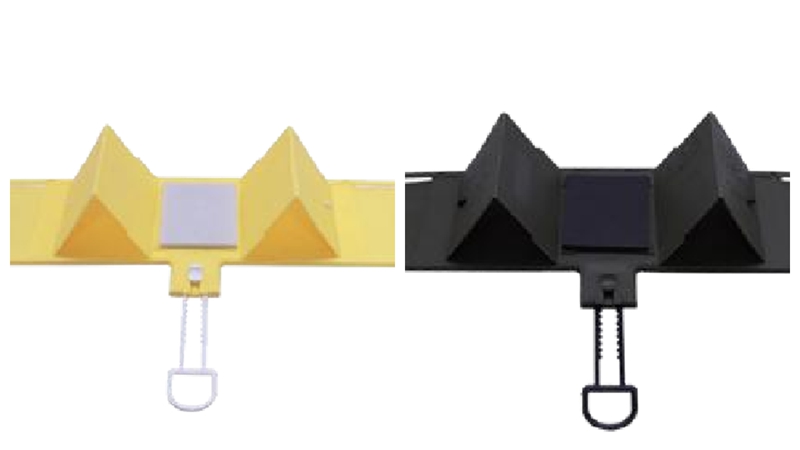
    In this article A head immobilizer secures the skull to a spine board so the cervical spine stays aligned during transport. This guide walks EMS, hospital, and distributor buyers through the real decision points — reusable vs disposable, compatibility, sizing, and the certifications that actually matter — using Tianzuo Medical's TW9005-series head immobilizer as a concrete reference. What a Head Immobilizer Actually Does A head immobilizer is the pair of contoured blocks and straps that locks a patient's head in neutral alignment once they are strapped to a long spine board. The board controls the torso; the head immobilizer controls the part that does the most damage if it moves. In a suspected cervical injury, even a few millimeters of flexion or rotation at C1–C2 can turn a stable fracture into a catastrophe, so the device exists to stop motion, not to treat it. Most units are built around two lateral blocks (one either side of the skull), an occipital support that cradles the back of the head, and a set of strags or a baseplate that anchors everything to the board. Tianzuo Medical's TW9005-series head immobilizer is designed for both pre-hospital and in-hospital emergencies, which is the dual-use profile most procurement leads actually need from a single SKU. Where It Fits in Spinal Motion Restriction Worth stating plainly: modern EMS has moved away from routine long-backboarding for everyone with neck pain. Protocols now favor selective spinal motion restriction. But when restriction is indicated, the cervical collar plus a head immobilizer on a board remains the standard combination for extrication and transport. So when you are specifying stock, think of the head immobilizer as part of a small system — collar, board, and immobilizer — rather than a standalone gadget. A distributor quoting a fire department or an ER will sell more convincingly when the immobilizer is presented alongside compatible collars and splints, because that is how the end user actually runs a call. Reusable vs Disposable: The First Decision This is usually where the budget conversation starts, and it should. Disposable foam units are cheap per call and eliminate decontamination labor, which appeals to high-turnover settings and mass-casualty kits. Reusable systems cost more up front but drop the per-patient cost dramatically once you are past a few dozen uses, and they generate far less waste. For a hospital trauma bay or a busy municipal EMS service, reusable is almost always the lower total cost of ownership. For tactical, wilderness, or event-medicine kits where cleaning is impractical, disposable wins. Tianzuo's TW9005-series sits in the reusable camp and is built for repeated clinical use, which is the right default for most institutional buyers. Key Features to Check Before You Buy Do not shop on price alone. The features that separate a usable immobilizer from a frustrating one: Radiolucency. If the unit blocks X-ray or CT, radiology has to remove it mid-scan, defeating the purpose. Confirm imaging compatibility before you commit. Strap quality and adjustment range. Straps fail first. Look for wide, low-stretch webbing with a range that covers both adult and smaller patients. Baseplate compatibility. The immobilizer must physically clip or strap to the spine boards you already own. Universal baseplates save you from buying a matching board. Cleaning profile. Smooth, sealed surfaces wipe down faster than textured foam and survive more disinfection cycles. These are the points your end users will complain about if you get them wrong, so they are also the points worth emphasizing in your own sales copy. Sizing, Compatibility, and Application Speed Head size varies more than people expect, and a one-size block that fits a 95th-percentile adult will not cradle a small patient. Check the manufacturer's stated fit range, and confirm the occipital support adjusts rather than assuming a fixed angle. Application speed matters under load. A design a single rescuer can apply in under a minute is worth real money on a busy scene. When you evaluate a sample, time it with one person and no audience — that is the honest number. Common Buying Mistakes to Avoid The recurring errors we see in tender specs: buying immobilizers without checking board compatibility, specifying disposable for a high-volume service (the waste and recurring cost balloon), and forgetting that straps are consumables that need a replacement path. A good supplier will flag all three instead of just shipping what you asked for. That consultative step is part of why working with a manufacturer directly, rather than a generic trading company, tends to produce a cleaner stocking list. A Quick Field Checklist for Your Team Once you have the right unit, application discipline decides whether it works. The sequence your trainees should internalize: apply the cervical collar first, then log-roll or slide the patient onto the board, place the two lateral blocks so the skull sits centered with the occipital support cradling the base of the skull, and only then secure the straps from board to block. Re-check that the head does not shift when you tug gently, and confirm the airway and breathing remain unobstructed. A common failure is tightening the straps before the blocks are seated, which lets the head list to one side. Walk new staff through this on a manikin before they see a real trauma, and the per-call time drops fast. Related Products TW9005-Series Medical Head Immobilizer— reusable head immobilizer for pre-hospital and in-hospital emergencies.View product →TW5002 Adjustable Cervical Support Collar— adult adjustable cervical collar, blue.View product →TW5001 Child Cervical Collar— mini-size pediatric neck protection, yellow.View product →TW5006 Military-Color Extrication Cervical Collar— military-green extrication collar.View product →TW6001 Inflatable Air Splints— first-aid limb immobilization for the same trauma kit.View product → Why Partner With Tianzuo Medical Xiamen Tianzuo Medical Co., Ltd. is a one-stop manufacturer integrating R&D, molding, and production — OEM and ODM are our forte, not an afterthought. Our immobilization line, like the rest of our catalog, is manufactured under ISO 13485:2016 quality management with CE marking and FDA-listed status, so distributor and tender documentation is straightforward. For B2B buyers we support low MOQ, bulk-order pricing, private-label branding, and full export documentation (FOB/CIF/DDP). Whether you are a distributor building a spinal-care kit, a hospital procurement lead specifying trauma-bay stock, or an EMS service tendering fleet equipment, we can match volumes and lead times to your rollout. Have a spec sheet or a target landed cost? Email Stephen@tzmed.com or contact tianzuomedical and our team will turn it around with a quote and lead time. Frequently Asked Questions What is the difference between a head immobilizer and a cervical collar? A cervical collar limits motion at the neck itself, while a head immobilizer secures the skull to a spine board to prevent movement of the whole head-and-neck unit. They are used together, not as substitutes. Are reusable head immobilizers worth the cost versus disposable ones? For high-volume hospital or EMS use, reusable units have a far lower cost per patient once you pass a few dozen uses, and they cut waste. Disposables make sense for kits where cleaning is impractical. How do I know if a head immobilizer is compatible with my spine board? Check whether the unit uses a universal baseplate or clips designed for a specific board brand. Universal baseplates attach to most standard long boards; always confirm before a bulk order. What certifications should a head immobilizer have for EMS or hospital use? At minimum, source from a manufacturer operating under ISO 13485 quality management with CE marking; FDA listing matters for the US market. Tianzuo Medical meets all three across its immobilization line. Can one head immobilizer fit both adult and pediatric patients? Many reusable units cover a wide head-size range through adjustable occipital support and straps, but verify the stated fit range. For very small patients, pair the immobilizer with a dedicated pediatric collar such as our TW5001.
  • High-Flow Nasal Cannula (HFNC): How It Works and When to Choose It Over a Standard Oxygen Mask
    High-Flow Nasal Cannula (HFNC): How It Works and When to Choose It Over a Standard Oxygen Mask
    Sep, 15 2026
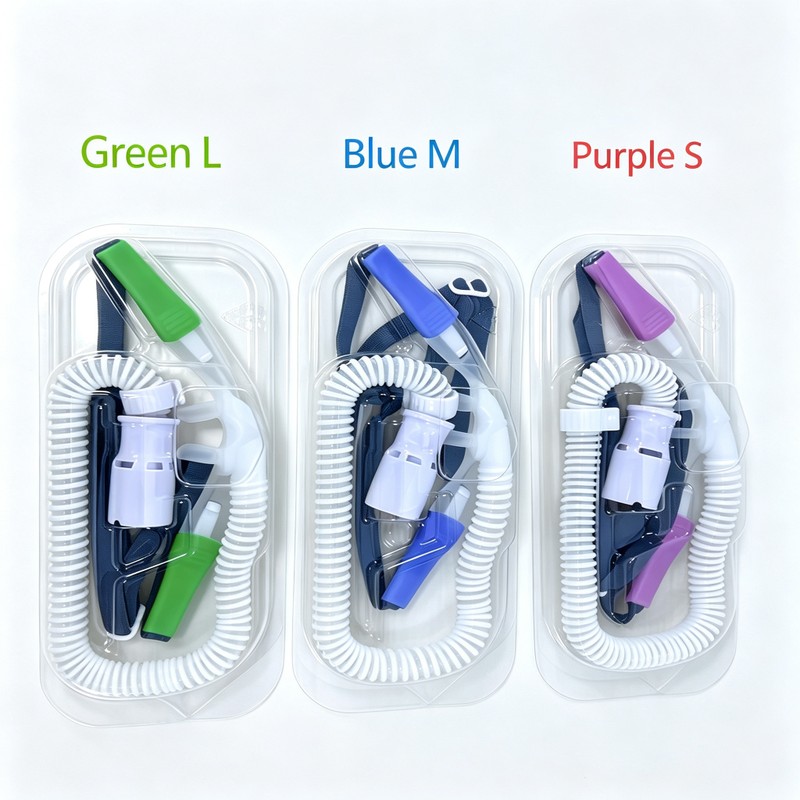
    In this article A high-flow nasal cannula (HFNC) delivers warmed, humidified oxygen at flows up to 60 L/min with adjustable FiO2 from 21% to 100% — closing the gap between a simple nasal cannula and invasive ventilation. This guide explains how HFNC works, where it beats a standard oxygen mask, and what procurement teams should look for when sourcing it. What Exactly Is a High-Flow Nasal Cannula? Most buyers know the basic nasal cannula — the soft twin-prong device that trickles 1–6 L/min of oxygen into the nose. A high-flow nasal cannula takes that same idea and scales it up dramatically. Instead of room-temperature, dry gas, HFNC pushes a precise blend of oxygen and air through a heated, humidified circuit at flows that can reach 60 litres per minute. The result is a therapy that looks deceptively simple but behaves more like a mini respiratory-support system than a passive oxygen line. For a B2B buyer, the practical takeaway is this: HFNC is not a "bigger nasal cannula." It is a distinct clinical category with its own consumables, circuits, and sizing — which matters when you plan kits, tenders, or distributor stock. How HFNC Actually Works Three mechanisms separate HFNC from conventional low-flow oxygen, and they are worth understanding because they show up in every clinical guideline: Dead-space washout. The continuous high flow flushes CO2 out of the nasopharynx between breaths, so more of each minute of ventilation does useful gas-exchange work. Modest positive airway pressure. The flow resists expiratory airflow and generates a small PEEP-like effect, helping keep small airways and alveoli open. Accurate, fixed FiO2. Because flow meets or exceeds the patient's peak inspiratory demand, room air is no longer entrained to dilute the oxygen — so the set FiO2 is the FiO2 delivered. Add active heating and humidification, and you also avoid the dry-nose, cracked-mucosa discomfort that drives patients to pull standard masks off. HFNC vs a Standard Oxygen Mask: Where It Wins A standard face mask or simple cannula works well for stable, low-demand patients. HFNC earns its place when the clinical picture gets harder: Acute hypoxemic respiratory failure — pneumonia, COVID-related failure, post-extubation support. Multiple critical-care protocols now start here before stepping up to NIV or intubation. High work of breathing — the dead-space washout and small PEEP effect cut the effort of every breath. Patient comfort and compliance — patients can talk, sip water, and stay oriented. That cooperation matters more than people expect; mask intolerance is a leading reason conventional NIV fails. Precise FiO2 titration — unlike a Venturi or non-rebreather, where delivered concentration drifts with the patient's own inspiratory flow, HFNC holds the target. The honest counterpoint: HFNC is not a ventilator. If a patient needs immediate invasive support, or has severe hypercapnia requiring NIV, it is the wrong tool. Good procurement means stocking the right device for each step of the escalation ladder — not forcing one product to do everything. Sizing and Consumables Buyers Should Spec HFNC is a consumable-heavy therapy. The nasal interface itself comes in multiple sizes — for Tianzuo's HFNC line the options run L / M / S / XS / XXS, which lets clinicians fit everyone from adults down to small pediatric patients without changing the platform. When you build a quotation or a tender bill of materials, remember the recurring items: The nasal cannula interface (single-use, sized per patient) The heated, often water-resistant circuit The humidification chamber interface Compatible oxygen sources and air-oxygen blenders at the bedside A distributor who only stocks the interface will frustrate customers who need the full disposable chain. Bundle it. Where HFNC Fits in a Respiratory Product Range HFNC does not replace your oxygen-mask or standard-cannula business — it extends it upward. A complete respiratory portfolio typically covers low-flow cannulas for ward and homecare, masks for medium-demand oxygen, and HFNC for higher-acuity support. That ladder is exactly what hospitals, EMS procurement officers, and tender specifiers want to source from one supplier, because it simplifies contracting, documentation, and after-sales. For Tianzuo Medical, HFNC sits alongside nasal oxygen cannulas, oxygen masks, anesthesia masks, and breathing circuits — a coherent oxygen-therapy and airway family rather than a one-off SKU. Sourcing Checklist for Distributors and Tenders If you are evaluating an HFNC supplier, a short checklist saves expensive surprises later: Confirm the full disposable set is available, not just the interface. Check size coverage — a five-size range (L/M/S/XS/XXS) covers most clinical needs. Ask about compliance — ISO 13485 quality management and CE marking are baseline for EU and many export markets; FDA listing matters for the US channel. Verify OEM/ODM flexibility — private-label packaging, language on the pouch, and custom kitting change how fast you can land a tender. Confirm lead time and MOQ early, because consumable demand is steady and reorder-driven. Related Products High-Flow Nasal Cannula (HFNC) — TW8660View product →Medical PVC Nasal Oxygen Cannula — TW8601View product →Medical-Grade PVC Oxygen Mask with Tubing — TW8344View product →PVC-Free Anesthesia Masks — TW8304View product →Disposable Anesthesia Breathing Circuit (Expandable, Latex-Free)View product → Why Partner With Tianzuo Medical Xiamen Tianzuo Medical is a one-stop manufacturer integrating R&D, molding, and production — and OEM / ODM is our forte. Our oxygen-therapy and airway range is built for distributors, wholesalers, and tender buyers who need a reliable B2B medical supplier, not a catalog of unrelated parts. We hold ISO 13485:2016 certification with CE and FDA-listed products, and our team even helped draft China's *Guidelines for the Technical Review of Manual Resuscitator Registration* — a signal of the engineering depth behind every SKU. For procurement teams, that translates into low MOQ, competitive bulk order and private label options, and the export documentation (FOB / CIF / DDP, certificates, packing lists) that smooths cross-border shipping. Whether you run an EMS pre-hospital program, stock a hospital ICU/OR, or bid a national tender, we can kit HFNC with complementary nasal cannulas, masks, and circuits from one factory. Ready to discuss volumes, customization, or a sample shipment? Contact our team at https://www.tianzuomedical.com/contact-us or email Stephen@tzmed.com — we typically respond within one business day. Frequently Asked Questions What flow rate does a high-flow nasal cannula deliver? HFNC systems deliver heated, humidified gas from roughly 2 L/min up to about 60 L/min, with FiO2 adjustable from 21% (room air) to 100%, set independently of flow. Is HFNC the same as a regular nasal cannula? No. A standard cannula gives low-flow, dry, variable-concentration oxygen; HFNC adds high flow, active heating/humidification, dead-space washout, a small PEEP effect, and an accurate fixed FiO2. When should HFNC be chosen over a non-rebreather or Venturi mask? When the patient has a high work of breathing, needs precise FiO2, or requires more support than a mask can comfortably provide — such as acute hypoxemic respiratory failure or post-extubation care. Can HFNC replace a ventilator or NIV? It is a step between standard oxygen and invasive support, not a replacement. Patients needing immediate intubation, severe hypercapnia requiring NIV, or unstable hemodynamics still need escalation. What sizes are available for Tianzuo's HFNC interface? The HFNC nasal interface is offered in L / M / S / XS / XXS, covering adult through small pediatric use within one platform.
  • Nasal Oxygen Cannula: The Quiet Workhorse of Oxygen Therapy (and How to Spec It Right)
    Nasal Oxygen Cannula: The Quiet Workhorse of Oxygen Therapy (and How to Spec It Right)
    Sep, 10 2026
    In this article A nasal oxygen cannula looks almost too simple to matter — two little prongs and a tube. But for patients on long-term oxygen, it's usually the most comfortable way to breathe. This guide covers what a nasal cannula actually does, who needs one, how Tianzuo's TW8601 sizes fit different patients, and what buyers should check before ordering. What a Nasal Oxygen Cannula Actually Does Strip it down and a nasal cannula is just a low-flow oxygen delivery device. Oxygen flows from a wall outlet, a cylinder, or a concentrator, runs through a length of tubing, and comes out of two soft prongs that sit just inside the nostrils. The patient breathes it in through the nose, mixed with room air. That simplicity is the whole point. There's no mask to strap on, nothing covering the mouth, and the patient can still talk, eat, and cough. For someone on oxygen for hours or days, that comfort is the real selling point. Why Clinics and Home Care Reach for It You'll see nasal cannulas everywhere — wards, post-op recovery, COPD care, homecare. The reason is comfort over the long haul. A face mask does the job, but wear one for 12 hours and the skin gets sore and clammy. A cannula lets the patient keep their routine and a bit of dignity. It's also the default for chronic conditions where oxygen is a constant companion — emphysema, heart failure, home-based breathing support. A family caregiver can learn to fit one in about thirty seconds, which is exactly what you want for at-home use. Picking the Right Size — TW8601 Comes in Five Here's where the spec sheet actually matters. Tianzuo's nasal oxygen cannula (Item No. TW8601) ships in five sizes: L, M, S, XS, and XXS — covering a large adult down to a small infant. Fit isn't cosmetic. A poor fit leaks oxygen, irritates the nostrils, and wastes product. Sizing is easy once you've done it a few times: bigger patient, bigger cannula. But don't eyeball it. Too tight leaves pressure marks; too loose hisses and under-delivers. For distributors, carrying the full size run means you won't lose a pediatric order because you only stocked adult sizes. How It Fits the Bigger Oxygen Picture A cannula rarely travels alone. It pairs with an oxygen source and often sits beside other respiratory products. Tianzuo builds the whole chain: the medical-grade PVC oxygen mask with tubing (TW8344) for higher-flow needs, nebulizer kits with mask and tubing (TW8345) for aerosol therapy, and ultra-soft or PVC-free anesthesia masks (TW8374, TW8304) for procedures. For buyers that's real leverage. Sourcing cannulas, masks, and nebulizers from one OEM means one quality system, one shipment, and one compliance package — not three. Less paperwork, fewer customs surprises. A Few Practical Tips From the Field Check the tubing length before you quote. Ward and home setups need different reach; a short tube becomes a returns headache. Soft medical-grade PVC matters for long wear. Stiff material means sore skin and complaints. Standard connectors save you from carrying a drawer of adapters. For high-flow patients, spec the high-flow nasal cannula (TW8660) instead of pushing a standard one past its design range. Related Products TW8601 Medical PVC Nasal Oxygen Cannula— five sizes (L/M/S/XS/XXS) for ward and homecare oxygen deliveryView product →TW8344 Medical Grade PVC Oxygen Mask with Tubing— higher-flow oxygen delivery optionView product →TW8345 Full Sizes Nebulizer Kit with Mask and Tubing— aerosol therapy complementView product →TW8374 PVC Anesthesia Masks with Ultra-Soft Cushion— procedural airway interfaceView product →TW8660 Medical High Flow Nasal Oxygen Cannula— high-flow nasal therapy variantView product → Why Partner With Tianzuo Medical Xiamen Tianzuo Medical is a one-stop OEM/ODM manufacturer of emergency, anesthesia, and respiratory devices, with 15+ years in the field and distribution across 34+ countries. Our nasal oxygen cannula and the wider oxygen-therapy line are built under an ISO 13485:2016 quality system and carry CE and FDA listings. For wholesalers, distributors, and tender buyers, we support private labeling, flexible MOQs, and bulk orders with full export documentation — certificate of conformity, certificate of origin, and regulatory files to smooth import clearance. We handle FOB, CIF, and DDP shipments worldwide. Want a sample or a wholesale quote on TW8601 or a full respiratory bundle? Reach us at https://www.tianzuomedical.com/contact-us or email Stephen@tzmed.com. Frequently Asked Questions What is a nasal oxygen cannula used for? It delivers low-flow supplemental oxygen through two prongs in the nostrils for patients who need oxygen over hours or days — common in wards, recovery, COPD care, and homecare. How do I choose the right cannula size? Tianzuo's TW8601 comes in L, M, S, XS, and XXS. Match the size to the patient: larger sizes for adults, smaller ones for infants. A correct fit prevents leaks, skin irritation, and wasted oxygen. Can a patient eat and talk with a nasal cannula on? Yes. Because nothing covers the mouth, patients can speak, sip water, and take soft food normally — a big reason it's preferred over a face mask for long-term use. What's the difference between a standard and a high-flow nasal cannula? A standard cannula like TW8601 handles low-flow oxygen; a high-flow nasal cannula (TW8660) is built for much higher flow rates and is a different clinical tool. Don't spec a standard one past its range. Do you supply nasal cannulas with OEM or private-label branding? Yes. Tianzuo offers OEM/ODM for the nasal oxygen cannula and the full respiratory line, with custom packaging, flexible MOQs, and CE / ISO 13485 / FDA documentation for export.
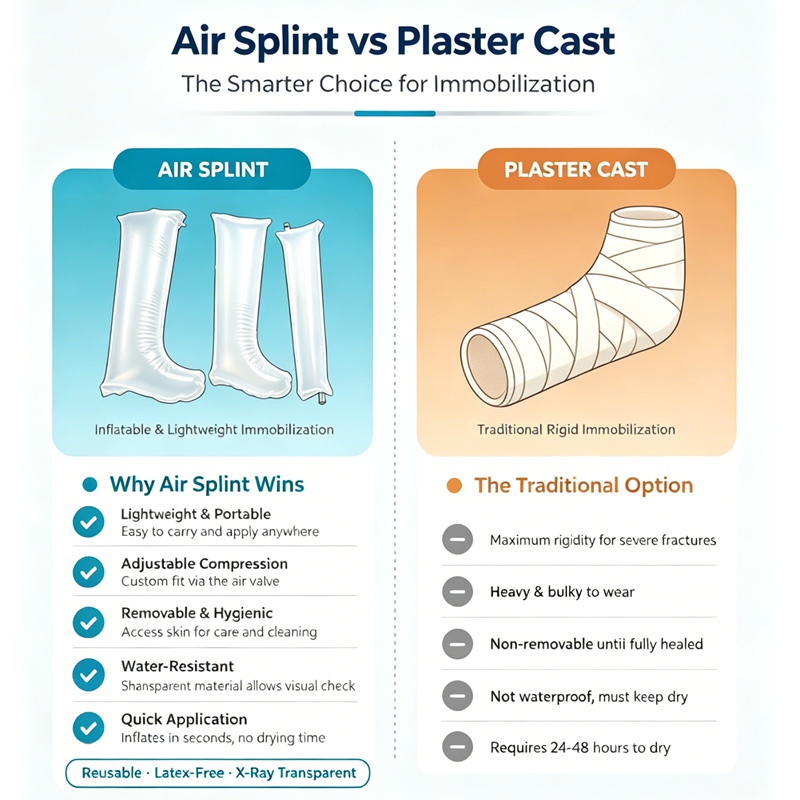
  • Air Splint vs Plaster Cast: Which Immobilization Device Should You Choose?
    Air Splint vs Plaster Cast: Which Immobilization Device Should You Choose?
    Sep, 08 2026
    In this article An air splint (pneumatic splint) immobilizes a fractured or sprained limb by inflating a transparent sleeve around it, giving EMS and first responders a fast, adjustable alternative to a rigid plaster cast. This guide compares the two, explains when each belongs in pre-hospital care, and covers what distributors should look for when sourcing wholesale pneumatic splints. What Is an Air Splint (Pneumatic Splint)? An air splint is a double-layered plastic sleeve shaped to fit a specific extremity — arm, forearm, leg, ankle, or foot. In its deflated state it lies flat and packs into almost any first-aid kit. On scene, you slip it over the injured limb, position it, and inflate by mouth through a one-way valve until it is firm but not tight. The trapped air applies even, circumferential compression that holds the limb still during transport. Two features make it distinct from a cast. First, the material is transparent, so a responder can watch skin colour and check circulation underneath without removing it. Second, it is non-circumferential in spirit: unlike plaster, which fully encases the limb and cannot be adjusted, an air splint tolerates swelling because you simply add or release a little pressure. That matters most in the first hour after an injury, when tissue edema is still building and a rigid cast would risk cutting off blood flow. Air Splint vs Plaster Cast: The Core Differences A plaster or fiberglass cast is a definitive device applied in a clinic for the weeks-long healing of a stable fracture. It wins on structural security — there is no stronger way to hold bone fragments in alignment. Its trade-off is rigidity: it cannot be loosened, it must stay dry, and it assumes the swelling has already settled. An air splint is a field device, not a replacement for a cast. It is lighter, faster to apply, and removable in seconds once deflated. It suits the chaotic, time-pressured window between injury and hospital. The compromise is that it offers less absolute support and is physically fragile — a puncture deflates it. For procurement teams building an EMS bag or crash cart, the two are not competitors so much as different layers of the same care pathway: pneumatic splints for stabilization en route, casts for the recovery that follows. When to Use an Air Splint in Pre-Hospital Care Reach for a pneumatic splint whenever you must move a patient with a suspected fracture or severe sprain and you cannot yet rule out a break. Field protocols lean on the rule "if you can't rule out a fracture, treat it like one." Air splints excel in: Limb transport: forearm, wrist-through-elbow, lower-leg, and foot-and-ankle injuries where you need compression without a full cast. Swelling scenarios: because pressure is adjustable, you can re-check and ease the splint if fingers or toes start to pale — something a cast cannot do. Remote and prolonged carries: flat-packed sleeves weigh little and take no space, which is why outdoor, military, and ambulance services keep them on hand. Monitoring needs: the transparent wall lets you track circulation continuously through the window of transport. When a Cast (or Rigid Splint) Is the Better Call A pneumatic splint is the wrong tool for definitive fixation. Choose a rigid option — plaster, fiberglass, aluminium-foam, or a traction splint — when: The fracture needs long-term, unyielding alignment that only a hard shell provides. You are managing a mid-shaft femur break, where a traction splint counters muscle spasm and shortening. The patient will fly: altitude drops ambient pressure, so an inflated air splint must be partially deflated to avoid over-squeezing the limb — a cast has no such problem. Also remember the classic hazard of any inflatable device: over-inflation can choke off blood supply or, in the worst case, contribute to acute compartment syndrome. Train responders to inflate to firm-but-not-tight and to re-check distal pulse, sensation, and colour after application. How to Apply an Air Splint: Step-by-Step Clear the ABCs first. A fracture is rarely the only injury; confirm airway, breathing, and circulation before you touch the limb. Document baseline status. Check pulse, sensation, and skin colour below the injury, and write it down. Expose, don't pull. Cut clothing away rather than dragging it over the wound. Cover any open fracture with a sterile dressing first. Slide on the deflated sleeve in the position you find the limb — never straighten a deformed extremity unless circulation is compromised and help is far away. Pad bony points (wrist, ankle, elbow) with gauze so the plastic does not bite. Inflate by mouth to firm-but-not-tight. You should still be able to slide a finger between splint and skin at the edges. Re-check circulation immediately. If the pulse weakens or the extremity goes blue, release pressure and re-inflate softer. What Buyers Should Look for in a Wholesale Air Splint If you procure for an ambulance service, distributor, or tender, the splint itself is only half the decision. Look for a supplier that runs an ISO 13485:2016 quality system and holds CE and FDA-listed documentation, because those certificates travel with your export paperwork and shorten customs reviews. Confirm the valves seat cleanly and the seams are welded, not glued — a slow leak on a three-hour transport is a failure you do not want. For private-label programs, ask about OEM and ODM: can the manufacturer mould your size markings, print your brand, and bundle arm/leg/foot variants into one SKU kit? MOQ and lead time decide whether a small distributor can stock a full range or must start with a single high-turnover size. As a one-stop manufacturer integrating R&D, molding, and production, Tianzuo Medical builds immobilization and airway consumables on the same line, which lets procurement consolidate orders and cut per-shipment freight. Related Products Adjustable Cervical Support Collar (TW5002)— pair pneumatic limb splints with cervical immobilization for full trauma stabilization.View product →Resuscitation Mask with One-Way Valve (TW8342)— standard crash-cart CPR protection for the same pre-hospital bag.View product →Adult Silicone Manual Resuscitator (TW8111)— reusable silicone BVM for emergency ventilation.View product →Adult PVC Manual Resuscitator / Ambu Bag (TW8311)— cost-effective disposable-class BVM for bulk EMS stocking.View product →Choke Suction Device (TW8648)— airway-clearance device that rounds out the pre-hospital emergency kit.View product → Why Partner With Tianzuo Medical Xiamen Tianzuo Medical Co., Ltd. is a leading B2B medical supplier of emergency, anesthesia, and respiratory products for pre-hospital, in-hospital, and homecare settings. We integrate R&D, molding, and production under one roof, which makes OEM and ODM our forte — private-label splints, masks, and resuscitators are built to your specification, not pulled from a generic catalogue. Every production line runs on an ISO 13485:2016 quality system, with CE and FDA-listed documentation supplied for export and tender submission. For distributors and procurement managers, that translates into flexible MOQs, consolidated bulk orders across our immobilization and airway ranges, and export paperwork that clears customs without surprises. Whether you run an EMS fleet, a hospital tender, or a regional wholesale business, our team supports low-MOQ pilot runs and full-container repeat orders alike. Ready to build your pre-hospital kit? Contact our team at https://www.tianzuomedical.com/contact-us or email Stephen@tzmed.com to request a quote, technical datasheets, and OEM/ODM options. Frequently Asked Questions What is the difference between an air splint and a plaster cast? An air splint is an inflatable field device used to stabilize a limb during transport; a plaster cast is a rigid clinic-applied device for weeks-long fracture healing. The splint is adjustable and removable, the cast is fixed and definitive. When should you use a pneumatic splint instead of a rigid splint? Use a pneumatic splint in pre-hospital care when you need fast, adjustable immobilization and expect swelling, or when transporting a patient to hospital. Use a rigid splint or cast when the fracture needs long-term, unyielding alignment. Can an air splint be used for a broken leg? Yes, for lower-leg (tibia/fibula) and foot-and-ankle fractures a full-leg or foot-and-ankle air splint provides transport stabilization. It is not a substitute for a definitive cast, and mid-shaft femur breaks need a traction splint instead. Do air splints need to be deflated before a patient flies? Yes. Cabin pressure drops with altitude, which can over-inflate the sleeve and over-squeeze the limb. Partially deflate the splint before flight and re-check circulation on landing. What certifications should a wholesale air splint supplier have? Look for ISO 13485:2016 quality management, plus CE and FDA-listed documentation. These certificates support export compliance and tender eligibility, and a manufacturer offering OEM/ODM helps you private-label the product.

  • Venturi Mask vs Non-Rebreather Mask: Which Oxygen Delivery Device Should You Choose?
    Venturi Mask vs Non-Rebreather Mask: Which Oxygen Delivery Device Should You Choose?
    Sep, 03 2026
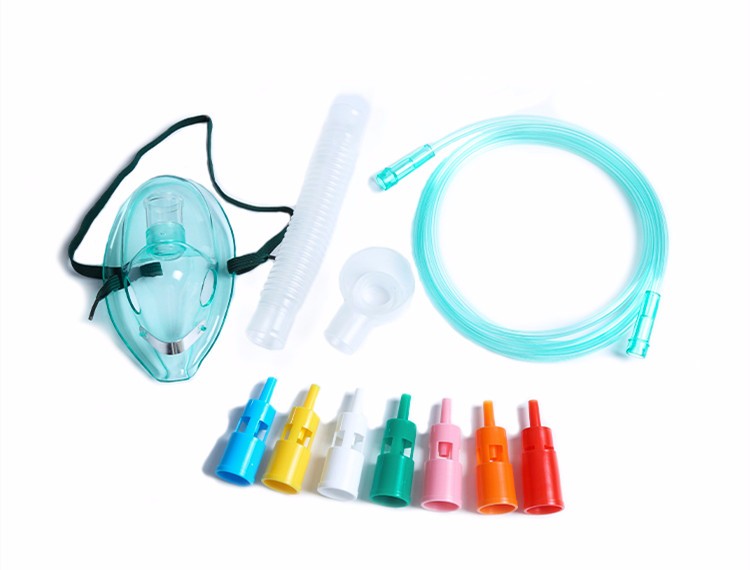
    In this article A Venturi mask delivers a fixed, precise FiO₂ (typically 24–60%) for controlled oxygen therapy, while a non-rebreather mask pushes near-100% oxygen from a reservoir bag for emergencies. This guide explains how each works, where they fit clinically, and what to specify when procuring them for your facility. What Each Device Actually Does Oxygen masks look similar on the shelf, but a Venturi mask and a non-rebreather mask solve opposite problems. The Venturi is a controlled-delivery device built for patients who must not receive too much oxygen — most famously people with COPD, where over-oxygenation can suppress respiratory drive and trigger CO₂ retention. The non-rebreather is a high-output rescue device: it floods the airway with the highest concentration a mask can deliver, and it is meant for minutes to hours, not days. If you stock only one type, you will eventually face a patient who needs the other. That is why most procurement lists for hospitals, EMS services, and even well-equipped clinics carry both. Venturi Mask: Precision When Control Matters The Venturi mask earns its name from the Venturi effect. A small, color-coded jet forces oxygen through a narrow orifice at speed; that fast stream pulls in a measured amount of room air through side ports. Swap the adapter (or turn the dial on adjustable models) and you set a fixed FiO₂ — commonly 24%, 28%, 31%, 35%, 40%, or 60% — almost regardless of how the patient breathes. For a buyer, the practical specs are: FiO₂ range: roughly 24–60%, set by adapter. Flow rate: around 4–12 L/min depending on the selected concentration. Key safety feature: an anti-asphyxia valve that keeps air moving if the oxygen supply drops. Because the delivered concentration barely drifts with the patient's tidal volume, the Venturi is the device respiratory therapists reach for when "close enough" is not safe. Target saturations for hypercapnia-risk patients typically sit at 88–92%, and only a fixed-FiO₂ device holds that line reliably. Non-Rebreather Mask: Maximum Oxygen, Fast A non-rebreather mask pairs a tight-fitting face mask with a reservoir bag and one-way valves. On inhalation the patient draws from the bag; on exhalation the valves route spent gas away so almost none is rebreathed. Run at 10–15 L/min with the bag kept at least partly inflated, it can deliver up to roughly 90–100% oxygen. This is the mask for the trauma bay, the ambulance, and the cardiac-arrest lineup. It is the fastest way to buy time before intubation or mechanical ventilation. But it is a short-term tool: clinicians are taught not to leave a patient on a non-rebreather beyond about 24 hours, and anyone who needs that much oxygen for longer belongs on a ventilator or high-flow system. Venturi vs Non-Rebreather: The Key Differences | Factor | Venturi Mask | Non-Rebreather Mask | | FiO₂ control | Fixed, precise (24–60%) | High but variable (up to ~100%) | | Typical flow | 4–12 L/min | 10–15 L/min | | Best use | Controlled therapy, COPD | Emergency, severe hypoxia | | Duration | Long-term / ongoing | Short-term only | | Safety valve | Anti-asphyxia valve | One-way reservoir valves | The headline difference is control versus output. A Venturi mask answers "exactly how much?" A non-rebreather answers "as much as possible, now." When to Reach for Each One Reach for the Venturi when the patient is at risk of hypercapnic respiratory failure — known or suspected COPD, a long-term smoker with chronic breathlessness, or a post-op patient with compromised lungs. Start low (24% at 2–3 L/min, or 28% at 4 L/min) and titrate against blood gases. Reach for the non-rebreather for major trauma, shock, anaphylaxis, CPR, carbon monoxide poisoning, or any critically ill patient until reliable saturations are confirmed. Set the target at 94–98% in that group. One hard rule: do not put a non-rebreather on a COPD patient in steady state — the uncontrolled concentration can precipitate the very failure you are trying to avoid. Common Procurement Mistakes Buyers Make Buying on price per unit alone. A mask that fogs, leaks, or has a sticky valve costs more in wasted oxygen and clinician time than the few cents saved. Forgetting adapters. Venturi masks are useless without the full color-coded adapter set; confirm the kit includes every concentration you stock. Ignoring strap and cushion quality. Transparent, soft-cushioned masks improve fit and patient tolerance, which directly affects delivered FiO₂. Skipping the reservoir check. For non-rebreathers, verify the bag inflates and the valves seat correctly out of the box. No MOQ planning. Emergency stockouts are expensive; align minimum order quantities with your consumption rate and reorder lead time. The simple rule for any buyer: carry both, train staff on when each applies, and treat mask quality as a clinical specification rather than a commodity line item. A ventilation decision made in seconds depends on the device in your hand working exactly as labeled. Related Products PVC Anesthesia Masks with Ultra-Soft Cushion (TW8374)— soft-seal masks for OR and respiratory circuits.View product →Resuscitation Mask with One-Way Valve, Emergency Face Mask (TW8342)— barrier protection for mouth-to-mask ventilation.View product →Adult Silicone Manual Resuscitator (TW8111)— reusable, autoclavable BVM for emergency ventilation.View product →Adult PVC Manual Resuscitator / Ambu Bag (TW8311)— cost-effective disposable BVM for pre-hospital use.View product → Why Partner With Tianzuo Medical Xiamen Tianzuo Medical is a one-stop manufacturer integrating R&D, molding, and production of emergency, anesthesia, and respiratory consumables. Our facility runs under ISO 13485:2016 with CE and FDA-listed status, and our team helped draft China's technical review guidelines for manual resuscitators — a measure of how seriously we treat airway safety. For distributors, tender buyers, and procurement managers, we are built for volume: OEM and ODM are our forte, with private-label options, flexible MOQ, and bulk-order pricing backed by export documentation. Whether you need a container of BVMs or a mixed respiratory bundle for a tender, we ship as a single B2B medical supplier partner rather than a patchwork of vendors. Ready to specify your next order? Contact our team at https://www.tianzuomedical.com/contact-us or email Stephen@tzmed.com for a quote, sample request, or catalog. Frequently Asked Questions What is the main difference between a Venturi mask and a non-rebreather mask? A Venturi mask delivers a fixed, precise FiO₂ (about 24–60%) for controlled therapy, while a non-rebreather mask delivers the highest possible oxygen (up to ~100%) from a reservoir bag for emergencies. When should I use a Venturi mask instead of a non-rebreather? Use a Venturi mask for patients at risk of CO₂ retention, especially known or suspected COPD, where target saturations of 88–92% must be held precisely. Can a non-rebreather mask be used long term? No. It is a short-term rescue device; clinicians avoid using it beyond roughly 24 hours, after which the patient typically needs intubation, mechanical ventilation, or a high-flow system. What flow rate should a non-rebreather mask run at? Usually 10–15 L/min with the reservoir bag kept at least partially inflated, so the patient always draws from oxygen rather than room air. Do Venturi masks need special adapters? Yes. They use color-coded adapters (or an adjustable dial) that set the FiO₂; confirm the full adapter set is included when procuring, or the mask cannot deliver its precise concentrations.
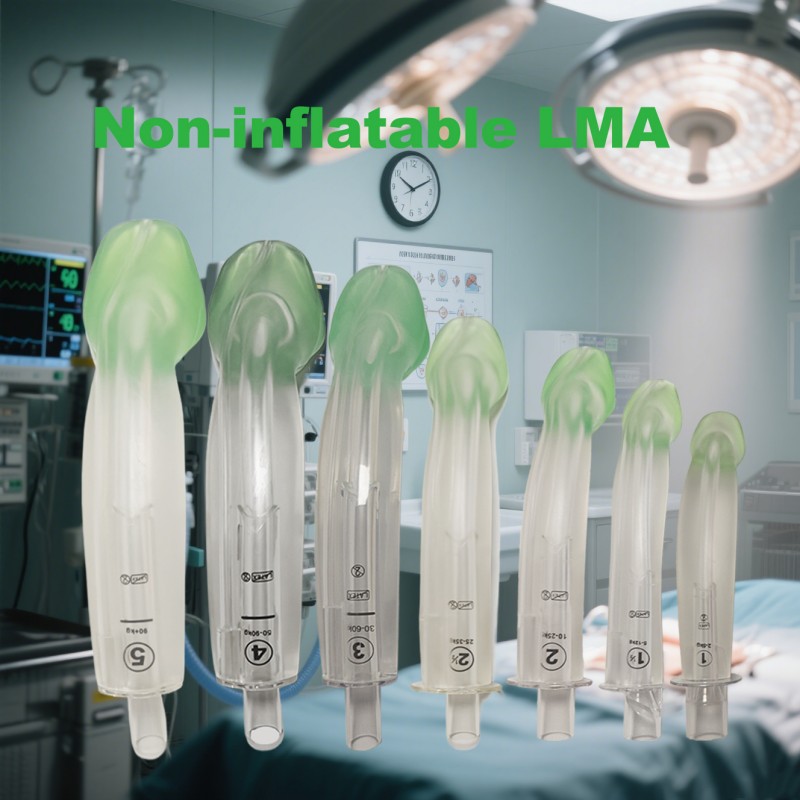
  • Laryngeal Mask Airway (LMA) vs Endotracheal Tube: How to Choose the Right Airway
    Laryngeal Mask Airway (LMA) vs Endotracheal Tube: How to Choose the Right Airway
    Sep, 01 2026
    In this article Choosing between a laryngeal mask airway and an endotracheal tube comes down to one question: how much airway protection and ventilation pressure does the patient actually need? The LMA is a supraglottic device placed above the vocal cords; the ETT is an infraglottic tube that seals inside the trachea. This guide breaks down when each wins, so procurement teams and clinicians can stock and specify the right tool. What Is a Laryngeal Mask Airway (LMA)? A laryngeal mask airway is a supraglottic airway device. It consists of a flexible tube with an elliptical, inflatable cuff at the distal end. The clinician inserts it blind — no laryngoscope, no direct view of the cords — and seats the cuff over the laryngeal inlet, where it forms a low-pressure seal around the top of the larynx. Air is channeled toward the lungs without ever passing through the vocal cords. Since its clinical introduction in the 1980s, the LMA has become a staple of ambulatory and short-procedure anesthesia. First-attempt insertion success routinely exceeds 95% in trained hands, and because the device never enters the trachea, it spares the patient the airway trauma associated with intubation. What Is an Endotracheal Tube (ETT)? An endotracheal tube is an infraglottic device. After induction, the provider uses a laryngoscope to visualize the vocal cords and passes a cuffed tube through them into the trachea. Inflating the distal cuff creates a tight, definitive seal against the tracheal wall. That seal is what makes the ETT the gold standard whenever absolute airway isolation matters. The Core Difference That Drives the Decision The single most important distinction is where the seal sits. An LMA seals *above* the glottis; an ETT seals *inside* the trachea. That anatomical gap determines three things buyers and anesthesiologists care about: Aspiration protection. Only the ETT truly isolates the lungs from the esophagus. An LMA offers low-to-moderate protection at best. Pressure tolerance. An ETT holds up under high positive-pressure ventilation. An LMA cuff can leak when airway pressures climb above roughly 25 cmH₂O. Invasiveness. The LMA is gentler on teeth, vocal cords, and mucosa, which translates into fewer sore throats and a faster emergence. In plain terms: the ETT is the safer choice when the stakes are aspiration or high-pressure ventilation; the LMA is the smarter choice when you want speed, comfort, and a lighter physiological footprint. When an LMA Is the Better Choice Reach for an LMA in scenarios such as: Short to medium elective surgeries (under roughly two hours) where the patient can breathe spontaneously or with light support. Ambulatory and day-surgery units, where faster recovery and lower postoperative nausea directly improve throughput. Rapid airway establishment in settings where laryngoscopy expertise or equipment is limited — the blind insertion technique keeps time-to-ventilation short. Patients at low aspiration risk with normal anatomy and no full-stomach concern. Because insertion does not require deep neuromuscular blockade, the LMA also reduces drug load and shortens the recovery window — a real operational advantage for high-turnover operating rooms. When the Endotracheal Tube Wins Specify an ETT when any of these apply: Full stomach, pregnancy, severe GERD, or obesity — anywhere regurgitation risk is elevated, the tracheal seal is non-negotiable. Prolonged or complex procedures, especially abdominal, thoracic, or prone-position surgery where tube security matters. High ventilation pressures or poor lung compliance, where an LMA cuff would simply leak. Airway itself is the surgical field, or substantive airway obstruction is present. The ETT remains the default for critical-care and emergency definitive airway control. No supraglottic device replaces it there. Materials and Single-Use Considerations for Buyers From a procurement standpoint, LMAs and face masks come in reusable silicone and single-use PVC or PVC-free formats. Single-use devices remove sterilization load, eliminate cross-contamination risk, and simplify inventory in busy ORs and EMS settings. For facilities running tenders or distributor programs, confirming CE, ISO 13485, and FDA documentation up front prevents delays at customs and during hospital qualification. Sizing is another practical detail distributors should not overlook. LMAs are supplied across a size range — typically size 1 for neonates up through size 5 for large adults — and a mixed stock is the only way to cover a real patient census. Cuff volume matters too: over-inflation causes mucosal ischemia, so procurement specs should match cuff capacity to the sizes a facility actually uses rather than buying on price alone. Tianzuo Medical does not manufacture the LMA itself, but the device is almost never used alone. It sits inside an anesthesia workflow that depends on compatible masks, seals, and backup ventilation — exactly the category of consumables a B2B buyer needs to source alongside any airway program. Choosing for Your Facility Map the decision to your case mix. High-volume day surgery with low-risk patients → favor LMAs and the consumables around them. Mixed or high-acuity hospitals → keep ETTs and full airway carts stocked. Most facilities run both, which is why a reliable manufacturer partner who can supply masks, resuscitators, and related disposable airway hardware on consistent lead times is worth more than a one-line product discount. One more operational point: the LMA lowers the skill floor for airway establishment, but it does not remove the need for credentialing. Any facility adopting it should pair the device with a clear failed-airway protocol and a ready backup — usually a bag-valve mask and, when indicated, a supraglottic-to-ETT escalation plan. Specifying the consumables for that backup kit is part of the same procurement conversation. Related Products PVC Anesthesia Masks with Ultra-Soft Cushion (TW8374)View product →Resuscitation Mask with One-Way Valve (TW8342)View product →Adult Silicone Manual Resuscitator (TW8111)View product →Adult PVC Manual Resuscitator / Ambu Bag (TW8311)View product →Adult SEBS Manual Resuscitator (TW8211)View product → Why Partner With Tianzuo Medical Xiamen Tianzuo Medical is a one-stop manufacturer integrating R&D, molding, and production of emergency, anesthesia, and respiratory consumables. Our strength is OEM / ODM: we support private-label programs, distributor exclusivity, and bulk orders with flexible MOQ for wholesalers and procurement teams worldwide. Every production line runs under ISO 13485:2016 with CE and FDA registration, and our team helped draft China's technical review guidelines for manual resuscitators — a measure of the engineering depth behind the products. Whether you are equipping an OR, an EMS crash cart, or a tender bid, we deliver consistent quality, export documentation, and responsive lead times. Talk to our team about your airway and ventilation program: Inquiry page: https://www.tianzuomedical.com/contact-us Email: Stephen@tzmed.com Frequently Asked Questions Is an LMA the same as intubation? No. Intubation means passing a tube through the vocal cords into the trachea (an ETT); an LMA sits above the cords and is documented as supraglottic airway placement, not intubation. Which device causes less sore throat after surgery? The LMA. Because it never enters the trachea, postoperative sore throat and hoarseness rates are markedly lower than with an endotracheal tube. Can an LMA be used for high-pressure ventilation? Only limited. The cuff may leak above roughly 25 cmH₂O, so patients needing high airway pressures should be managed with an ETT. When is an ETT mandatory over an LMA? When aspiration risk is high (full stomach, pregnancy, severe GERD, obesity), for prolonged or prone surgery, or whenever tight airway isolation is required. Are LMAs available as single-use devices? Yes. Many are supplied pre-sterilized in medical-grade PVC or silicone for single use, which removes sterilization burden and cross-contamination risk in high-turnover settings.
  • How to Choose a CPAP Mask: Full Face vs Nasal vs Nasal Pillow (2026 Buyer's Guide)
    How to Choose a CPAP Mask: Full Face vs Nasal vs Nasal Pillow (2026 Buyer's Guide)
    Aug, 27 2026
    In this article Choosing the right CPAP mask comes down to three things: how the patient breathes at night, how much facial coverage they will tolerate, and whether the seal holds at the prescribed pressure. This guide breaks down full-face, nasal, and nasal-pillow masks so B2B buyers can match the right style to the right user — and stock the range distributors actually ask for. Why the Mask Type Matters as Much as the Machine A CPAP machine only works if the interface delivers pressurized air without leaking. In practice, a poorly matched mask causes more therapy failure than a wrong pressure setting. Mouth breathing breaks a nasal seal overnight; a bulky full-face mask irritates claustrophobic users; high prescribed pressures need a more robust cushion than a minimal nasal pillow can hold. For a distributor or procurement manager, that means one size never fits all — the catalog has to cover the full spread of face shapes, sleeping positions, and prescription levels, or stockouts and returns pile up. The Three Main CPAP Mask Types Full-face masks cover both nose and mouth. They are the default for mouth breathers, chronic nasal congestion, and higher pressure settings, because air has two exit paths if the seal is imperfect. The trade-off is more facial contact and more potential leak points around the perimeter. Nasal masks seal around the nose only. They suit consistent nose breathers and feel less intrusive, with a wider field of vision for reading or watching TV. They fail the moment the mouth drops open, so some users need a chin strap to keep the seal intact. Nasal pillow masks use small cushions that sit at the nostril openings. They are the lightest and least claustrophobic option — ideal for side sleepers, stomach sleepers, and glasses wearers — but they concentrate airflow directly at the nostrils and struggle at high pressures. None of the three is universally "best." Each solves a different combination of breathing habit, face shape, and pressure need, which is exactly why a single SKU cannot serve every customer. Matching a Mask to the User Start with the breathing pattern. Mouth breathers at night should go straight to a full-face mask. Reliable nose breathers can use a nasal or nasal-pillow mask. Then weigh sleep position: side and stomach sleepers do best with the minimal contact of nasal pillows, while back sleepers tolerate bulkier full-face designs. Finally, check the prescribed pressure — higher settings generally need the larger sealing surface of a full-face or nasal mask rather than a pillow. Comfort in the first two weeks drives long-term adherence, and adherence is what makes CPAP clinically effective. A good supplier expects first-mask mismatches and plans for exchanges; for a B2B buyer, that argues for stocking multiple styles and sizes rather than betting the whole order on one product. Sizing, Fit, and the Procurement Checklist Most CPAP masks ship in S/M/L (sometimes XL), and the right size depends on face width and nose-bridge shape, not body weight. When evaluating a supplier, look for soft, skin-friendly cushions; adjustable, low-marking headgear; clear sizing cues; and modular parts — cushions, frames, and headgear that can be reordered separately to extend product life and cut returns. For wholesale buyers, the secondary checklist is commercial. Consistent sizing across the range, stable material quality (silicone cushion vs PC shell vs PVC), and private-label or OEM/ODM support matter as much as the mask itself. So do the certifications distributors need for tender and export: ISO 13485, CE, and FDA listing. A manufacturer that handles molding and assembly in-house also protects you from the supply gaps that appear when demand spikes. Tianzuo Medical's CPAP Mask Range Our CPAP lineup covers the three core styles so distributors can fill one sourcing relationship instead of several. The range includes half-face CPAP masks (TW8186 / TW8186B, sizes L/M), a nasal CPAP mask (TW8189, sizes L/M/S), a full-face silicone CPAP mask (TW8190-L, adult), and a PVC CPAP mask (TW8187, sizes L/M/S). Options span PC shell, silicone cushion with or without pad, and forehead-support variants — letting you match comfort tier to price point across different markets without multiplying suppliers. Related Products PVC Anesthesia Masks with Ultra-Soft Cushion— soft-seal airway interface for OR and ventilation use.View product →Emergency Resuscitation Mask with One-Way Valve— CPR and rescue-breathing protection with a filtered valve.View product →Adult Silicone Manual Resuscitator— reusable BVM for pre-hospital and ICU ventilation.View product →SEBS Manual Resuscitator— latex-free, cold-resistant resuscitation bag for single-patient use.View product →Portable Suction Device— airway clearance for emergency and transport settings.View product → Why Partner With Tianzuo Medical Xiamen Tianzuo Medical is a one-stop manufacturer integrating R&D, molding, and production, with OEM and ODM services as our forte. Our quality system is certified to ISO 13485:2016, products carry CE certification and are FDA-listed, and our team drafted China's *Guidelines for the Technical Review of Manual Resuscitator Registration*. For distributors and procurement teams we offer stable bulk supply, competitive MOQ, private-label and custom-mold options, and full export documentation. Whether you need a single CPAP style or a complete respiratory catalog, we ship directly from the factory. Contact us today at our inquiry page or email Stephen@tzmed.com to request a quote, samples, or a distributor agreement. Frequently Asked Questions Which CPAP mask is best for mouth breathers? A full-face mask, because it covers both nose and mouth and keeps the seal even when the mouth opens during sleep. Can a nasal mask be used if the patient breathes through the mouth? Only with a chin strap to keep the mouth closed; otherwise air leaks and therapy drops, so a full-face mask is usually the safer choice. Are nasal pillow masks suitable for high CPAP pressure? They can feel uncomfortable at high pressures because airflow is concentrated at the nostrils; full-face or nasal masks handle higher settings better. How often should CPAP mask cushions be replaced? Typically every 3–6 months depending on use and wear; offering replacement cushions separately reduces returns and builds repeat B2B orders. Do Tianzuo CPAP masks support OEM and private label? Yes. As a manufacturer we provide OEM/ODM, private-label, and custom-mold options with CE, ISO 13485, and FDA-listed documentation for export and tender.
Prev
1 2 3 4
Next
Sign Up To Get The Latest updates

Please read on, stay posted, subscribe and we welcome you to tell us what you think

leave a message

leave a message
Ready to scale your medical business? Click here to get a free quote & catalog!
submit

Home

Products

WhatsApp

contact

Tell us your requirements (e.g., Quantity, Destination Port)
leave a message
Ready to scale your medical business? Click here to get a free quote & catalog!
Submit