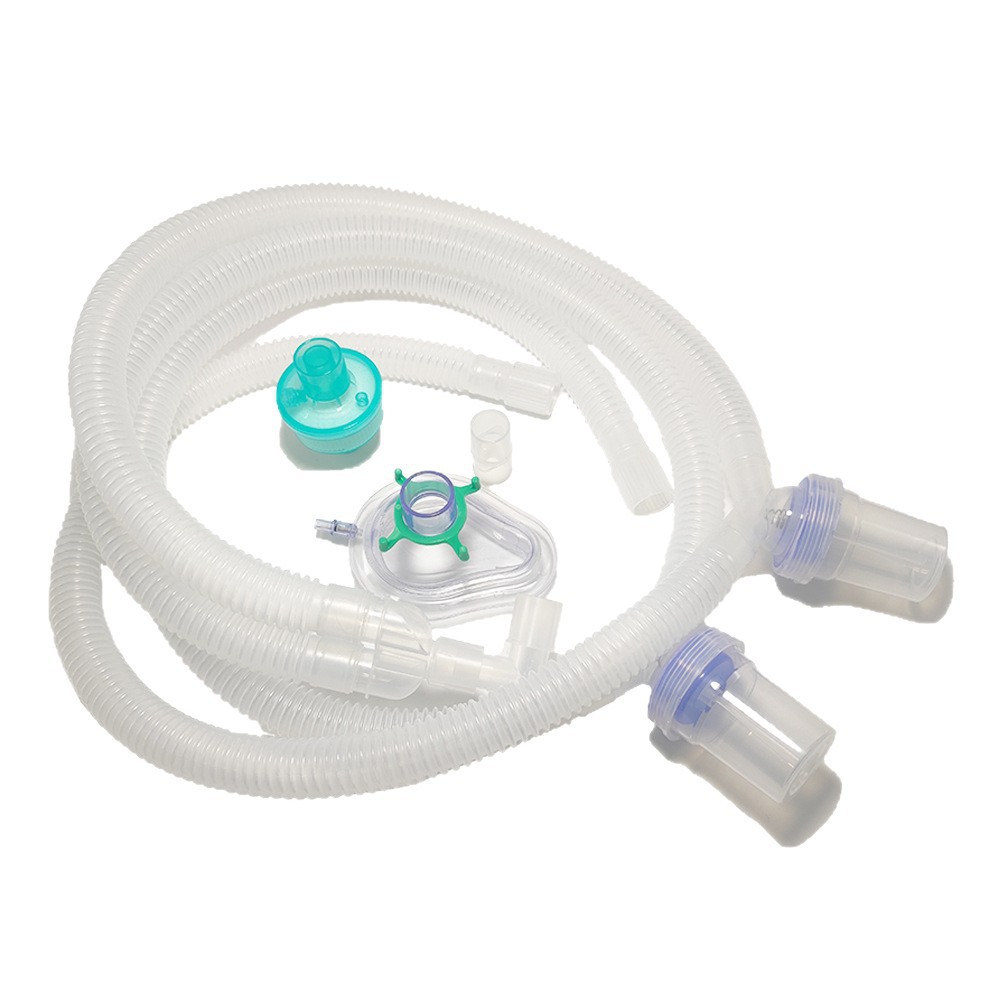
manual resuscitator manufacturer

Blog

  • Tianzuo Medical: Your Trusted Partner for Emergency & Respiratory Solutions | ISO 13485 & FDA Registered
    Tianzuo Medical: Your Trusted Partner for Emergency & Respiratory Solutions | ISO 13485 & FDA Registered
    May, 22 2026
    H1: Tianzuo Medical: Engineering Reliability for Global Healthcare   1. Introduction: More Than Just a Manufacturer In the fast-paced world of global healthcare, reliability isn't optional—it's the foundation of trust. At Tianzuo Medical, we understand that every second counts in emergency and respiratory care. For years, we have been dedicated to bridging the gap between clinical necessity and innovative engineering. Unlike generic suppliers, we focus on delivering durable, safe, and compliant medical solutions tailored for both clinical settings and homecare environments.   2. Solving Critical Challenges in Emergency Medicine The landscape of emergency care is evolving. Medical professionals today demand equipment that is not only effective but also easy to use and maintain. We recognized early on that standard first aid kits often lack the robustness required for pre-hospital scenarios. That’s why we channel our expertise into developing high-performance manual resuscitators, anesthesia masks, and immobilization devices. Whether it’s a high-stress ambulance response or a routine home nebulization therapy, our products are engineered to perform consistently under pressure. We don't just sell devices; we provide peace of mind during critical moments.   H2: The Pillars of Our Excellence   1. Innovation Rooted in StandardsWhat sets us apart is our active role in shaping industry regulations. As a drafting enterprise for China’s Technical Review Guidelines for Manual Resuscitator Registration, our R&D team doesn't just follow standards—we help define them. This deep involvement ensures that our designs are always ahead of the curve, incorporating the latest clinical feedback and technological advancements to reduce the risk of device failure.   2. Uncompromising Quality ControlQuality is non-negotiable in our facility. We operate under the strict ISO 13485:2016 quality management system, ensuring that every component meets the rigorous demands of international markets. Global Compliance: Our products are certified to meet EU MDD 93/42/EEC requirements, ensuring they are market-ready across Europe. US Market Access: With FDA registration, we guarantee that our devices adhere to the safety and performance standards expected by American healthcare providers. In-House Capabilities: From mold design to final assembly, maintaining in-house control allows us to monitor quality at every single touchpoint.   3. Flexible Manufacturing & PartnershipWe believe in building partnerships, not just processing orders. Our advanced production lines are equipped to handle both high-volume output and specialized requests. OEM/ODM Services: Whether you need a custom-branded anesthesia mask or a unique immobilization solution, our team offers flexible OEM and ODM services. Scalability: With well-equipped facilities, we can scale production to meet your specific market demands without compromising on delivery timelines.   Conclusion: A Promise of Partnership At Tianzuo Medical, our mission extends beyond manufacturing. We are committed to a culture of responsibility and innovation. By choosing us, you’re not just sourcing products; you’re gaining a partner who is equally invested in making emergency care safer and more accessible worldwide. Let’s build a healthier future together.
  • A Tribute to Nurses: The Heartbeat of Healthcare
    A Tribute to Nurses: The Heartbeat of Healthcare
    May, 12 2026
    🩺 More Than a Job: It’s a Calling Nursing isn’t just a profession. It’s a commitment to showing up — again and again — for people in their most vulnerable moments. Whether it’s a trauma bay at 2 AM, a long-term rehab floor, or a quiet bedside conversation with a worried family, nurses bring the same things every time:Skill. Patience. And genuine compassion. They are the calm in chaos. The steady hand. The voice that says, “I’ve got you.” 🛠️ Behind Every Life-Saving Tool, There’s a Nurse As a medical device manufacturer, we don’t just design products. We watch how they’re used — in real emergencies, real recoveries, real days. We see nurses reach for manual resuscitators when every second matters. We see them check anesthesia masks, adjust respiratory devices, and trust that their tools will work — so they can focus on the patient, not the equipment. That’s why we listen closely to nurses.Your feedback shapes our designs. Your clinical experience tells us what works, what fails, and what needs to be better. Because the best medical device isn’t the most advanced one.It’s the one a nurse can trust — without thinking twice. 💙 To Every Nurse, Everywhere To the nurses working overnight shifts, weekend doubles, and holiday rotations.To those in busy city ERs, small rural clinics, and home care visits.To the new grads and the 30-year veterans: Thank you. You show up. You stay kind. You make the hard calls.And you do it all again the next day. We see you. We appreciate you. And we’re proud to build tools that support your work — because your work saves lives. Happy International Nurses Day.You truly are the heartbeat of healthcare.
  • Three‑Ball Incentive Spirometer: Daily Lung Training That Actually Works
    Three‑Ball Incentive Spirometer: Daily Lung Training That Actually Works
    May, 11 2026
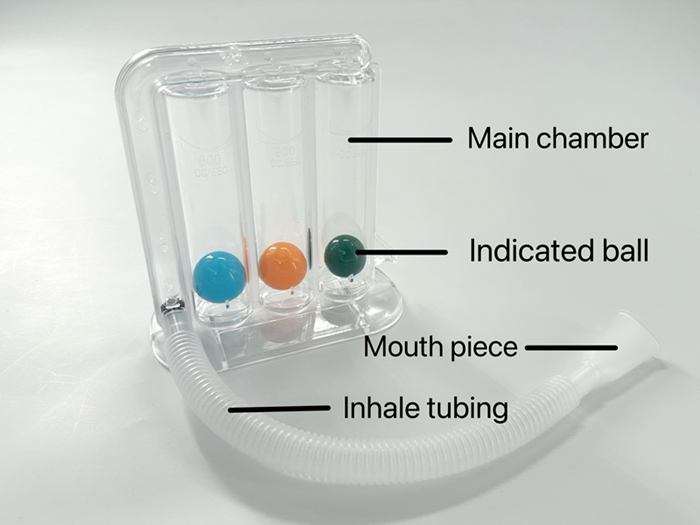
    What Is a Three‑Ball Incentive Spirometer? A three‑ball incentive spirometer is a simple, non‑invasive breathing device. It helps patients rebuild lung strength through guided deep breathing. Whether you’re recovering from surgery, managing a chronic respiratory condition, or just want better daily lung health, this tool gives you clear visual feedback. It’s lightweight, portable, and works just as well at home as in a clinical setting. The design is straightforward: three balls rise inside a chamber when you inhale. The higher they go, the deeper your breath. That immediate feedback makes training easy—and effective. 💡 Why Use a Three‑Ball Spirometer? Regular use helps: Expand lung capacity Clear mucus and respiratory secretions Reduce chest congestion Breathe more comfortably over time It’s especially useful for: Post‑operative patients (especially chest or abdominal surgery) People with COPD, asthma, or other chronic lung issues Anyone looking to strengthen their lungs before or after illness 🔧 Key Specs You Should Know     Feature Details Purpose Deep breathing, lung expansion, mucus clearance Flow rate levels 3 adjustable levels: 600±60 / 900±90 / 1200±120 cc/sec Main chamber material PS (medical grade) Indicator balls ABS Mouthpiece PP, non‑toxic Filter sponge FOAM Other components PE These materials meet international safety standards—safe for repeated use. 📋 How to Use (Step by Step) Follow these steps for correct and effective training: Sit or stand upright – in a chair, on a bed, or standing straight. Connect the tubing to the main chamber. Hold the spirometer vertically. Exhale normally, then place the mouthpiece in your mouth. Seal your lips tightly around it. Inhale slowly and deeply – like sipping through a thick straw.Try to raise one, two, or all three balls, and hold them up for 2–3 seconds. Remove the mouthpiece and exhale slowly. Repeat steps 3–5 as many times as your doctor or therapist recommends. Clean the mouthpiece after each use. Air‑dry it and store it in a clean bag. 📌 Always keep the spirometer upright during use—if tilted, the readings won’t be accurate. 🧼 Storage & Transport Tips To keep your spirometer working properly: Storage: Keep indoors in a cool, dry, well‑ventilated place Humidity ≤80% Avoid corrosive gases, dust, and direct sunlight Transport: Don’t crush or place heavy objects on top Keep away from rain, snow, and sun exposure ✅ Quick Maintenance Checklist     After each use Clean and air‑dry the mouthpiece Weekly Wipe the chamber with a dry cloth Monthly Check for cracks or worn parts As needed Replace if balls don’t move smoothly 🏁 Final Takeaway A three‑ball incentive spirometer is one of the simplest, most reliable tools for improving lung health. It gives real‑time feedback, fits any setting, and works for both rehab and daily maintenance. If you or your patients need better breathing training—without complexity or high cost—this is a smart place to start.
  • 🚨 Common Manual Resuscitator Failures (And How to Fix Them Fast)
    🚨 Common Manual Resuscitator Failures (And How to Fix Them Fast)
    May, 11 2026
    In emergency situations, a manual resuscitator—often called a bag-valve mask (BVM) or AMBU bag—can mean the difference between life and death.But even small malfunctions can compromise ventilation. Knowing how to spot and fix common issues is a critical skill for any healthcare professional. Below, we break down the most frequent BVM problems, what causes them, and how to troubleshoot them on the spot. 1. Air Leaks During Use Air leakage is the #1 complaint with manual resuscitators. It usually happens at three points: the mask seal, the valve connections, or the bag itself. 🔍 How to fix it: Reapply the mask to ensure a tight face seal. Adjust head positioning if needed. Check the inlet and outlet valves for cracks, dirt, or debris that might prevent sealing. Look over the bag for any visible tears, holes, or worn spots. ✅ A small leak can greatly reduce tidal volume. Always start troubleshooting at the mask. 2. Valve Malfunctions Faulty valves directly affect airflow direction and volume. Here’s what to watch for:     Problem What happens Quick fix Inlet valve stuck closed Bag won’t refill after squeezing Clean or replace valve Outlet valve stuck open Air flows back into bag, not patient Inspect and replace if needed Faulty PEEP valve Incorrect pressure in critical care Pre-test PEEP function before use 🧪 Pro tip: Test all valves before putting a resuscitator into service. This prevents most field failures. 3. The Bag Won’t Refill You squeeze the bag… and it stays flat. This is usually a refill issue, not a bag problem. Common causes and fixes: Check oxygen tubing – kinks or blocks are the #1 cause. Look at the inlet valve – if stuck, it can’t draw air or O₂. Verify gas source – low pressure or empty tank = no refill. Work from the outside in: tubing → connections → oxygen source → valve. 4. Poor Chest Rise (Even When Squeezing) This is frustrating. You’re squeezing the bag, but the patient’s chest barely moves. Step-by-step troubleshooting: Recheck mask seal – a loose mask = lost volume. Open the airway – use head-tilt, chin-lift or jaw-thrust. Clear obstructions – suction if you suspect secretions or foreign body. Inspect the resuscitator – bag tear or valve failure may reduce output. 👉 Poor chest rise is rarely just one issue. Always check both patient and equipment. 🛠️ Pre-Use Checklist (Prevents Most Failures) Do this before every shift or patient contact: Squeeze the bag and watch for smooth refill. Listen for air leaks around valves and mask. Inspect all ports, tubing, and mask for cracks or blockages. Test oxygen flow if connected to a source. Store BVMs in clean, dry, and temperature-controlled conditions. 📅 Replace expired or worn parts immediately—don’t wait for failure. 🔄 When to Retire a Resuscitator No BVM lasts forever. Replace yours immediately if: The bag is cracked, torn, or permanently deformed. Valves fail after cleaning and reassembly. The device has passed its expiration date (yes, BVMs expire). It no longer meets safety standards (ISO 10651-4, AHA guidelines). 💡 A failing BVM puts patients at risk. Reliable equipment saves lives—don’t compromise.
  • Building Trust in Medical Devices: The Hidden Value of Responsible Manufacturing
    Building Trust in Medical Devices: The Hidden Value of Responsible Manufacturing
    May, 07 2026
    In the global medical device industry, earning trust in medical equipment is no easy feat—it requires consistent quality assurance, a reliable supply chain, and a long-term commitment to accountability. For clinics, hospitals, distributors, and emergency response teams around the world, choosing a responsible partner will make every link in the supply chain more stable and reliable.   Consistency in Every Detail Medical devices require strict control at every stage, from material selection to production, testing, and packaging. Small differences in craftsmanship can affect real world performance. Responsible manufacturers follow standardized processes to ensure each product meets expectations, batch after batch.      Safety as a Top Priority Safety is the foundation of medical care. Reliable suppliers use safe, tested materials and follow international safety guidelines. They invest in quality control and testing to reduce risks, support better clinical outcomes, and protect both users and patients.   Reliable Supply for Critical Moments Emergency and clinical settings cannot afford interruptions. Stable production planning, transparent lead times, and responsible inventory management help ensure products arrive on time, even during market fluctuations. A steady supply means greater peace of mind for long term planning.    Long-Term Partnership Over Short-Term Transaction  The most valuable business relationships are built on consistency and support. Responsible manufacturers focus on sustainable cooperation, clear communication, and flexible solutions. They stand behind their products and support partners as markets and needs evolve.   Conclusion Trust in medical devices comes from responsibility: consistent quality, reliable delivery, safety focus, and long-term partnership. These elements create real, lasting value for every user and partner in the global healthcare community.
  • Why High-Quality First Aid Equipment Boosts Rescue Success Rates
    Why High-Quality First Aid Equipment Boosts Rescue Success Rates
    Apr, 29 2026
    When seconds count in an emergency, the difference between life and death often comes down to one critical factor: the quality of your first aid equipment. Cheap, low-grade gear can malfunction when you need it most, while professional, reliable first aid tools directly improve treatment outcomes, keep responders safe, and streamline emergency care. In this guide, we break down exactly how top-tier emergency medical equipment turns high-pressure situations into successful rescues.       Stable Emergency Performance: Gear That Doesn’t Fail When It Matters Most   In chaotic environments—ambulances, accident scenes, ICUs, and field emergencies—your equipment must perform consistently, no matter the stress.   Premium manual resuscitators and professional first aid devices deliver:   Steady, reliable tidal volume for proper ventilation Smooth, uninterrupted airflow Fully functional valves that won’t stick or leak   Unlike low-quality alternatives that can fail under pressure, high-grade emergency gear maintains stable performance in real-world crisis conditions. This reliability means you can focus on patient care, not troubleshooting broken equipment.     Superior Safety & Infection Control: Protecting Patients and Providers   Emergency care isn’t just about saving lives—it’s about keeping everyone safe from avoidable harm. High-quality first aid equipment is built with strong infection control in mind:   Medical-grade, non-toxic materials that meet strict health standards Disposable components to eliminate cross-contamination Independent exhalation systems that reduce infection risk Patented structural designs that prevent fluid or bacterial contamination   These features make professional gear the safest choice for both pre-hospital emergency response and in-clinic treatment.     Ultra-Low Impedance: Easier Ventilation for Better Patient Outcomes   One of the most overlooked but vital advantages of premium first aid equipment is its low breathing impedance.   Top manual resuscitators offer:   Inspiratory impedance as low as 2.0 cmH₂O Expiratory impedance of just 1.9 cmH₂O Well below the global standard of <5 cmH₂O   For patients in respiratory failure, this makes a life-changing difference. Lower impedance means less effort for the patient to breathe during resuscitation, improving oxygen delivery and reducing fatigue during critical care.     Global Certifications: Trusted by Hospitals and Emergency Teams Worldwide   Quality first aid equipment isn’t just well-made—it’s certified and recognized globally. Products that pass international safety and performance standards are the preferred choice for:   Hospitals and medical clinics Professional emergency response teams Medical distributors and suppliers International procurement organizations   Certifications ensure compatibility, reliability, and acceptance across different healthcare systems and regions.     Final Thoughts: Quality First Aid Equipment Is Non-Negotiable   Emergency care doesn’t give you a second chance. Low-cost, low-quality first aid gear may seem economical upfront, but it puts patients and responders at serious risk during crises.   Investing in high-quality, professional emergency medical equipment means:   Consistent performance when every second counts Stronger infection control and safety Better patient comfort and ventilation outcomes Global trust and compliance with medical standards   If you’re responsible for emergency preparedness—whether for a hospital, ambulance team, workplace, or community program—never compromise on first aid equipment quality. It’s the foundation of successful rescue and effective life-saving care.  
  • Why Quality & Reliability Are Non-Negotiable in Emergency Medical Supplies
    Why Quality & Reliability Are Non-Negotiable in Emergency Medical Supplies
    Apr, 24 2026
    In emergency medicine, every second counts. The right emergency medical supplies don’t just support care—they can mean the difference between life and death. Whether in ambulances, field response sites, clinics, or hospital emergency rooms, reliable, high-quality medical equipment keeps operations smooth, protects patients, and gives healthcare teams the confidence to act fast.   Low-quality supplies lead to delayed treatment, avoidable risks, and broken trust. That’s why quality, reliability, and compliance are not optional—they’re essential for anyone working in emergency care, global distribution, or medical procurement.       Quality Consistency Reduces Preventable Risks   Emergency care allows zero room for equipment failure. Tianzuomedical Medical devices and emergency supplies must follow strict manufacturing standards and safety rules to perform consistently when needed most.   Even small quality flaws can create serious problems:   Delayed or interrupted emergency treatment Unnecessary safety risks for patients and providers Errors during high‑stress medical procedures Worse patient outcomes and longer recovery times   Choosing well‑made, rigorously tested emergency medical supplies lowers avoidable risks. Clinicians can focus fully on patients instead of troubleshooting broken or unreliable tools, keeping critical care on track even in chaotic situations.     Regulatory Compliance Builds Global Trust & Market Access   For international buyers, distributors, and hospitals, regulatory compliance is a foundation of safe, scalable emergency care. Certified emergency medical supplies streamline global trade and prove commitment to patient safety.   Products with trusted certifications offer clear benefits:   Faster customs clearance across borders Wider access to global healthcare markets Stronger trust from hospitals, clinics, and end‑users Clear demonstration of manufacturer accountability and professionalism   Key certifications for emergency medical supplies include CE, FDA, ISO 13485, SGS, and FSC. These marks confirm products meet strict international safety and quality standards.     Durability & Usability Speed Up Emergency Response   Emergency settings are fast, unpredictable, and physically demanding. The best emergency medical equipment combines durability, lightweight design, and simple usability to support real‑world performance.   Top‑tier emergency supplies share these key features:   Lightweight and easy to transport Intuitive operation with minimal training Strong, durable construction for repeated field use Resistant to wear in harsh environments   User‑friendly design reduces operational errors and speeds up response times. When clinicians can use equipment quickly and correctly, overall rescue efficiency and patient care improve.     Stable Supply Chains Keep Emergency Care Ready   Emergencies happen without warning—and medical teams can’t afford stockouts. A stable, reliable supply chain for emergency medical supplies is a critical part of emergency preparedness.   Partnering with suppliers that offer stable delivery means:   No unexpected shortages of life‑saving equipment Consistent production and on‑time shipping Better long‑term budget planning for procurement teams Less disruption for hospitals and first responders   For clinics, ambulance services, and global buyers, a dependable supply chain ensures readiness when every moment matters.     Why Choosing the Right Emergency Medical Supplies Matters   Emergency medical devices are more than products—they’re part of a life‑saving system. High‑quality, reliable, compliant supplies deliver lasting value:   Higher patient safety and better outcomes Lower long‑term costs from fewer failures and replacements Greater confidence for frontline medical teams Stronger, more resilient emergency healthcare systems   For medical providers, distributors, and procurement partners, prioritizing quality and reliability builds stronger systems and improves care when it matters most.     Final Thoughts   Quality and reliability are non‑negotiable in emergency medical supplies. From consistent performance and international compliance to durable design and stable supply chains, every detail shapes patient safety and operational success.   Investing in trusted, tested emergency medical supplies means investing in safer, faster, more reliable care for patients and peace of mind for the professionals who serve them.    
  • How to Respond to a Heart Attack: Critical First Aid Steps to Save a Life
    How to Respond to a Heart Attack: Critical First Aid Steps to Save a Life
    Apr, 22 2026
    A heart attack is one of the most dangerous and time-sensitive medical emergencies you can encounter. Every second counts when someone is experiencing a heart attack, and knowing exactly what to do can mean the difference between life and death.   In this guide, we’ll walk you through how to recognize heart attack symptoms and the exact first aid steps you need to take to help someone in need.       What Are the Common Symptoms of a Heart Attack?   Early recognition is the single most important factor in surviving a heart attack. Don’t wait or dismiss warning signs—act fast if you notice any of these symptoms:   Severe chest pain, pressure, or tightness (often described as a “crushing” feeling) Pain that spreads to the shoulder, arm, neck, jaw, or back Shortness of breath, even when resting Dizziness, lightheadedness, or fainting Cold, clammy sweats Nausea or vomiting Sudden, extreme weakness or fatigue   These symptoms can appear suddenly or develop slowly over minutes or hours. They can affect men, women, and people of all ages differently.     What to Do If Someone Is Having a Heart Attack   If you suspect someone is having a heart attack, do not hesitate—follow these life-saving steps immediately:   1. Call Emergency Services Right Away   First, dial 911 or your local emergency number. Tell the dispatcher you believe someone is having a heart attack so paramedics can prepare on the way.   2. Check Responsiveness, Breathing, and Pulse   Gently tap the person and ask if they’re okay.   If they are conscious: Help them rest in a comfortable position, loosen tight clothing, and keep them calm. If they are unconscious: Check for breathing and a pulse.   3. Start CPR Only If Necessary   CPR is only needed if the person is not breathing or you cannot find a pulse.   Hands-Only CPR (for untrained people)   If you’ve never learned CPR or don’t want to give rescue breaths:   Push hard and fast in the center of the chest Aim for 100–120 compressions per minute Continue until emergency help arrives   Standard CPR (for trained people)   If you’re certified and comfortable:   30 chest compressions 2 rescue breaths Repeat the cycle until help arrives   Keep going—don’t stop unless the person starts breathing normally or medical professionals take over.     Key Heart Attack First Aid Tips to Remember   Never drive the person to the hospital yourself — emergency medical services have life-saving equipment and can start treatment immediately. Do not give the person food, drink, or medication unless instructed by a 911 dispatcher. Stay with the person at all times and reassure them.     Final Thoughts   A heart attack can happen to anyone, anywhere, at any time. Being prepared with simple first aid knowledge can help you save a life.   The most important rules are: recognize symptoms, call for help, and perform CPR if needed.   Stay safe, and share this guide with your family and friends—you never know when this information will be critical.
  • Essential First Aid Skills Everyone Should Master: A Complete Guide
    Essential First Aid Skills Everyone Should Master: A Complete Guide
    Apr, 21 2026
    Accidents and medical emergencies can strike at any time—at home, on the road, at work, or in public spaces. Knowing basic first aid isn’t just a useful skill; it’s a life-saving one. When seconds count, the right knowledge can help you protect yourself, support loved ones, and assist strangers in critical situations.     In this guide, we break down practical, easy-to-learn first aid skills you can master today to stay prepared for unexpected emergencies.   How to Safely Check an Injured Person Before you act, always confirm the scene is safe for you and the injured person. Rushing into a dangerous area can put both of you at greater risk. Once safe, gently check for three key things: Consciousness: Tap their shoulder and ask if they’re okay. Breathing: Look, listen, and feel for normal breaths. Pulse: Check for a steady heartbeat at the neck or wrist.   If the person is unresponsive, not breathing normally, or confused, call your local emergency number immediately. Avoid moving them unnecessarily—especially if you suspect a neck or spinal injury.   How to Control Severe Bleeding Fast Heavy bleeding can become life-threatening in just minutes. Knowing how to stop blood loss quickly is one of the most valuable first aid skills. Follow these simple steps: Cover the wound with a clean cloth, gauze, or even a clean piece of clothing. Apply firm, continuous pressure directly on the wound until bleeding stops. If possible, raise the injured limb above heart level to slow blood flow. Do NOT remove clots once they form—this can restart bleeding. Keep pressure steady until emergency help arrives.   How to Perform CPR for Sudden Cardiac Arrest Cardiac arrest can happen to anyone, at any age. When someone collapses and stops breathing, CPR (cardiopulmonary resuscitation) can double or even triple their chance of survival. How to do hands-only CPR: Kneel next to the person and place the heel of one hand on the center of their chest. Place your other hand on top and interlock your fingers. Push hard and fast at a rate of 100–120 compressions per minute. Keep going without stopping until professional help takes over. You don’t need formal training to use hands-only CPR in an emergency.   How to Help Someone Who Is Choking Choking cuts off air supply quickly. If someone can’t breathe, speak, or cough strongly, act fast. Use these two steps: Back blows: Stand behind them and deliver firm hits between the shoulder blades. Abdominal thrusts (Heimlich maneuver): Wrap your arms around their waist, make a fist, and pull inward and upward quickly. If the person loses consciousness, stop thrusts, call emergency services, and start chest compressions right away.   Provide Comfort & Reassurance During an Emergency First aid isn’t just physical—it’s emotional too. Shock and panic can make an injury worse. Stay calm and: Speak in a soft, reassuring voice. Tell them help is on the way. Keep them warm and still to avoid extra stress. Avoid unnecessary movements that could worsen pain or injury. Small acts of comfort can make a huge difference in a crisis.   Choose Reliable First Aid Tools for Home & Work Having quality first aid supplies makes any response safer and more effective. Well-designed first aid kits and tools are: Easy to use even under stress Safe and durable for repeated use Suitable for homes, offices, schools, and public spaces Look for internationally certified first aid products trusted by medical professionals and families worldwide.   Final Thoughts: First Aid Is a Life Skill Worth Learning You don’t need to be a doctor or nurse to save a life. Mastering these basic first aid skills gives you the confidence to act calmly and effectively when emergencies happen. Whether you’re a parent, teacher, employee, or traveler, first aid training helps you protect the people around you. Stay prepared, stay safe, and know that your knowledge can make all the difference.
  • Drowning First Aid: Critical Steps to Save Lives in Water Emergencies
    Drowning First Aid: Critical Steps to Save Lives in Water Emergencies
    Apr, 20 2026
    Drowning is a leading cause of accidental death in pools, beaches, rivers and bathtubs. Learning proper drowning first aid can greatly improve survival rates and reduce serious injuries. This guide covers essential steps to respond quickly and safely in water emergencies. How to Recognize Drowning Drowning is often silent with no loud splashing or shouting. Victims may stay underwater or float face down. Their arms push down instinctively to breathe, so they cannot wave for help. A quiet child near water is a serious warning sign.   Safe Rescue Tips Always protect yourself first during a water rescue: Reach with a pole, rope or float to pull the victim in. Do not swim to the victim unless you are trained. Move the victim to dry land fast.   Check Breathing and Consciousness On dry land: Tap and shout to check for response. Open airway with head-tilt, chin-lift. Watch breathing for 5–10 seconds. Start life support immediately if not breathing.   Immediate Ventilation Support Use a bag-valve mask for safe artificial ventilation: Make a tight mask seal. Give slow breaths and watch chest rise. Keep steady ventilation until help arrives. Early ventilation lowers brain damage risk from oxygen loss.   CPR for Non-Breathing Victims Start CPR if no pulse and no breathing: Chest compressions at 100–120 per minute. Combine with rescue breaths. Continue nonstop until EMS takes over. Use jaw-thrust for suspected spinal injuries.   Keep Victim Warm and Stable Cover with blanket to prevent hypothermia. Do not give food or drink. Monitor breathing closely.   Reliable First Aid Equipment Quality first aid tools are essential for water emergencies. Professional breathing devices speed up ventilation and lower infection risk. Trusted gear is used by lifeguards, coast guards, pools and medical teams worldwide. Water emergencies happen fast, but correct first aid saves lives. Learn these steps and prepare proper equipment to protect yourself and others.
  • Disposable Air Splint: Essential Emergency Limb Fixation for Fractures & Soft Tissue Injuries
    Disposable Air Splint: Essential Emergency Limb Fixation for Fractures & Soft Tissue Injuries
    Apr, 18 2026
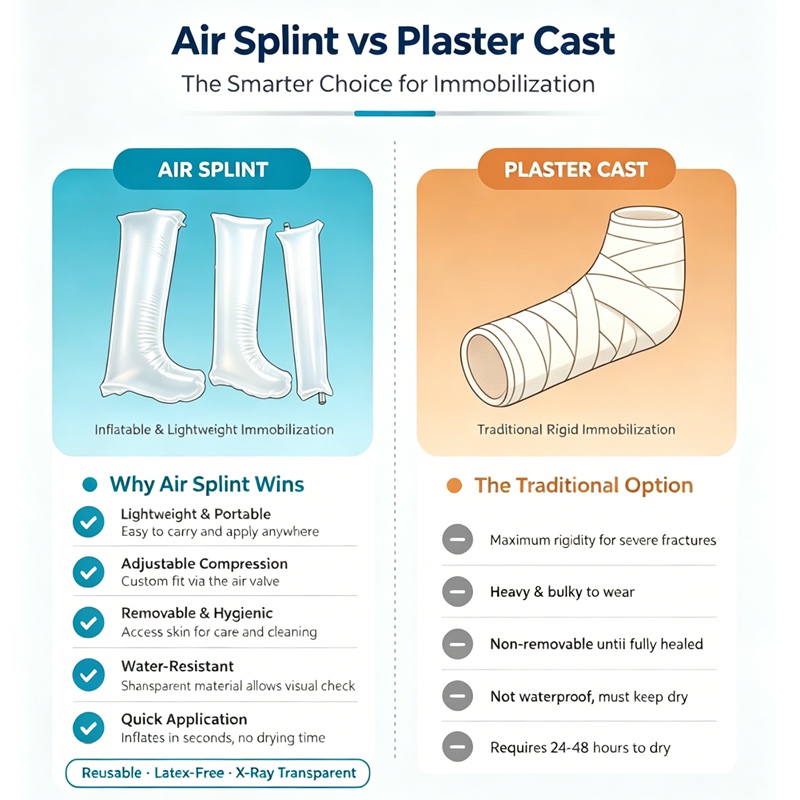
    In emergency first aid and pre-hospital care, timely, safe limb fixation is non-negotiable for avoiding secondary injuries from fractures, sprains, dislocations, or soft tissue damage. Our disposable air splint delivers a professional, user-friendly stabilization solution built for medical teams, first responders, and on-site emergency care—combining lightweight comfort, reliable support, and single-use hygiene.   What Is a Disposable Air Splint?   A disposable air splint is a single-use emergency limb immobilization device designed to stabilize injured arms, legs, wrists, hands, ankles, and feet. It uses an inflatable air cushion to conform naturally to limb contours, providing uniform, gentle compression that supports injured tissue without compromising circulation. As a disposable medical device, it requires no repeated cleaning or disinfection, effectively lowering cross-contamination risks in high-pressure emergency scenarios.   Product Composition & Safe Medical Materials     Each complete air splint set includes six targeted fixation models:   Hand and Wrist Half Arm / Full Arm Foot and Ankle Half Leg / Full Leg   The full kit also comes with a PVC inflation pump, PU extension tube, and nylon red first aid pouch. All materials are non-toxic, durable, and fully compliant with international medical device standards.     Core Benefits of Disposable Air Splints     Strong Stabilization   Effectively limits bone movement and reduces secondary injury during transfer and treatment. Adjustable Compression   Inflation pressure can be tailored to injury severity, balancing firm support and patient comfort. Quick & Simple Operation   Intuitive design enables fast application in emergencies, even under stress. Single-Use Hygienic Design   Eliminates disinfection workload and minimizes infection risk. Ultra-Portable   Collapses compact when deflated—perfect for ambulances, field first aid, and mobile medical teams.   How to Use a Disposable Air Splint   Position the deflated splint around the injured limb. Use the pump to inflate the air chamber until the splint fits snugly. Adjust pressure to secure immobilization without blocking blood flow. Monitor the patient and fine-tune pressure as needed. Open the air valve to deflate, then remove the splint when treatment is complete.   Ideal For: Who Needs Disposable Air Splints?   These inflatable limb splints are widely used in:   Hospitals & clinics Ambulance & emergency services First aid stations Sports medicine & outdoor rescue Industrial safety & on-site medical support   Why Choose Our Disposable Air Splint?   Our disposable air splint delivers professional-grade stabilization with unmatched ease of use. We enforce strict quality control throughout production to ensure reliability in critical situations. We support wholesale orders and accept custom specifications for size, packaging, and branding to meet global market needs.     Whether you’re outfitting an ambulance, stocking a first aid room, or building emergency kits, our disposable air splint is your trusted choice for safe, fast, and hygienic limb immobilization.
  • 5 Common Emergency Scenarios & Correct First Aid Methods You Must Know
    5 Common Emergency Scenarios & Correct First Aid Methods You Must Know
    Apr, 14 2026
    Emergencies strike without warning. Whether at home, work, or outdoors, mastering practical first aid skills can save lives. Below are the 5 most common emergency situations and step-by-step correct first aid procedures, plus key tips for choosing reliable first aid equipment for your family and team.   1. Respiratory Arrest: Immediate Ventilation Support When someone stops breathing, every second counts. · Immediately provide artificial ventilation with a manual resuscitator (Ambu bag) and oxygen supply. · Ensure a tight mask seal to avoid air leakage. Follow standard ventilation rates to keep oxygen flowing and stabilize the patient before professional help arrives.   2. Choking: Rapid Airway Clearance Choking can lead to suffocation in minutes — act fast. · Learn the Heimlich maneuver from a certified first aid training course. · Use professional anti-choking devices: they work for trained and untrained users alike. · Clear the airway as quickly as possible to restore normal breathing.     3. Cardiac Arrest: CPR & Chest Compressions CPR keeps blood circulating to the brain and heart when the heart stops. · Check for response: if no reaction, call your local emergency number immediately. · Start hands-only CPR (no rescue breaths needed for untrained rescuers). · Place one hand over the other on the center of the chest. · Push straight down 2 inches (≈5 cm) at a rate of 100–120 compressions per minute. · Let the chest fully rise between compressions. · Keep going nonstop until a trained responder or medical team takes over.   4. Trauma Injuries: Immobilize & Protect Fractures, neck injuries, and sprains need quick immobilization. · Use cervical collars for neck injuries. · Apply air splints to fractured or sprained limbs. · This stops secondary damage and reduces pain during transport to a hospital.   5. How to Choose Reliable First Aid Equipment · For business buyers, families, and medical teams, quality and safety are non-negotiable. · Prioritize devices that are safe, durable, and easy to operate. · Look for international certifications: CE, ISO, FDA. · Select age-appropriate sizes: adult, child, and infant for full coverage.   Final Note: Preparedness saves lives. Stock high-quality first aid tools and refresh your skills regularly to stay ready for any emergency.
Prev
1 2
Next

Sign Up To Get The Latest updates

Please read on, stay posted, subscribe and we welcome you to tell us what you think

leave a message

leave a message
Ready to scale your medical business? Click here to get a free quote & catalog!
submit

Home

Products

WhatsApp

contact

Tell us your requirements (e.g., Quantity, Destination Port)
leave a message
Ready to scale your medical business? Click here to get a free quote & catalog!
Submit